crowd-sourced digital charity conference

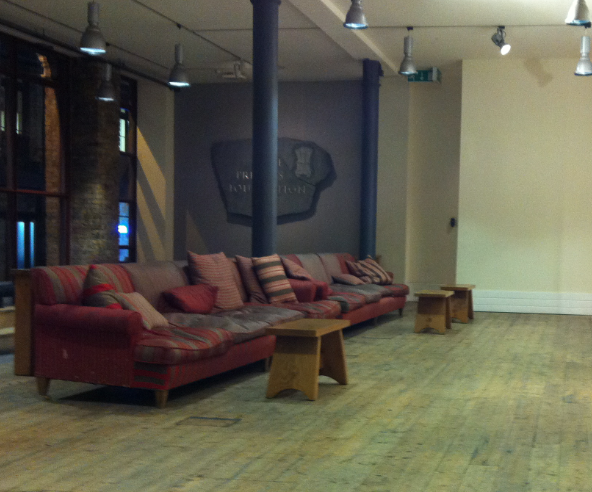
The Prince’s Foundation reception areaGet a room. Fill it with digital types from charity and agencies. Go!

That’s the principle of Barcamp non-profits. A time and place for people with a particular interest to come together to share learnings and come up with new ideas.

I volunteered to be an organiser just before Christmas and now the event is just around the corner (17 Feb 2012). So I met with a few of the other organisers (Amy, Nick and Sylwia) to confirm the basics.

Once we finished chatting about tea, coffee, biscuits and whiteboards (the important stuff!) we couldn’t help stirring up a few potential ideas for the day. I won’t give anything away – but I will say I’m confident it’s going to be a great day!

So … over to you to make sure I’m right. Bring your challenges and gems of learning and be prepared to share.

program or be programmed, technophobe to digital native

This week the UK has been talking about ICT in education and how internet addiction changes your brain, so it felt timely to mention a book I’ve meant to highlight for a while.

Dougles Rushkoff is famous for his views on new media’s impact on society and his latest book is a great read. I read ‘Program or be Programmed’ last year and found myself agreeing with most of it. It’s about how technology is shaping our lives, rather than our lives shaping technology.

Reflecting on this a year after reading I’m starting to revisit applications for this theory in my day-to-day. This thought stands out:

A part of any digital job should be about inspiring inquisitiveness and experimentation in those who think digital is a “black box” they won’t understand. A “black box” which is dangerous and forbidden to tamper with. In doing this you’re helping people go from programmed to program, from technophobe to digital native.

What do you think? Are you doing this in your role?

reducing your bounce rate

This week I was pleasantly surprised by an old blog post on charity bounce rates getting picked up. It sparked a conversation with @charitychap and @LondonKirsty about reducing your website bounce rate that I thought worth elaborating on.

Having assumed a view on average bounce rate for charity websites from my old post. We all agreed the key challenge is that measuring your bounce rate might be easy (and is critical) but it’s harder to know how to reduce it apart from following the generic tips out there. The conversation got me thinking about the analysis we started to consider in my last job.

We got to the stage of considering how best to segment our view of bounce rate. This came from the recognition that taking a site wide view of bounce rate might work for some websites which have a single purpose, but many charity websites have multiple purposes and so a single view isn’t good enough.

This means a good definition of your key audience groups and their goals is very important. Along with recognising that goals may vary by personal circumstance and time of year. For example, for health charities there is a clear ‘patient pathway’ view that can be taken – from diagnosis, through treatment, to recovery, and often to maintenance.

But how exactly can you take a segmented audience view of bounce rate without requiring all of your users to be logged in or personally identifiable? Well – we didn’t find a concrete answer to this. But here are some ideas:

  • Use your content as an approximation of the audience; look at bounce rate by section rather than site wide and make assumptions about the audience consuming that particular section and how you might cross-sell or up-sell to that group.
  • Use the traffic referral source as an approximation of the audience; look at bounce rate segmented by traffic source and see where you can make assumptions about the audience based on this eg those from BBC Vs The Sun, Google Vs Bing are different demographics.
  • Segment those that don’t bounce from those that do; these are two high level segments that could shed some light on things when looked at within a content section.

Finally, of course, the best way to reduce bounce rate is to test, test and test again. I’m not sure enough testing of the ‘bread-and-butter’ online activity happens in charities. But the surest way to find out what improves your bounce rate is to test variations and find the winning combination until you start to spot potential to improve further.


digital content strategy – web managers meet up

  1. Looking fwd to #webmgrs tonight at Innovation Warehouse. Theme is content strategy. Expecting a full house of about 70. Are you coming?
  2. Heading up to @webmgrs meet-up at Innovation Warehouse. Come in from the rain to a warm atmosphere! Kick off at 6.30. #webmgrs
  3. First up…
  4. Head of Content for #eBay Europe Lucy Hyde discusses multi-lingual content management #webmgrs
  5. 21 sites @ebay Europe – 4 functions in content team: content mgrs, localisation team, emerging mkts, web dev. #webmgrs
  6. #webmgrs lucie hyde, head of content, eBay does not have a cms
  7. Architecture of @ebay site has grown up organically due to way site founded. Trying to work on this now #webmgrs
  8. More strategic approach to content has seen efficiencies and better user feedback but hard to quantify in £ due to @ebay model #webmgrs
  9. Bit like communication tourettes @ebay previously. International org built on silos so incentives by team not org didn’t help #webmgrs
  10. eBay was anti ‘process’ so Lucie rebranded process as ‘relationships’. Importance of finding the right corporate language… #webmgrs
  11. Advice; be prepared for battles but pick them wisely, have a good sponsor to provide cover, show rather than tell #webmgrs
  12. Take away the debates with standards and templates. Then able to focus on debates that matter. Train, train and train again #webmgrs
  13. Created a quality score sheet @ebay – everyone who wants to sign off content has to use it – helps reduce subjectivity #webmgrs
  14. Woah, that must have been excruciating @ebay RT @spirals: Went from 60,000 pages to 30,000 after the initial content audit #webmgrs
  15. #webmgrs eBay did a site audit in Germany and found Xmas campaigns from 2003 so managed to halve the site size. non product pages btw
  16. After got it running well. Go up next level – messaging hierarchy, layout, multi variate testing. End to end campaign strategy #webmgrs
  17. Need to change way think about content. Huge amount of customers not even on site -they’re mobile so need to go to them #webmgrs
  18. Onsite stats show about 80% of behaviour across Europe is very typical although tone of voice considerations more varied #webmgrs
  19. Next up…
  20. One-man content enforcer @acediscovery telling the story of the rebirth of the Horniman Museum website. Love it!
  21. No content strategy – but very clear paths on what wanted to do. Inc. what to replicate from old @HornimanMuseum site #webmgrs
  22. Be VERY specific about how content should be delivered. Word but no embedded images. Inc change frequency expected #webmgrs
  23. “@spirals: Love it – @HornimanMuseum blog strategy ‘content our visitors would like to read’ #webmgrs” < genius
  24. Photos work better than words for @hornimanmuseum says @acediscovery #webmgrs
  25. 20% of @Hornimanmuseum visitors are under 5yrs old.. No wonder they like the photos #webmgrs
  26. Final thoughts…
  27. Interesting chatter about digital projects often bear brunt of breaking down silos as have to be cross org #webmgrs
  28. Really good #webmgrs meetup – great talks on content strategy from #eBay Europe’s @LucieHyde and @HornimanMuseum’s @acediscovery
  29. @acediscovery Hey, thank you for chatting tonight. V interesting, & you were a great speaker at #webmgrs. Will look forward to hearing more;
  30. @Aggelos_Taplatz @DeborahFrancis @Niecieden @spirals @webmgrs Thanks for all the nice words and feedback about last night. Glad you enjoyed!

own a colour UNICEF case study

I recently spoke @nfptweetup with Max (and help from Yvette) about the UNICEF own a colour project. Here’s the slides for anyone interested.


To see with speaker notes please view here and use the ‘actions’ option.

the ideal transition digital team

In a week where the Government’s digital champion Martha Lane Fox said there was a digital skills gap in charities [ref: ACEVO conference] it seems only right that I finally write this blog post.

Round two on what everyone ‘just doing digital’ means; “the nirvana where everyone is ‘just doing digital’ may come, but what’s the ideal transition digital team?”. I’ve been contemplating this mind boggler and avoiding writing anything for a good few weeks. But the quote from the ACEVO conference tipped me over the edge.

What does the ideal transitional digital team look like?

It might be big or small, digital all-rounders, or specialists in discrete areas. These specifics are dependent on the organisation size and needs. In this transitional time those factors are less important than the ethos and culture of the team.

I think it’s crucial that the individuals are avid life-long learners who enjoy passing on knowledge. It’s only with these traits that a digital team can help close the skills gap talked about. Remembering of course that the organisation needs to provide the space and resources that allow them to act in this capacity.

It’s even more important that the transitional digital team is not over protective or territorial. A true collaborative approach is needed to make the hub and spoke model work. Other teams need to bring their expertise to the table and own the integration of digital into their work. This means a digital team letting go – occasionally even if you’re doubtful something will be a success. As long as the risk isn’t high, letting others learn through trial and error is the quickest way.

Being a change agent isn’t without its challenges. So patience and persistence are the final facets of a great digital transitional team.

So… what do you think? Are there other skills digital charities teams need right now?

BTW: Thanks to David Bull for tweeting the quote that tipped me over.
maximising mobile marketing – @Brandrepublic conference

Last week I attended a conference on maximising mobile marketing. I tweeted. A lot. Here’s the best bits.

  1. #brmobile over 1billion in bets through mobile says @betfair speaker – people using dead time
    November 8, 2011 4:16:01 AM EST
  2. First speaker… Comscore
  3. Mobile handsets – 27% nokia, 11% iphone, Samsung 19% #brmobile
    November 8, 2011 4:20:47 AM EST
  4. 54% of people in the UK don’t have a smartphone #BRMobile
    November 8, 2011 4:22:34 AM EST
  5. 40% consumers use mobile when see an interesting ad – even if not a mobile ad #brmobile
    November 8, 2011 4:28:10 AM EST
  6. November 8, 2011 4:29:20 AM EST
  7. 10% of UK smartphone users (4.7m) accessing mobile banking now #brmobile
    November 8, 2011 4:33:33 AM EST
  8. Don’t forget SMS – it can give significant response 1.9mil out of 19.9mil #brmobile
    November 8, 2011 4:38:58 AM EST
  9. July 2011- 2.9mil scanned a QR code – mostly for product discovery #brmobile
    November 8, 2011 4:40:42 AM EST
  10. Top tips slide 2 #brmobile http://lockerz.com/s/154319556
    November 8, 2011 4:41:50 AM EST
  11. 3 takeaways from comescore-1.Mobile growing rapidly 2.consider carefully the audience you want to reach 3. don’t get left behind #brmobile
    November 8, 2011 4:44:22 AM EST
  12. Next speaker… Expedia
  13. #brmobile 39% of people use their smartphone whilst on the toilet
    November 8, 2011 5:24:00 AM EST
  14. 80% of apps less than 1000 downloads (consumer healthcare). Less than 1% branded apps pass 1mill downloads #brmobile (Deloitte research)
    November 8, 2011 4:57:01 AM EST
  15. . @expedia decided not to silo mobile with a specific mobile person. Had mobile champions but integrated into core business #brmobile
    November 8, 2011 5:17:44 AM EST
  16. 4mil monthly mobile visitors to @expedia mobile, and it’s not cannabalising website bookings #brmobile
    November 8, 2011 5:33:18 AM EST
  17. Top tips for creating a mobile experience from @expedia #brmobile http://lockerz.com/s/154325602
    November 8, 2011 5:32:20 AM EST
  18. Community/ gaming layer, local immediacy layer, social layer, self-service layer – the components of @expedia mobile experience #brmobile
    November 8, 2011 5:30:31 AM EST
  19. Next speaker… Weber Shandwick
  20. Intent vs Content: @jamesdotwarren discusses the results of WS’s #smartmarketing report at #MaximisingMobileMarketing conference #brmobile
    November 8, 2011 5:34:12 AM EST
  21. Mobile mkg = teenage s*x. lots of talk, not much doing, and if doing the doing is not good. #brmobile
    November 8, 2011 5:57:21 AM EST
  22. 44% of people feel naked without their smartphone. 36% changing way think and interact with products and services #brmobile
    November 8, 2011 5:59:49 AM EST
  23. Search lifecycle- desktop 30day journey search to purchase, 1hour on mobile! #brmobile
    November 8, 2011 6:05:51 AM EST
  24. Next speaker… Sky
  25. Sky have over 1m people viewing live tv via mobile devices every month #brmobile #skygo
    November 8, 2011 6:45:02 AM EST
  26. 23% of online time is spent on mobile. If you work in digital you should spend at least this on mobile too #brmobile
    November 8, 2011 6:50:38 AM EST
  27. 3 screen strategy is core @sky. From content build through to advertising – becoming agnostic to a degree #brmobile
    November 8, 2011 6:39:04 AM EST
  28. ‘integrated marketing is the output of an integrated business’ Tim Hussain, Sky #brmobile
    November 8, 2011 6:51:11 AM EST
  29. Ultimately it’s still about single consumer view. Just multiethnic touch points and screens #brmobile
    November 8, 2011 6:41:00 AM EST
  30. Mobile USP to a campaign- it’s personal, it’s a second shadow (always there), it’s immediate, it’s feature rich #brmobile
    November 8, 2011 6:54:30 AM EST
  31. Next speaker… Autotrader
  32. Used 4m mkg strategy- Mindset:test,learn,iterate. Method:awareness,education,trial. Mix:mobile,ATL,partners,autotrader. Msg. #brmobile
    November 8, 2011 7:08:09 AM EST
  33. 0.5mil mobile users in 12 months. Became a new challenge #brmobile
    November 8, 2011 7:16:32 AM EST
  34. Bounce increased by 20% when off season. They hit saturation with their activity. Too much share of voice #brmobile
    November 8, 2011 7:18:29 AM EST
  35. Maturing the mobile strategy from autotrader #brmobile http://lockerz.com/s/154340838
    November 8, 2011 7:20:56 AM EST
  36. 300k year 1, 500k year 2, 1mil year 3, next years target is 2mil mobile users of autotrader #brmobile
    November 8, 2011 7:23:09 AM EST
  37. Next speaker… Pizza Express
  38. Now up- pizza express: In oct 27% of all traffic to pizza express sites came from mobile #brmobile
    November 8, 2011 8:07:36 AM EST
  39. 1000 table bookings a month through mobile #brmobile
    November 8, 2011 8:12:16 AM EST
  40. Optimising for mobile search by creating restaurant pages for local sites. To avoid bouncing people into a location search #brmobile
    November 8, 2011 8:13:57 AM EST
  41. Next up a panel discussion
  42. panel with @nicholascumisky – says don’t forget Nokia is still biggest handset producer #brmobile
    November 8, 2011 9:32:37 AM EST
  43. French connection fail – build an app before a m.site and it didn’t work. So now building one. Doh! They needed proper analytics! #brmobile
    November 8, 2011 9:20:13 AM EST
  44. HTML5 offering new innovations. Yodel mobile working on an interactive ad unit for the reader Kobo #brmobile
    November 8, 2011 9:37:27 AM EST
  45. Unilever lynx case study means they now see mobile as a horizontal not just an add-on. They ask how mobile can extend the story #brmobile
    November 8, 2011 9:44:45 AM EST
  46. 3G vs 4g question is diluted by fact that huge amount of mobile connectivity is via wifi. Cloud is on the rise instead of apps #brmobile
    November 8, 2011 9:49:58 AM EST
  47. By 2015 estimated 1.5bil mobiles will have NFC built in. Perhaps some will be dormant – but it’ll be there #brmobile
    November 8, 2011 9:56:21 AM EST
  48. QR code coming under criticism. Only 1% of phones able to read #brmobile
    November 8, 2011 10:00:43 AM EST
  49. NFC going to compliment QR codes and AR not replace it #brmobile
    November 8, 2011 9:59:52 AM EST
  50. Next speaker… Debenhams
  51. How @debenhams see mobile in their business strategy #brmobile http://lockerz.com/s/154371429
    November 8, 2011 10:08:05 AM EST
  52. mobile providing link between channels as always on @debenhams #brmobile
    November 8, 2011 10:09:59 AM EST
  53. Impressive – @debenhams app paid for itself within 2 weeks #brmobile
    November 8, 2011 10:25:06 AM EST
  54. 700k downloads, £3mil sales, over 1/3 use @debenhams app repeat times #brmobile
    November 8, 2011 10:14:06 AM EST
  55. Use push notifications when people close to store – result in 67% app open #brmobile
    November 8, 2011 10:17:32 AM EST
  56. Next speaker… WWF
  57. Goal to increase fundraising by £1mil so @wwf targeting countries where mobile already surpassed desktop use #brmobile
    November 8, 2011 10:29:24 AM EST
  58. . @wwf sms conversion case study – Austria 2007 #brmobile http://lockerz.com/s/154377697
    November 8, 2011 10:38:14 AM EST
  59. Text num on @wwf street team shirt low rsp but ‘text facing’ good #brmobile < note @UNICEF_uk pic http://lockerz.com/s/154379603 http://lockerz.com/s/154379620
    November 8, 2011 10:45:51 AM EST
  60. Next speaker… FT.com
  61. next up FT.com @spoonerf on user journeys #brmobile
    November 8, 2011 11:12:23 AM EST
  62. Mobile users 20% of FT traffic, 30% page views from mobile. Overall 4mil reg users, 250k subscribers #brmobile
    November 8, 2011 11:17:32 AM EST
  63. 15% of subscriptions direct from mobile. Mobile users twice as likely to consume content at wkds #brmobile
    November 8, 2011 11:19:19 AM EST
  64. Last year FT kept launching apps in response to market. But not sustainable. And then apple changed subscription payment journey #brmobile
    November 8, 2011 11:21:32 AM EST
  65. So took a risk – June launch of HTML5 site – within a week 100k downloads so removed apps from iTunes #brmobile
    November 8, 2011 11:22:45 AM EST
  66. Big marketing benefit – can send people straight to content in web app. Not to an iTunes download page #brmobile
    November 8, 2011 11:24:55 AM EST
  67. Next speaker… Visit Britain
  68. First Mobile @visitbritain app in 2008. Too expensive but learnt. 2009 next app learnt need PR to have app found. #brmobile
    November 8, 2011 11:39:35 AM EST
  69. Found more success by tying in mobile to bigger picture – overall digital and marketing strategy rather than just a silo app #brmobile
    November 8, 2011 11:54:05 AM EST
  70. Love UK @visitbritain app used Facebook places. Users 50% more likely to buy and 20% had bigger basket value #brmobile
    November 8, 2011 11:52:31 AM EST
  71. Last speaker… Barclays
  72. Mobile payments and services @barclays #brmobile http://lockerz.com/s/154395549
    November 8, 2011 11:59:39 AM EST
  73. Big challenge is awareness and education about mobile payment options #brmobile
    November 8, 2011 12:03:49 PM EST
  74. Digital wallet is not just a replacement of physical wallet-bump you phone to share money-identification is key #brmobile
    November 8, 2011 12:10:02 PM EST
  75. Mobile wallet should do more than your usual wallet – @barclays ideas here #brmobile http://lockerz.com/s/154397648
    November 8, 2011 12:09:36 PM EST
  76. Parting thoughts …
  77. Fair to say native apps haven’t fared well at todays #BRMobile conf- scope for them certainly- but mobile internet has more potential
    November 8, 2011 10:11:54 AM EST
  78. #smartmarketing #brmobile ROI anyone? 80% of branded apps get less than 1k downloads
    November 8, 2011 6:57:29 AM EST
  79. Still not sure about NFC. Been talked about for years now #Brmobile
    November 8, 2011 10:11:18 AM EST
  80. Great loyalty case studies on Starbucks and Pizza Express. Shows what can be done with mobile loyalty. #brmobile
    November 8, 2011 7:56:34 AM EST
  81. Very thought provoking day at #brmobile mobile marketing conference. Glad to see we’re not alone in our barriers
    November 8, 2011 1:29:02 PM EST

will digital teams continue to exist?

My recent posts have sparked some real world discussions around two questions:

  • If everyone in the future is ‘just doing digital’ what will digital teams be doing?
  • And, as best posed by Alison Daniels, “the nirvana where everyone is ‘just doing digital’ may come, but what’s the ideal transition digital team?”

I’m going to explore the first question here and dedicate a separate post to the other one (watch this space!).

The easiest way to explore this question is with a definition of what everyone in an organisation ‘just doing digital’ could look like, and identifying some of the questions this creates.

Everyone is ‘just’:

  • creating web content – they’re writing web pages, creating short videos, and posting pictures.
  • using social media – through networks like facebook they’re servicing and attracting customers / supporters, through networks like linkedIn they’re making business connections, and they’re using all types of social media to co-create strategies and products.
  • building websites – they’re using drag and drop online tools to create simple web pages that ‘do stuff’.
  • doing digital marketing – they’re creating (or commissioning) search, affiliate and display advertising campaigns.

So here are the questions:

  • How do you manage the quantity Vs quality balance?
  • How do you prioritise for the greater good rather than individual interests?
  • How do you avoid duplication and cannibalisation where it matters?
  • How do you avoid fragmentation and make integration happen?
  • What if existing off-the-shelf tools don’t do what you need them to do?
  • How do you stop your digital activity looking identikit if you’re ‘just doing’ what everyone is ‘just doing’?
  • How do you keep on top of the next new thing if you’re busy doing the day job?

I see the role of future (and perhaps existing) digital teams is to answer these questions. In fact, stepping back, these questions are not too different from those that marketing teams have worked with for a while. So a logical conclusion might be that digital teams will become the marketing teams of the future.

And so we see the rise of creative marketing technologists – this presentation summarises it nicely.


So what do you think? Are you a future creative marketing technologist?

who owns digital in charities?

If I had a penny for every time someone asked me where a digital team should sit within an organisation I’d have a lot of pennies. The debate has changed over the years as digital has become more important but the core consideration remains the same.

So I always find it useful to start with my own personal context. As someone who has worked in digital for my entire career I’ve been ‘all over the shop’:

  • At the Multiple Sclerosis Society digital was part of the Services directorate, a sub-team of Research and Information.
  • At RNID (now Action on Hearing Loss) digital was a sub-team of the Marketing and Brand team, and after I left the team moved into an External affairs also within the Comms directorate.
  • At the British Heart Foundation digital was in the Policy and Communications division, at one point as a sub-team with Marketing and Brand, another point just a separate Digital team, and then a part of a Multimedia team that includes traditional media officers who were spreading out into digital PR.
  • At UNICEF UK the Digital hub sits in the Fundraising division, following the merge of a Digital Marketing team from Fundraising and a New Media Resources team from Comms.

But in my experience the digital team have always been a cross organisational team no matter where the line management happens. So back to that core consideration I mentioned; “Where will the team have the influence and resources it needs?”. A question you could ask about any team in any organisation, but it’s the need that might be different.

A digital team needs to be more than just a service team during this time of transition between traditional and digital mediums and ways of working. A digital team which is only about direct delivery misses the opportunity to catalyse the skills and behaviour change that is needed for the whole organisation to embed digital.

As I alluded to in my post which mentioned the hub and spoke model, there will be a time when everyone needs to ‘do’ digital and it’s not far off. I often use two analogies to explain this:

  • When electricity was first around every business had an electricity manager. Now they just call in the electrician (experts) every so often.
  • Businesses used to have typist pools, now everyone (ok – almost everyone) does their own word processing. It’s only when you need to do something complex or special that you get expert help in.

Any organisation which isn’t leveraging the expertise of its digital team to change the ways of working and spread digital skills across the organisation is, in my opinion, going to be left behind. So the team should sit wherever in the organisation it’s possible for this to happen, and that depends on the organisation.

building female leaders of tomorrow

Another video to share from the UCLA course I attended. If you’re male I’d be very interested to hear your thoughts on this. If you’re female then this is practically compulsory viewing 😉