barcampnfp 2015

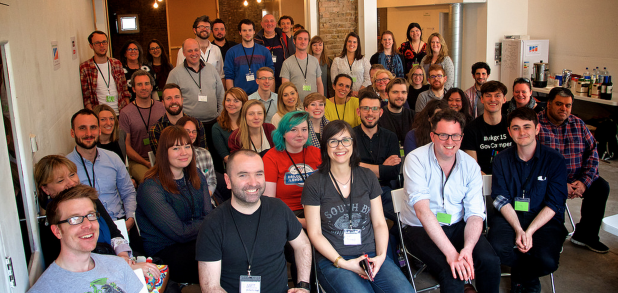
Barcampnfp 2015 end of day group shot by @netsmith

Barcampnfp 2015 end of day group shot

Hello, long time no see, sorry!

This year seems to have really flown by and I have a few different blog posts stuck in my head ready to get out. The first one being to share all the great stuff we learned from this year’s Barcampnfp.

Held 8th April 2015 in the ultimate shabby chic east London space (thank you Top Office Machines) we again had around 100 non-profit interested tech and nfp staff come together to network and learn.

How did the day work?
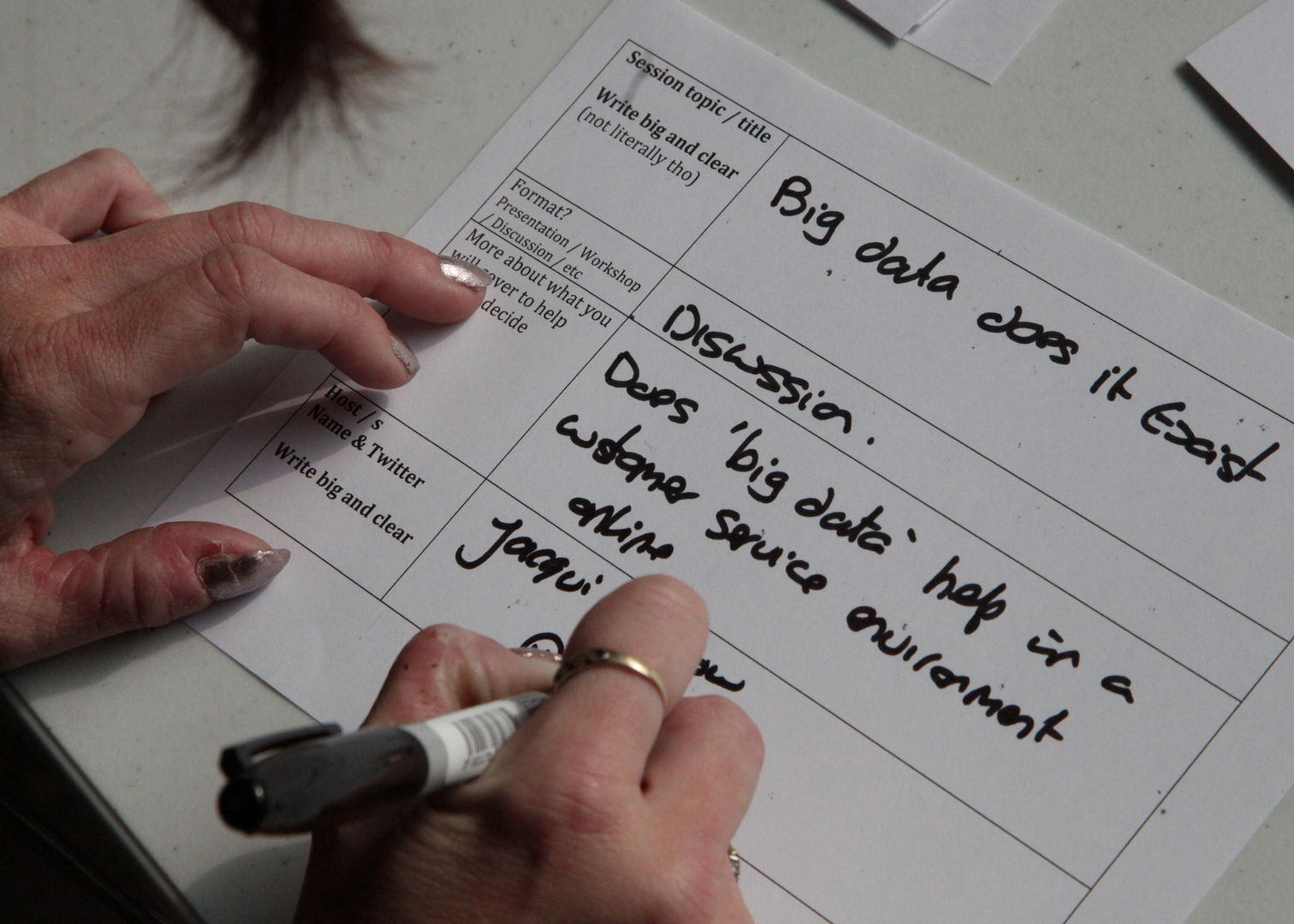
barcampnfp session card photo by Gaby JeffsFor those of you that don’t know already; Barcampnfp is in an unconference format, where the only thing set before the day is the venue and times. A blank timetable is posted on the morning of the event so that every participant has the chance to propose sessions. The event truly is owned by the people who attend it – this way only the topics of interest to the audience actually become part of the day!

I’ve always slightly broken the rules of a traditional barcamp by having a defined theme (tech & non-profits) and curating the sessions rather than just allowing the timetable board to be filled up directly. Following the mammoth curation session last year I decided to try just letting the participants free like the traditional format. To support this I creating more structured session cards (see pic) to guide people making suggestions.

The structured cards worked well but the curation was something participants said they’d like back next year. The curation was missed because it helped similar topics merge and gave the chance for people to be matched with someone who knows about a theme they want to learn about. Some great lessons to take on for the next event!

What did we learn?

Here’s a few of the high level things we learned:

  • Agile methodology is becoming more adopted in non-profits, but contrary to common thought discipline and documentation is what really makes agile work.
  • Digital transformation is a hot topic in the sector right now, some organisations are completely in support while others aren’t. Either way there are lots of ‘stealth’ tactics that can be put to use by specialists without org support.
  • Engaging young people requires great imagery along with good stories. Just bite the bullet and use Instagram and Snapchat which is where these audiences are right now.
  • A/B testing is important but don’t test something that you’re not prepared to implement -­ it might win!
  • Video can be done on a shoe string – raw and real stories work best in this case.
  • Measuring impact is a challenge still being ploughed through – the AMEC framework can be a great model to work with.

Check out the live notes from the day here and pictures here.

As always, let me know if you’d like to run a barcampnfp near you or get involved in the London events @spirals.


charities going backwards in digital maturity – should we blame the donors

This week Lloyds and Go On UK released their 2015 digital maturity report with the headline insight that charities are behind SMEs and going backwards when it comes to digital.

There’s some fascinating stats such as the % of digital skills across four broad skill areas (communicate, find things, provide information, transact). The study shows that charities come out worst in transact skills areas and, to be honest, I’m not that surprised.

Lloyds digital maturity report - graphWhile it’s easy to get into debates about the methodology used in the study, what’s harder to deny the fact that as a whole the charity sector has been slower to take up more digitally enabled transaction methods.

You can logic that this is due to appropriate audience focus; with older audiences being more likely donors and where average giving amounts are typically higher. To my knowledge the persistence of the printed cheque is specifically tied to charities lobbying for it to continue precisely due to this fact (happy to be corrected here if you know different!).

So should we blame the donors for charities being behind in digital?

Before I say anything else, the answer to this is clearly No. There’s a complex set of factors at play beyond audience fit; limited resources, expertise and affordable technology.

Being a long time digital specialist in the sector I’ve seen the trials and tribulations of forward focused individuals (including many non-specialists). Individuals who’ve tried to use digital but been left feeling disempowered and receiving warnings that this would risk their long-time supporter engagement. Where you have limited resources and the technology isn’t easily available you do often have to make a choice, and do it quickly based on assumptions.

Things have changed but they need to change more

With SMS giving increased in the last few years I’ve definitely seen a shift in charities thinking more about younger people. As ‘older donors’ become even more technically savvy this too has increased the impetus in the sector.

Instead of the first assumption being ‘they don’t do digital’ a few more decisions now come from the assumption ‘everyone is using digital and if we’re not there they’ll go to someone else’. However, having worked in some of the largest charities and now working with more different sized charities I can see there’s a lack of equality across the sector. Not every charity has the resources, expertise and technology to have shifted.

I’m excited to be working on something that should help to change this, let me know if you want to know more.

the future of news?

This picture sums it up… either the future, or the hype of the future. This is Periscope – a new live streaming app launched today by twitter. Whatever it becomes, I can already think of some great ways that non-profits could use it.

new york explosion via periscope

why aren’t there more charity start-ups?

Last night Nesta held an event examining this very topic. As usual there was some great content from Mary McKenna who has been working with Vinspired on Tasksquad.

Tasksquad is a rarity – one of very few charity founded startups, at least to my knowledge. Yet I feel there are so many factors that should make charities fertile ground for entrepreneurial action;

  • goodwill support,
  • often more forgiving audiences (if you fail for the right reasons)
  • and a wealth of expertise in real social issues.

Here’s a storify from the Nesta charity digital innovation event on what everyone had to say about why it’s rare.

the difference of thinking in platforms

Mozfest_10Nov_018A little while ago I was lucky enough to attend my first, but hopefully not last, Mozfest. I didn’t entirely know what to expect apart from lots of ‘open web’ information and ideas. The timetable wasn’t released until the day before and it was live updated through the entire weekend. It was a great mix of structured and unconference.

I got practical tasters of lots of topics including making your first web app, creating your own maps, and hacking a mobile html5 game.

Quite a bit of my time was spent working with a team assembled on the first day on a project to simplify mobile giving. I won’t describe the final output as there’s a great blog post about Pass the App here. What I wanted to share is the striking difference it made by considering the problem from a platform perspective.

Thinking from a platform perspective really focuses you on the purpose and key features you need. A platform isn’t (primarily) a perfectly designed end consumer product in itself – it’s a tool that others can use to build their own version of something. This gives you an objectivity that quite often gets lost in projects where you’re building the finished public facing website or app.

I found focusing on empowering others through a platform is hugely empowering in itself!


As an aside: I also spoke to SourceFabric about why I was at Mozfest from UNICEF UK. Excuse the Ummms.

technology for development – Guardian Activate 2013

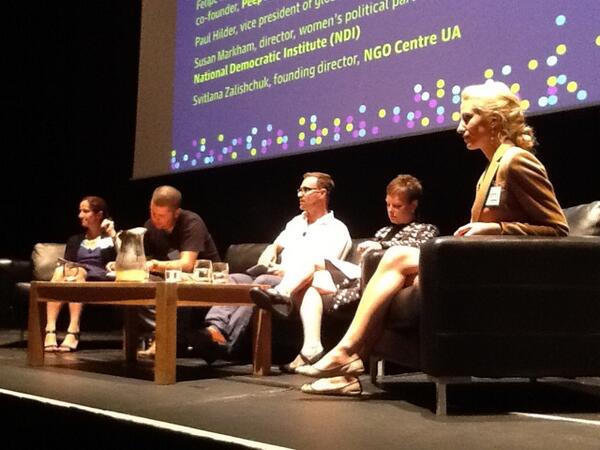
Panel Guardian Activate 2013Today I was inspired once again to hear how technology is being used to change the world.

Yes – smart glasses are what many are talking about. They may still be a little bit glitchy and gimmicky but Pebble has already shown our appetite for wearable screens.

However that’s not where big change is expected next year. We still have far to go to understand and apply the full potential of mobile with cloud tech.

That’s why it’s so exciting …

My storify summary from Guardian Activate can be found here.

preparing your website for a high traffic TV event like Soccer Aid

There’s a moment when there’s no turning back, you’ve done as much preparation and contingency planning as possible and the rest is down to whether a celebrity footballer does something that goes ‘mega viral’.

Soccer Aid is a bi-annual TV programme that raises money for UNICEF. It’s a fantastic live TV event when celebrity footballers, and celebrity non-footballers compete. In return for a great afternoon of telly the viewers are asked to spare a moment to make the world a better place for children by donating to UNICEF UK.

So what exactly does this mean if you happen to be the digital team @UNICEF_UK?

Preparations start-up to a year in advance, and are usually coordinated by a Soccer Aid Digital Producer contracted for the project. There are three core digital streams; marketing, social engagement and tech. I’m going to focus on tech to keep this as brief as you can for something that covers around 12 months work!

The architecture

There was one time (I don’t hesitate to say it was before me, even though I’ve been in the situation during my career) when the worst happened. The UNICEF UK website went down during Soccer Aid.

So now we do a whole host of scaling up, streamlining and performance testing to make sure there’s a reliable web presence and donation funnel in the lead up, just after, and most critically- during the TV programme.

This involves optimisation of the main website and creating a flat (non-CMS) microsite for the highest peaks. We fine tune the website application layer and database processes. Plus we increase the number of servers and use CDN for hosting of any image and video.

Last year we also channeled most of the online donations traffic to a BT MyDonate funnel to push the heaviest lifting outside of our environment. This decoupling meant we could still serve some content if the donations funnel went down, or vice versa, still gather donations if the website went down.

Performance testing

Once we had our approach built we carried out our first performance test, this identified more tweaks to be made. There were two other tests throughout our preparations. They not only identified issues that were fixed but also gave us an expectation of what contingency to plan.

To help with this we had one or two team members casually browsing the website during the tests to observe the experience during heavy traffic. This meant we could begin to think what to say to users if it happened for real.

If you’ve never done it before – it’s important to note that performance testing is best when its on your live site so it’ll probably mean a few late nights so you don’t affect your regular users during the day!

Contingency

Coupled with this preparation we also had a very detailed contingency plan. It mapped out the various possible scenarios and the actions we would take, including who would take key decisions. This was co-created with suppliers who were actively monitoring and on call through the peak moments.

The night itself was a long one. We had one of those moments, a celebrity injury which swelled (couldn’t resist the pun!) the conversation.

Fortunately the tech all went well, hitting our ‘max tweets’ threshold three times is another story…


Quick note: This is a re-post: I created this blog post originally for the Web Managers Group 

augmented reality summit – summary

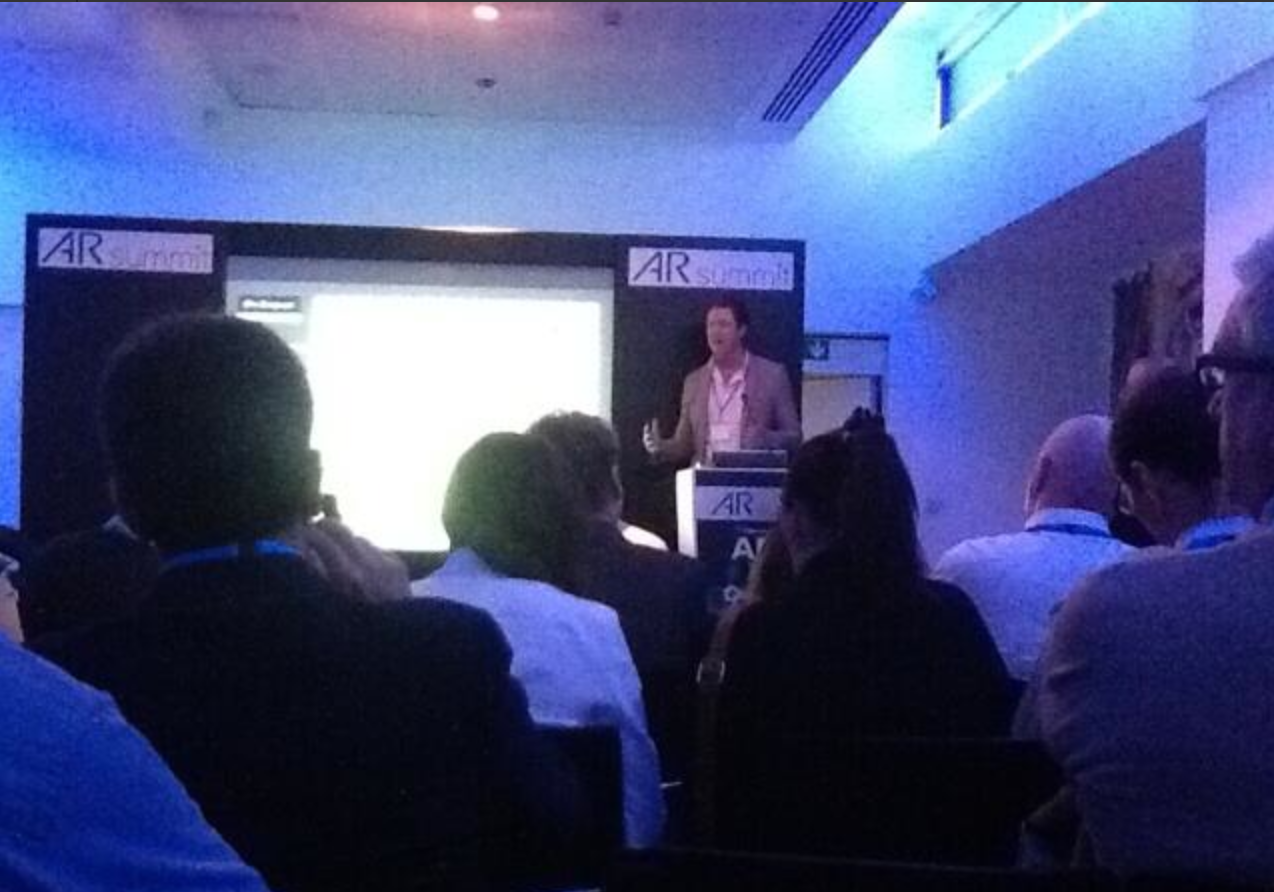
AR Summit 2013This thursday I attended the Augmented Reality Summit, its been going for a few years but this was my first. Here’s a quick summary of my key take aways.

General trend

  • AR has grown from a niche techie interest to something that is viable for consumers in the last year.
  • There is ongoing convergence of wearable technology and AR. Oculus rift and Smart glasses being the obvious examples.
  • Google glass is being viewed as a conversation starter to get the key issues, like privacy, worked through quickly. Smart glasses have been around for a while.
  • QR codes are mostly outdated already as markers – image recognition is widely possible. I’ve never been a fan of QR.
  • AR and future mobile devices have the potential to disrupt the games console market by being just as powerful.
  • The key challenges:
    • battery power; use runs down your battery quickly, but the industry is working on processors and software to help.
    • GPS accuracy
    • interoperability; there’s no standards yet!
    • quality content.

Tips

  • Lighting; accuracy can be affected by light variation but you can always use the flash on a phone to help.
  • Markers; picking a strong image is critical in avoiding temperamental ‘pick-up’ in the AR reading.
  • Apps; custom apps exist at the moment because the off-the-shelf ones give limited interactivity and content options.
  • Aurasma; is relatively widespread in its adoption and has cheap / free options for creating AR triggers. Blippar and Zappar (and others) are yet to offer this.

Case studies

And here’s a tweet summary of the AR Summit in storify.

should you outsource your digital technology?

Crown from Seville CathedralThis week I picked up a new phrase (thanks Ian); ‘technology sovereignty’. It’s a nifty way to explain a principle I’ve used in my work ever since I can remember.

Technology Sovereignty = While you might, and probably should in many cases, outsource your technology supply and maintenance needs to a specialist/s – you should not hand over complete control. 

There’s obvious downsides if you do hand over your sovereignty; reduced ability to negotiate price or options, reduced flexibility, and more.  You could even find yourself in the terrible position I once experienced.

At one workplace I inherited a setup where the website CMS, development contract and hosting were all with one supplier – then the company went into administration due to a hostile merger. I was forced to move suppliers without any real choice, unless you consider months of downtime a choice. The new supplier had significantly higher prices and no understanding of the CMS (among other things).

I learnt a lot from that experience. One thing I realised is how much I’ve leaned on my computer science background to help me at work. The benefit of being able to challenge and co-design solutions with suppliers has definitely helped me to keep more control and avoid all kinds of issues.

Recently someone told me they didn’t feel they should need to know this stuff to do their digital job. In reply I talked about car maintenance. I was taught about how a car engine worked in school. It didn’t mean I could build an engine – but I could describe how it should work. It’s meant I can challenge car mechanics where needed.

So should you outsource your technology?
Yes, at least in part. Outsourcing often means you can benefit from economies of scale that come with a supplier or platform having multiple clients. But make sure you know what you’re talking about and avoid having a single point of failure unless it’s an area where failure doesn’t matter.

practical mobile tips for non-profits and charities

I was one of the keynote speakers at Media Trust’s Go Mobile conference this week, a few people have asked for my slides and notes so here they are…

Notes:

Mobile is here

You have to think mobile for all of the experiences you are designing. It’s not going away and it’s not ‘on the horizon’, its well and truly here.

But it’s still evolving

Mobile compatibility is still not entirely standardised, it’s a bit like the www in the 90’s. Adoption of different devices is also changing rapidly. For example, in just the last year the UNICEF UK website has seen a big growth in iPad that has caught it up with iPhones, we also saw Google Nexus 7 appear as well as others.

Case: UNICEF UK Mobile Website

To make sure we had a mobile compatible site as quickly as possible we launched an interim mobile website of just a few key pages and the donation funnel. We’re working on optimising the whole of the site. To keep costs lower and give us increased technology flexibility we’re using separate ‘layers of tech’ to do the transformation rather than having a fully responsive site (for now).

Case: UNICEF Sweden website

Our UNICEF Sweden office, on the other hand, have created a fully responsive website. They were on the brink of a full website rebuild so it made sense to invest now and go ‘mobile first’. The site is designed for smartphones first and PC desktops last. They had to make some hard decisions on how to streamline content.

Forget about ‘mobile’

It’s easy to get obsessed about mobile devices, really what this change means is a change of behaviours. Remember behaviour first when you are designing user experiences. People are now using multiple devices, we don’t live in single screen households.

Time of day

This graph demonstrates a clear difference in behaviour that mobile has created. UNICEF UK non-mobile traffic peaks during working hours while traffic from mobile devices is consistent throughout the day, even into the early hours. This pattern is important when you think about how people are interacting with your brand.

Case: UNICEF UK Speak Up for Children

I’ve learnt the behaviour lesson. We (with an amazing group of partners) did a brilliant mobile campaign called Speak Up for Children, it was a great success in the end, but we failed at first. The original concept was to create the biggest voice petition in the world. It seemed to make sense that a mobile campaign should use the voice feature of your mobile phone.

We quickly learned that very few people wanted to interact this way, it was just a bit too intrusive / embarrassing. So we paused the campaign and replaced the petition with a simple email address entry field.

Case: Syria Emergency

We also know that SMS giving is really effective. It enables the immediate emotional response of a supporter who wants to help, it also gets funds for emergencies quickly. We even include the SMS giving number in search adword campaigns. You should be prepared for SMS giving no matter what charity you are.

Apps are hard

Finding a concept that works as an app is hard. UNICEF offices around the world have tried and success has been limited. You need an app that fits with an individual’s life, if you wouldn’t download it – don’t build it.

When I worked at the British Heart Foundation we created a recipe finder app, it worked because it was something people could use repeatedly and it fitted with our brand.

Email is important

Increasingly, email is consumed on mobile. If you have an email marketing programme or email newsletter it should be compatible with mobile now. Even if you have to create plain text emails, it’s better than emails that don’t work on a mobile.

It can be easy (sort of)

If you have very limited resources it can be very difficult to go mobile. But there are lots of platforms which are now mobile compatible which you could design your experience around. For example; using twitter, facebook and justgiving could give you a campaign experience which is mobile compatible without you needing to convert your own website for a bit longer.

And that was it!

15 mins really isn’t very long to talk about mobile. I didn’t even touch on UNICEF use of mobile in the field, there’s a bit about that in this innovation presentation.