should you always show a donate button?

In a recent strategy session I was leading with a charity we hit upon a debate the team had been having for the last few months of thinking about their new website; should the donate button always be on?

The fundraiser at the charity had shared some study or other (I’ve asked for details – please comment if you know them) which said a donate button on your home page and header wasn’t a good idea and actually put off visitors rather than allowing time to build engagement before making an ask.

Cutting to the chase; I disagreed.

A clear ‘always on’ donate button is like a steering wheel in a car, it’s an expected part of the furniture your visitor needs to see to know they’re in the right place (a charity website) and to get involved if they want to.

With every part of your website now a potential homepage, because any user could land anywhere on your site from a search, you need to ensure there’s something that clearly communicates what you are and a donate button is a good shortcut – a badge for charities.

If you’re a heavily service orientated charity you should of course consider the weighting of the ‘call to asks’ across your site. Focusing on servicing the people you’re there to help is critical, without question, but like all things in life – awareness comes before action.


the tension between brand and digital

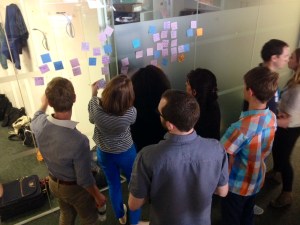
Post it sorting at Mozilla with UNICEF UK volunteersThere’s been many debates over the impact of digital on brand and reputation. Only recently, it cropped up in a few different ways during a workshop I was involved with organising. Given this, I thought it was time to pull together some thoughts on the theme.

To give a bit of context; the workshop involved a diverse group of UNICEF UK fundraising volunteers playing around with a new Mozilla product. Appmaker helps almost anyone build a mobile web app. It’s still in an experimental phase but already quite progressed compared to the version I helped shape at mozfest last year.

Brand Vs digital

When this issue crops up its still typically presented as opposites. But like most things I’m not sure its helpful to see this as an argument with ‘sides’. This introduces a sense of competition rather than partnership or evolution.

In the workshop this sense of opposition was clear in most of the concerns raised, for example ‘what about your brand if volunteers are creating apps without your involvement?’.

Here’s a break down of the underlying tensions that crop up regularly and the real world factors as I see them.

Look and feel

What: The sense that anything not created by the brand owner is going to be poor quality or inconsistent and that this will damage the organisation.

My perspective:

Most “average joe’s” spend less time looking at your stuff than you do. Anything more than a minor problem is likely to be spotted quite quickly by today’s savvy consumer so the risks here are contained.

The democratisation of technology also means its easier to support non-designers to create reasonably consistent and good quality material if you put the right toolkit in place. If you don’t proactively put a toolkit out there you have to expect more variation and ‘dodgy design’ as people enthusiastically work out ways to hack it for themselves.

Sometimes a person outside the organisation can be more authentic and creative, and therefore more effective. Rather than spending hours trying to include authentic voices, empowering others means you’ve already done that legwork and created a sustainable model.

Open to abuse or untruths

What: The sense that people will use their new power to create an authentic looking app or other digital material to say or do something that’s not right, either on purpose or accidentally. Common concerns are that users will say something on behalf of a brand that isn’t true or funnel money or data into the wrong place.

My perspective:

This is definitely a risk, but its a risk that has always existed. Anyone could knock on a door and claim to be from a particular organisation by brandishing a printed leaflet. Educating consumers has always been a need. Today’s technology may have magnified the problem in some ways but it can also be a part of the solution.

Digital tools can provide ways to ‘lock-down’ elements of the setup so they can’t be tinkered with. Additionally there might be some sort of notification that gets sent to an organisation when certain actions take place meaning there’s a transparent audit trail.  An example with Appmaker is that UNICEF UK could possibly create a default ‘donate’ component that links directly to UNICEF’s secure payments and database.

There are also ways that digital can help to authenticate individual users are who they say they are. For example with Appmaker we could possibly create an electronic badge system where the unique badge can only be earned by genuine fundraising volunteers who have been in touch.

Finally, if there’s anything suspicious the thing about digital is that the genuine website and contact points for the brand are just a click away. As I said earlier, consumers are savvy, it’s fairly frequent that we get emails and tweets @unicef_uk checking if something is really authentic.

Aligning priorities and messages

What: The sense that you can’t keep control over key messages and timings if you’ve empowered others to act on your behalf and tailor their material/s for their own community.

My perspective:

If any of these concerns gets me the most riled up it’s this one. By consciously losing a little bit of control you gain the ultimate benefit that marketing seeks; you become a more integrated part of people’s lives. By being malleable to the interests of users you become more relevant and interesting to them personally.

Not forgetting that you continue to control the primary digital channels for your brand and can communicate the priorities to anyone who you’ve empowered. You might also reserve a place in your digital toolkit that will automatically update from central messages.

There’s not many (any?) moral ways you can control conversations or minds so this risk has always been an aspect of marketing.

Do you need designers and brand managers?

Don’t get me wrong, all of this doesn’t mean you can do away with designers or brand specialists. They can create the toolkit, focus on the big picture and keep pushing forward with more cutting edge work. They have a powerful role in making an ecosystem of digital empowerment real.

Digital can magnify the impact of designers and brand managers which is why it befuddles me that this topic still comes up in the language of arguments.

social media week – barcampnfp workshop

SMW barcampnfp 2013

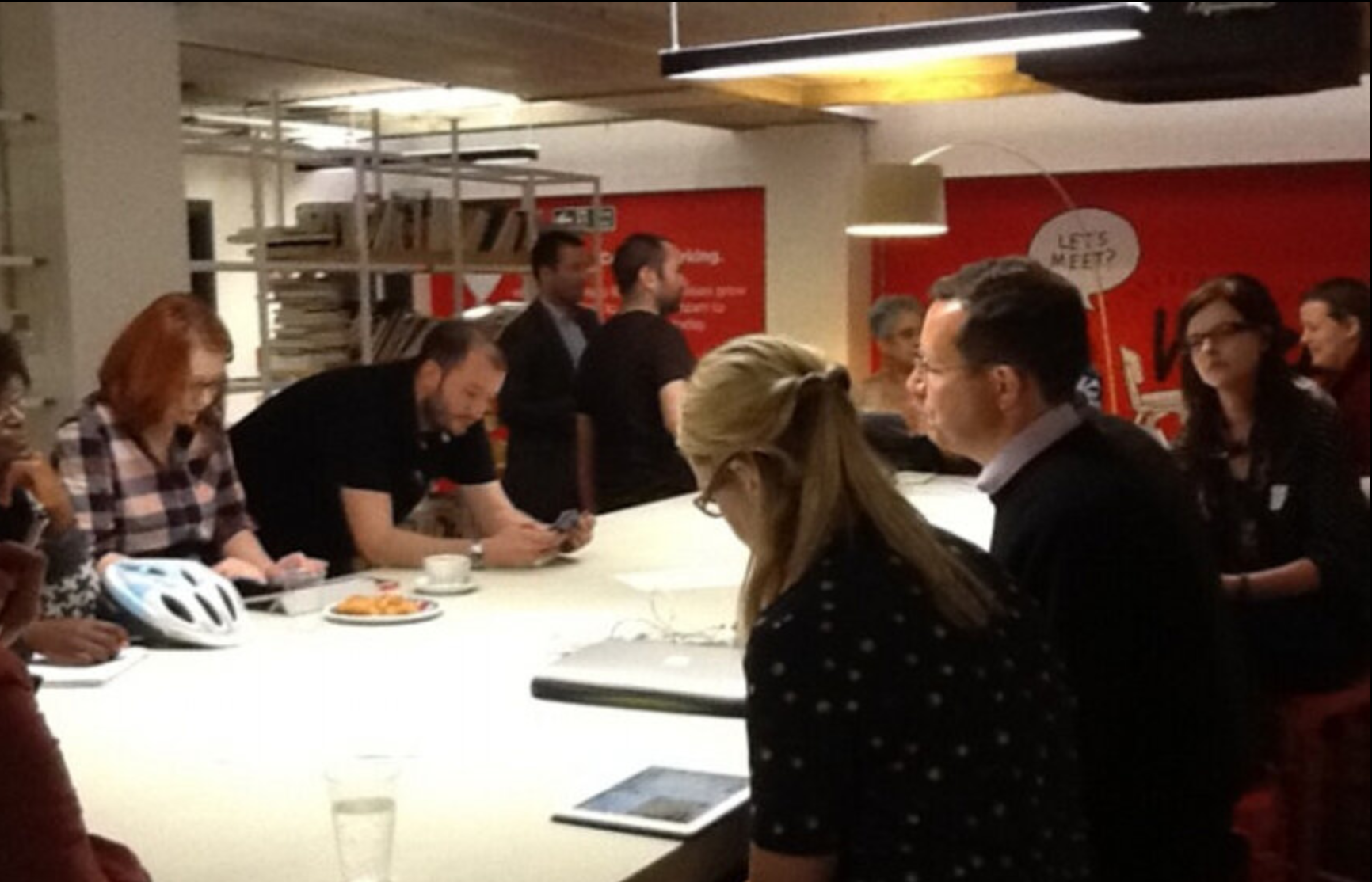
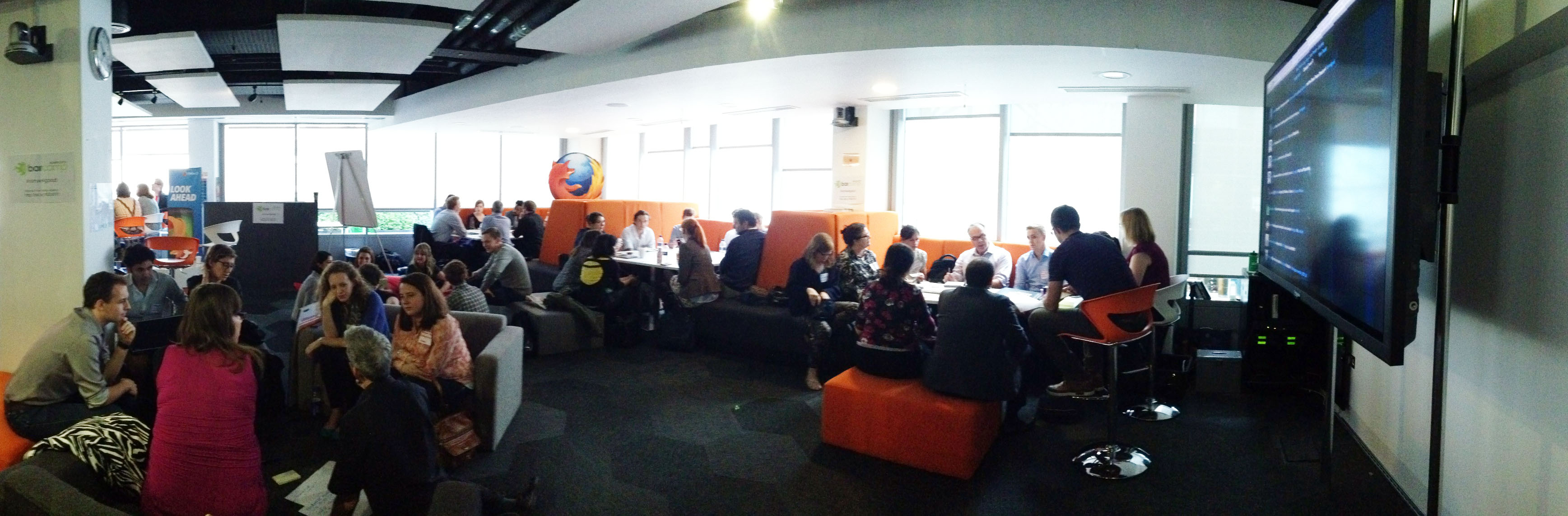
This week we held a barcampnfp workshop as part of Social Media Week. A group of around 50 people from across the non-profit sector and digital industry came together to work out the next big things for doing good using social media.

We came up with a ton of good, bad and ugly examples of social for good campaigns. I particularly remember this campaign by Refuge which featured a beauty blogger highlighting domestic abuse and the Trial by timeline example from Amnesty.

Moving on from the shared inspiration we started to hive mind ideas for how to achieve real world impact using social media – putting aside any silos that might currently exist. Naturally, we could have carried on for much longer… but here’s a few of the things we came up with.

Plus here’s a storify of the day.

augmented reality summit – summary

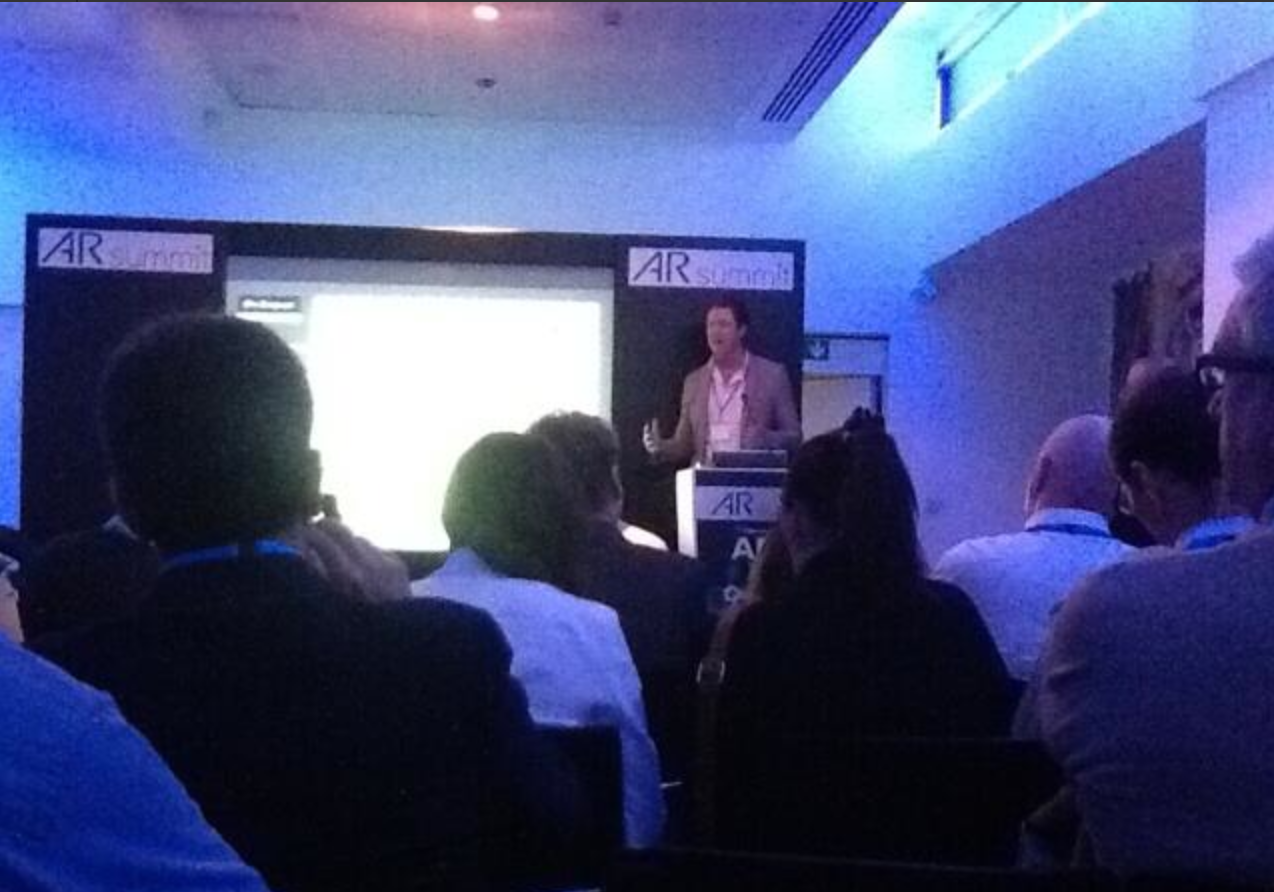
AR Summit 2013This thursday I attended the Augmented Reality Summit, its been going for a few years but this was my first. Here’s a quick summary of my key take aways.

General trend

  • AR has grown from a niche techie interest to something that is viable for consumers in the last year.
  • There is ongoing convergence of wearable technology and AR. Oculus rift and Smart glasses being the obvious examples.
  • Google glass is being viewed as a conversation starter to get the key issues, like privacy, worked through quickly. Smart glasses have been around for a while.
  • QR codes are mostly outdated already as markers – image recognition is widely possible. I’ve never been a fan of QR.
  • AR and future mobile devices have the potential to disrupt the games console market by being just as powerful.
  • The key challenges:
    • battery power; use runs down your battery quickly, but the industry is working on processors and software to help.
    • GPS accuracy
    • interoperability; there’s no standards yet!
    • quality content.

Tips

  • Lighting; accuracy can be affected by light variation but you can always use the flash on a phone to help.
  • Markers; picking a strong image is critical in avoiding temperamental ‘pick-up’ in the AR reading.
  • Apps; custom apps exist at the moment because the off-the-shelf ones give limited interactivity and content options.
  • Aurasma; is relatively widespread in its adoption and has cheap / free options for creating AR triggers. Blippar and Zappar (and others) are yet to offer this.

Case studies

And here’s a tweet summary of the AR Summit in storify.

marketing bootcamp – tough love for leaders

Last week was the first Marketing Academy bootcamp…

What is a marketing bootcamp?

I was lucky enough to be selected from around 600 applicants as one of 30 Marketing Academy scholars. The selection process was rigorous; written application, employer endorsement, showcase piece, telephone interview, four psychometric tests and a panel interview!

There are three bootcamps in the 12 month scholarship. The other elements of the scholarship are mentor meets, lunch and learns, faculty days and coaching.

The bootcamps are two or three intensive days of active learning with all scholars in attendance. This first one was mostly led by @thelivingleader but we also heard from @gailgallie@olibarrett and @petermarkey.

What did I learn?

Lots and lots and lots. Here’s a few of the easy to share bits:

  • Leadership: A real leader is one that develops other leaders. Authenticity is key.
  • Communication: Giving info isn’t the main leadership communication style; other key ones are seeking clarification, supporting, building.
  • Networking: Don’t ask what someone does – find out about them as a person first. You can spot something useful to share by email later.
  • Personal development: Focus on what you want to grow, if you focus on the negatives they will grow.
  • Your vision: If you vocalise your ambitions as if they were already true – it makes them easier to achieve.
  • Confidence: You can’t control how people feel, only how you treat them. So focus on what you give, not what you get.
  • Pull and push: When leading there are times to push, and there’s a moment to switch to pull. If you keep pushing results will diminish.

It’s going to be an amazing year of learning – I’ll try to share it with you along the way.

the future of digital jobs

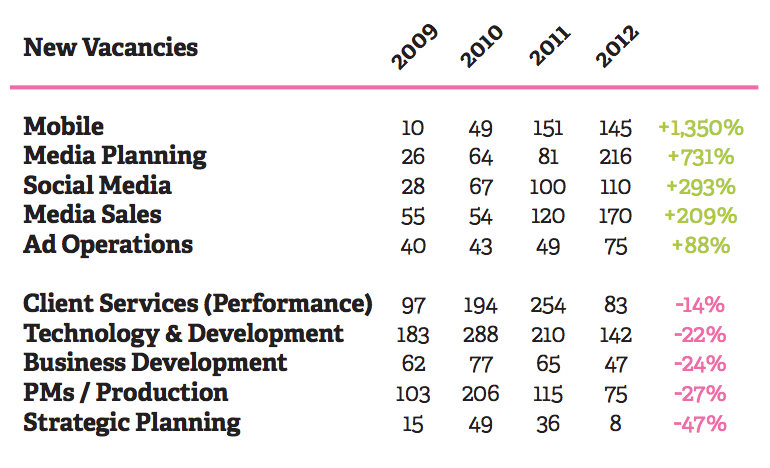
chart courtesy of Propel LondonDiscussing digital transformation often ends with the inevitable question… what happens to the digital roles (your job!) when the transformation is finished?

I’ve written about whether digital team’s will continue to exist before so I won’t go into detail again. But recently I spotted this salary benchmarking report by Propel which I thought gives some useful insights.

I particularly like the chart about new vacancies by role type. What this data makes me think is:

  • there’s more growth in digital marketing roles than ‘back office’ tech and services.
  • specific digital strategy roles are perhaps being subsumed into overall strategy roles.
  • technology is more consumerised and development is getting slightly ‘easier’ to do and project manage with less-specialist roles.

What does it make you think?

practical mobile tips for non-profits and charities

I was one of the keynote speakers at Media Trust’s Go Mobile conference this week, a few people have asked for my slides and notes so here they are…

Notes:

Mobile is here

You have to think mobile for all of the experiences you are designing. It’s not going away and it’s not ‘on the horizon’, its well and truly here.

But it’s still evolving

Mobile compatibility is still not entirely standardised, it’s a bit like the www in the 90’s. Adoption of different devices is also changing rapidly. For example, in just the last year the UNICEF UK website has seen a big growth in iPad that has caught it up with iPhones, we also saw Google Nexus 7 appear as well as others.

Case: UNICEF UK Mobile Website

To make sure we had a mobile compatible site as quickly as possible we launched an interim mobile website of just a few key pages and the donation funnel. We’re working on optimising the whole of the site. To keep costs lower and give us increased technology flexibility we’re using separate ‘layers of tech’ to do the transformation rather than having a fully responsive site (for now).

Case: UNICEF Sweden website

Our UNICEF Sweden office, on the other hand, have created a fully responsive website. They were on the brink of a full website rebuild so it made sense to invest now and go ‘mobile first’. The site is designed for smartphones first and PC desktops last. They had to make some hard decisions on how to streamline content.

Forget about ‘mobile’

It’s easy to get obsessed about mobile devices, really what this change means is a change of behaviours. Remember behaviour first when you are designing user experiences. People are now using multiple devices, we don’t live in single screen households.

Time of day

This graph demonstrates a clear difference in behaviour that mobile has created. UNICEF UK non-mobile traffic peaks during working hours while traffic from mobile devices is consistent throughout the day, even into the early hours. This pattern is important when you think about how people are interacting with your brand.

Case: UNICEF UK Speak Up for Children

I’ve learnt the behaviour lesson. We (with an amazing group of partners) did a brilliant mobile campaign called Speak Up for Children, it was a great success in the end, but we failed at first. The original concept was to create the biggest voice petition in the world. It seemed to make sense that a mobile campaign should use the voice feature of your mobile phone.

We quickly learned that very few people wanted to interact this way, it was just a bit too intrusive / embarrassing. So we paused the campaign and replaced the petition with a simple email address entry field.

Case: Syria Emergency

We also know that SMS giving is really effective. It enables the immediate emotional response of a supporter who wants to help, it also gets funds for emergencies quickly. We even include the SMS giving number in search adword campaigns. You should be prepared for SMS giving no matter what charity you are.

Apps are hard

Finding a concept that works as an app is hard. UNICEF offices around the world have tried and success has been limited. You need an app that fits with an individual’s life, if you wouldn’t download it – don’t build it.

When I worked at the British Heart Foundation we created a recipe finder app, it worked because it was something people could use repeatedly and it fitted with our brand.

Email is important

Increasingly, email is consumed on mobile. If you have an email marketing programme or email newsletter it should be compatible with mobile now. Even if you have to create plain text emails, it’s better than emails that don’t work on a mobile.

It can be easy (sort of)

If you have very limited resources it can be very difficult to go mobile. But there are lots of platforms which are now mobile compatible which you could design your experience around. For example; using twitter, facebook and justgiving could give you a campaign experience which is mobile compatible without you needing to convert your own website for a bit longer.

And that was it!

15 mins really isn’t very long to talk about mobile. I didn’t even touch on UNICEF use of mobile in the field, there’s a bit about that in this innovation presentation.

The night before barcampnfp

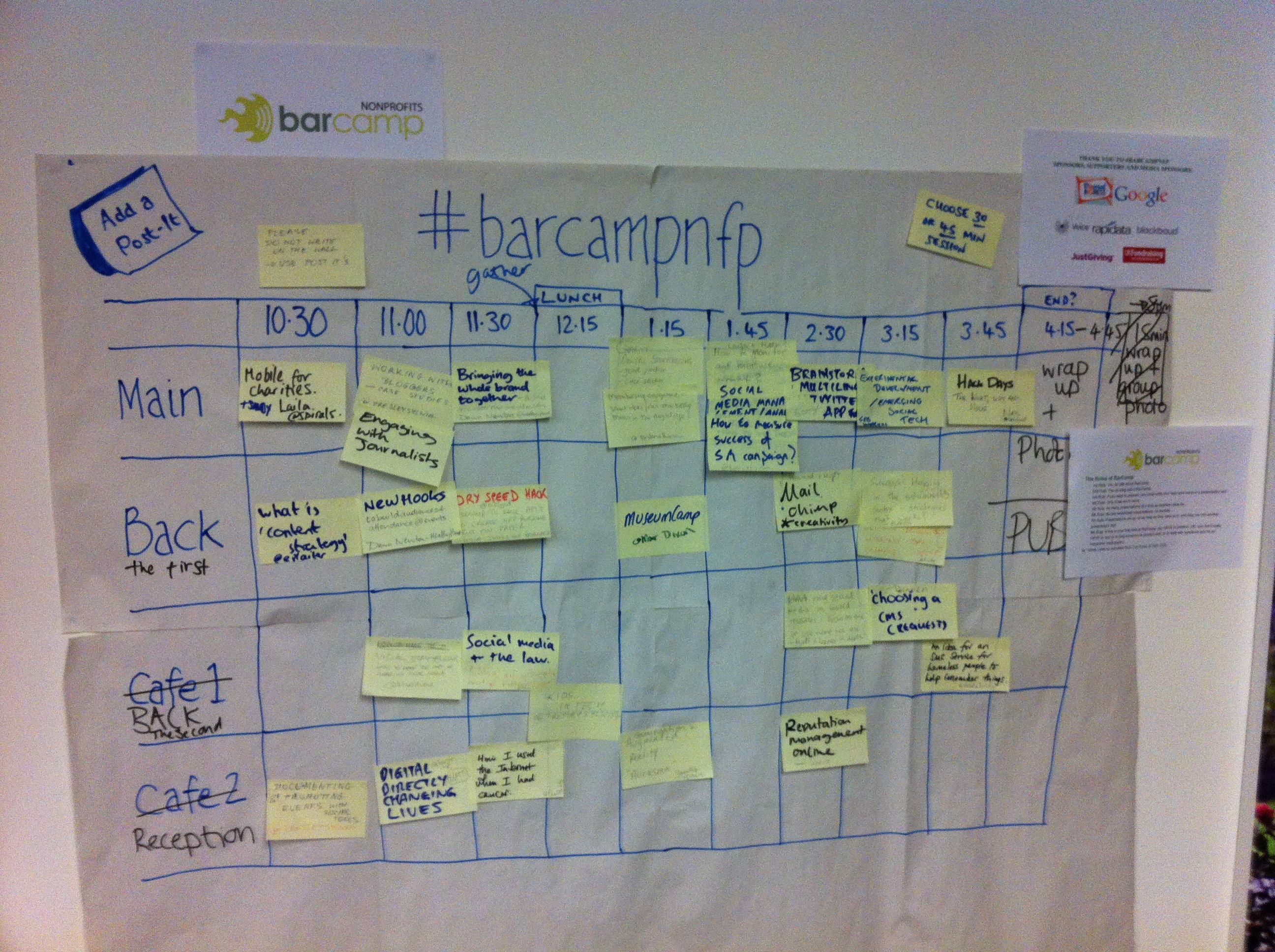
barcampnfp Oct 2012I’ve been involved in barcampnfp for about a year and a half now, once as a helper and twice as the London lead organiser. Every time I learn something new, or more accurately, lots of new things.

There’s something special about an unconference format which means you learn something every time no matter whether you’re a newbie or old hand. Often it’s something I didn’t even know I wasn’t aware of. That’s why I’m really excited about tomorrow, not for what I know is going to happen but what I don’t know.

We’ve got some brilliant people on the participants list and lots of plotting of ideas for sessions already happening on the hashtag.

Watch this space #barcampnfp and hopefully our live notes will work too: bit.ly/bcnfpnotes

what’s in a hashtag?

This week I talked at #gagldn about the UNICEF #sahelNOW campaign we did earlier this year. It was an intense period where we worked hard to ‘do the basics brilliantly’ and break the media quietness around the emerging crisis in West Africa. Here’s the slides. Happy to answer questions, drop me a comment!

p.s. we all agreed you can’t do a campaign just based on a hashtag!

barcamp non-profits october 2012

Last week was the second London Barcampnfp. As one of the co-organisers I don’t want to say too much as a few of our lovely participants have already done a much better job than I would:

[I’ll keep adding to this list as new posts appear]

My key take-out is; get the right people together and wonderful ideas are inevitable. But we need even more people, including more non-charity people as well next time!

So please spread the word, February 2013 here we come…