digital transformation KPIs: myths and meaning

This week I spoke at the NCVO Trustee conference in a session on digital transformation, with my particular bit being on the practical angle of measurement. It was a great session with talks from Megan Griffith GrayPatrick Nash and Kay Boycott highlighting the need to view digital transformation not as a subset of Comms, and not as “Digital”, but instead as Service Transformation.

My favourite bits included when Kay challenged the audience of Trustees to educate themselves and stop dismissing digital strategy as something they can delegate purely to junior staff. Seeing Patrick highlight the proven 70% – 80% savings possible in using technology to support delivery of services also made it to my highlights.

When it came to talking about Key Performance Indicators (KPIs), we asked the audience of around 40 to raise their hand if they were exposed to their digital KPIs as trustees. Sadly an awkward absence of raised hands followed. It’s not often I’m left that speechless…

Moving quickly on, I spoke on a few myths and meaningful factors to be aware of. Here’s the top-line points:

Myths

  • Big numbers matter
    • In their own right big numbers are misleading, having lots of traffic or social media followers means nothing if people are not actively engaging and doing things that contribute to your charity goals.
  • Improved results are always good
    • Seasonality and external environmental factors could be causing peaks which have nothing to do with any actions your charity has taken. While this improvement might be beneficial, it isn’t always an indicator you’re doing more things right.
  • Digital needs its own KPIs
    • Everyone owns the performance, not just the digital team. Equally digital should be woven through all you do as we live in a country where digital is embedded in our lives. Measures should no longer sit in a silo and be the interest of the few ‘experts’.

Meaning

  • Outcome driven
    • Start with understanding your audiences and what will genuinely impact them and your related charity goals. Measures like ‘opportunities to see’, ‘page views’ and ‘impressions’ mean nothing unless you can prove impact within or for your target audiences and mission.
  • People and culture
    • Building capabilities within your team is critical, you can’t assume younger workforces automatically have workplace appropriate digital skills. Taking a phone call personally doesn’t directly translate to what works professionally, this is the same with digital skills. Baselining and monitoring skills and personal development is key to encouraging and supporting digital transformation.
  • Shifts
    • What you really need to pay attention to is shifts, and aim to track this over time. Benchmarking your results and spend against the external environment will help you understand performance and whether you might be lagging behind. Using stats like the Ofcom Communications Market Reports can help define whether you should be investing in other areas based on consumer behaviour.

The session ended with a quick Q&A which exposed enthusiasm but a shared concern about getting the right help and resources. Personally I feel its too easy to use these challenges as excuses to brush aside change as unobtainable, but I’m hopeful this room of Trustee’s will start to change things.
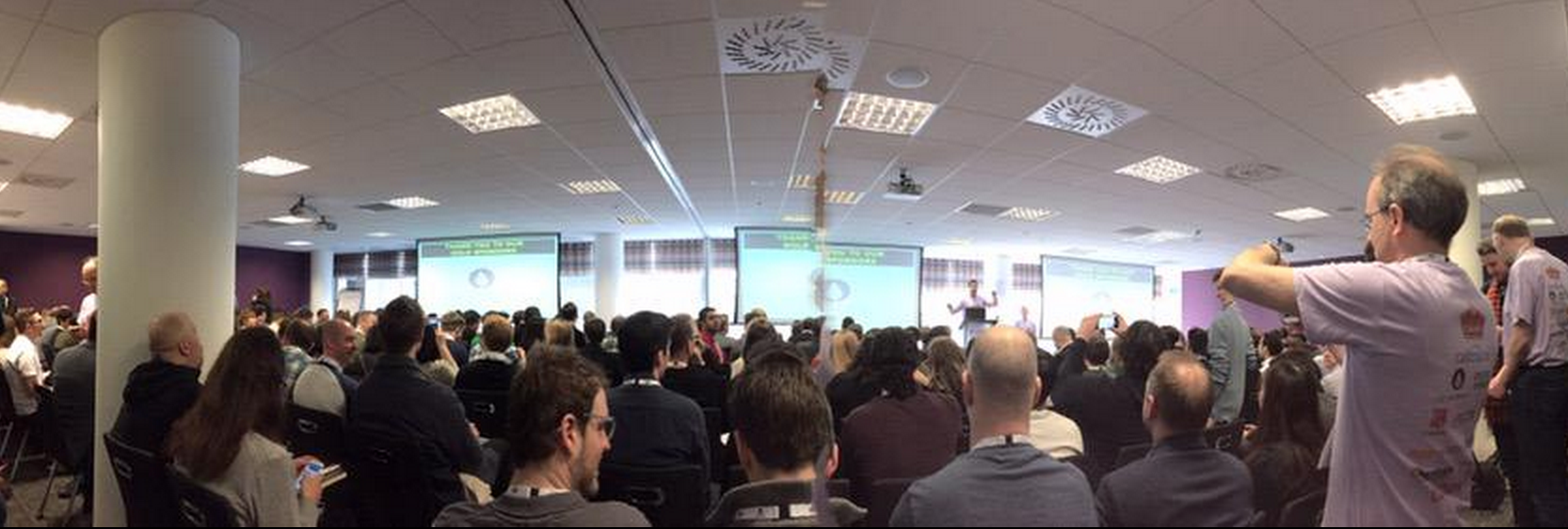
digital analytics reminders from measurecamp

MeasurecampThis weekend I spent Saturday immersed in data and analytics at Measurecamp. I love a good unconference and this definitely is up there, brilliantly organised and lots of brain stretch, and of course I can’t not mention the free t-shirt and laser pointer.

I’m a complete advocate and enthusiast about the power of data and testing. So much so I made the business case, won the budget, and recruited a digital analyst in all of my last three workplaces. Plus an analyst role is on the cards for my current team at Raising IT too.

There’s a huge amount of material generated from the event that I won’t try to replicate here. But I thought what might be useful is a few of the top-line reminders I took away:

  • Testing has lots of trip ups and myths.
    • For long purchase / supporter journeys they may have made their mind up before you even started your test.
    • It’s possible to test a gazillion things, but really you should only test the things you can actively influence and change.
    • You shouldn’t necessarily use all the results to judge a test, any ‘whales’ (outliers) should be removed to avoid skewing the conclusion.
    • Traditional models assume the environment hasn’t changed. You need an agile analytics approach where there is change to factor in.
  • Tools for digital analysis have converged to greater or lesser extent.
    • Google analytics is very powerful these days and what most people are using. I heard only a mere mention of a couple of other providers throughout the day.
    • Tracking inbound phone call sources can be made easier through Twilio or Calltracks (and probably others).
  • Integrating tracking in your CMS is still a bit technical and time-consuming.
    • There’s so many intricacies with integrating analytics correctly that it kept coming up again and again. A few of the people I spoke to were frustrated that they spent more of their time on implementation of tracking than the analysis of the data.
  • Key performance indicators need buy-in,actual evidence is not enough.
    • You should only publish clear actionable results that people are actively bought into viewing.  This take out reminded me of test I did while at one of my organisations. They insisted we printed the whole of the monthly web stats and display them on the notice board … it took a whole three months before anyone returned the ‘claim a prize if you spot this’ slip!
  • Attribution models still need expert judgement.
    • Last click / first click / weighted or something else, you still need to make a judgement as there’s no clear-cut way to decide what’s best for your activity. Try it and shape it through use.

barcampnfp 2014

Notes

Blogs

Mixed media

Pics


What’s this all about?

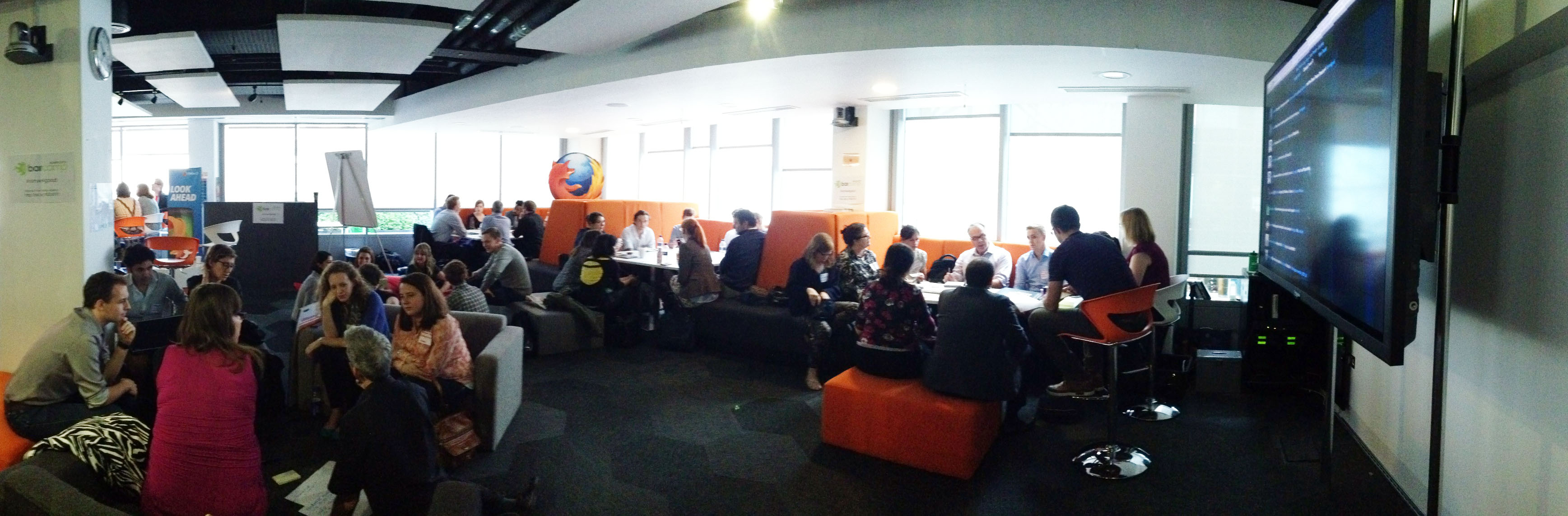
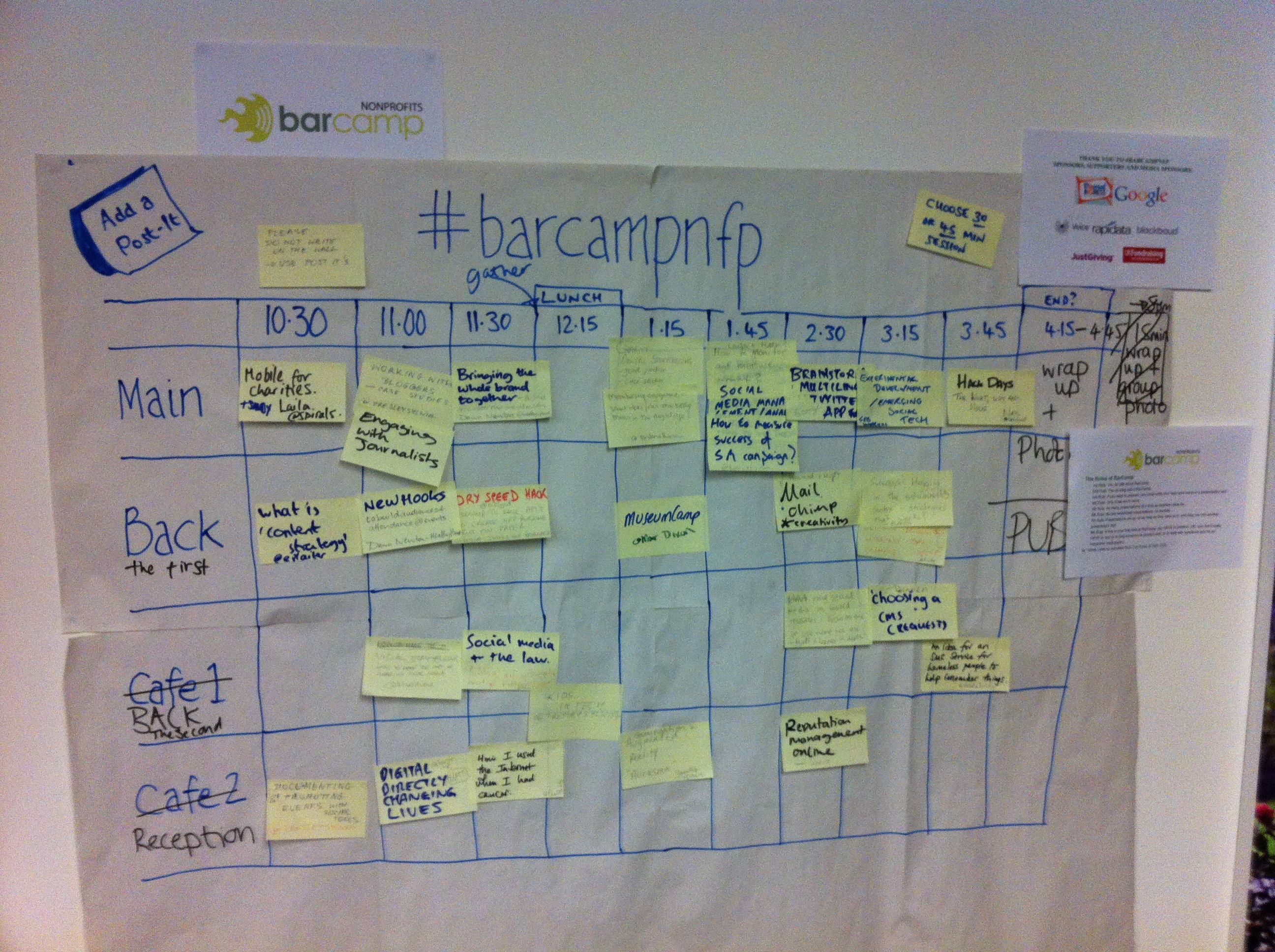
Barcampnfp is an ‘unconference’ where people from Tech & Digital come together with people from Non-profits (charity, academic, gov, arts & culture etc) to exchange ideas and learning. I’ve been the London lead for a number of years now.

This year’s full day event it took place at The Bakery on Thursday 20 March 2014 and we usually have a half day event during Social Media Week in September.


the difference of thinking in platforms

Mozfest_10Nov_018A little while ago I was lucky enough to attend my first, but hopefully not last, Mozfest. I didn’t entirely know what to expect apart from lots of ‘open web’ information and ideas. The timetable wasn’t released until the day before and it was live updated through the entire weekend. It was a great mix of structured and unconference.

I got practical tasters of lots of topics including making your first web app, creating your own maps, and hacking a mobile html5 game.

Quite a bit of my time was spent working with a team assembled on the first day on a project to simplify mobile giving. I won’t describe the final output as there’s a great blog post about Pass the App here. What I wanted to share is the striking difference it made by considering the problem from a platform perspective.

Thinking from a platform perspective really focuses you on the purpose and key features you need. A platform isn’t (primarily) a perfectly designed end consumer product in itself – it’s a tool that others can use to build their own version of something. This gives you an objectivity that quite often gets lost in projects where you’re building the finished public facing website or app.

I found focusing on empowering others through a platform is hugely empowering in itself!


As an aside: I also spoke to SourceFabric about why I was at Mozfest from UNICEF UK. Excuse the Ummms.

social media week – barcampnfp workshop

SMW barcampnfp 2013

This week we held a barcampnfp workshop as part of Social Media Week. A group of around 50 people from across the non-profit sector and digital industry came together to work out the next big things for doing good using social media.

We came up with a ton of good, bad and ugly examples of social for good campaigns. I particularly remember this campaign by Refuge which featured a beauty blogger highlighting domestic abuse and the Trial by timeline example from Amnesty.

Moving on from the shared inspiration we started to hive mind ideas for how to achieve real world impact using social media – putting aside any silos that might currently exist. Naturally, we could have carried on for much longer… but here’s a few of the things we came up with.

Plus here’s a storify of the day.

UNICEF UK mobile and digital talk at Institute of Fundraising convention

I spoke at the IOF National Convention today. If you missed it and are interested – here’s the slides and there’s also a storify one of the audience put together. Note: I’m not responsible for typos in the storify 😉

augmented reality summit – summary

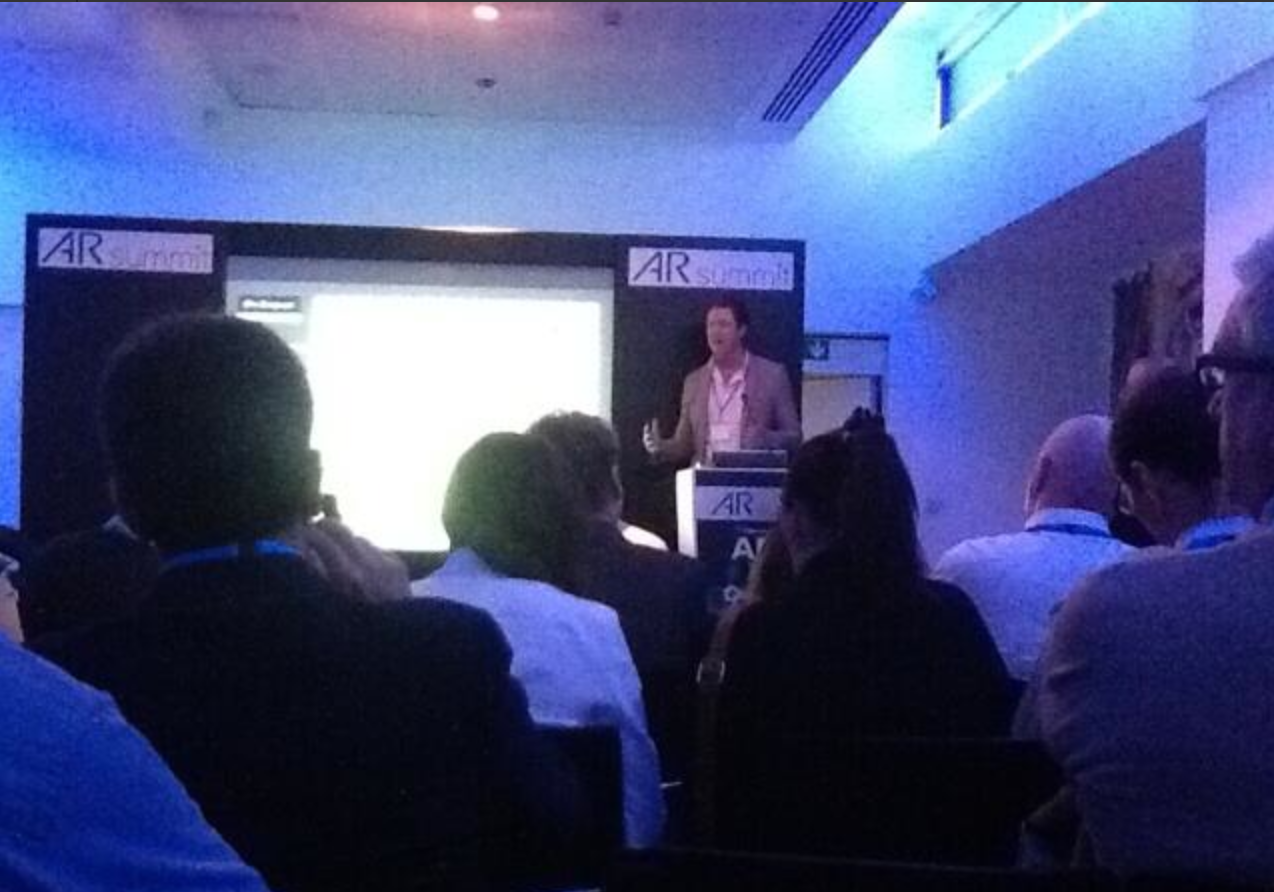
AR Summit 2013This thursday I attended the Augmented Reality Summit, its been going for a few years but this was my first. Here’s a quick summary of my key take aways.

General trend

  • AR has grown from a niche techie interest to something that is viable for consumers in the last year.
  • There is ongoing convergence of wearable technology and AR. Oculus rift and Smart glasses being the obvious examples.
  • Google glass is being viewed as a conversation starter to get the key issues, like privacy, worked through quickly. Smart glasses have been around for a while.
  • QR codes are mostly outdated already as markers – image recognition is widely possible. I’ve never been a fan of QR.
  • AR and future mobile devices have the potential to disrupt the games console market by being just as powerful.
  • The key challenges:
    • battery power; use runs down your battery quickly, but the industry is working on processors and software to help.
    • GPS accuracy
    • interoperability; there’s no standards yet!
    • quality content.

Tips

  • Lighting; accuracy can be affected by light variation but you can always use the flash on a phone to help.
  • Markers; picking a strong image is critical in avoiding temperamental ‘pick-up’ in the AR reading.
  • Apps; custom apps exist at the moment because the off-the-shelf ones give limited interactivity and content options.
  • Aurasma; is relatively widespread in its adoption and has cheap / free options for creating AR triggers. Blippar and Zappar (and others) are yet to offer this.

Case studies

And here’s a tweet summary of the AR Summit in storify.

The night before barcampnfp

barcampnfp Oct 2012I’ve been involved in barcampnfp for about a year and a half now, once as a helper and twice as the London lead organiser. Every time I learn something new, or more accurately, lots of new things.

There’s something special about an unconference format which means you learn something every time no matter whether you’re a newbie or old hand. Often it’s something I didn’t even know I wasn’t aware of. That’s why I’m really excited about tomorrow, not for what I know is going to happen but what I don’t know.

We’ve got some brilliant people on the participants list and lots of plotting of ideas for sessions already happening on the hashtag.

Watch this space #barcampnfp and hopefully our live notes will work too: bit.ly/bcnfpnotes

what’s in a hashtag?

This week I talked at #gagldn about the UNICEF #sahelNOW campaign we did earlier this year. It was an intense period where we worked hard to ‘do the basics brilliantly’ and break the media quietness around the emerging crisis in West Africa. Here’s the slides. Happy to answer questions, drop me a comment!

p.s. we all agreed you can’t do a campaign just based on a hashtag!

barcamp non-profits october 2012

Last week was the second London Barcampnfp. As one of the co-organisers I don’t want to say too much as a few of our lovely participants have already done a much better job than I would:

[I’ll keep adding to this list as new posts appear]

My key take-out is; get the right people together and wonderful ideas are inevitable. But we need even more people, including more non-charity people as well next time!

So please spread the word, February 2013 here we come…