digital capabilities and attitudes by age and region

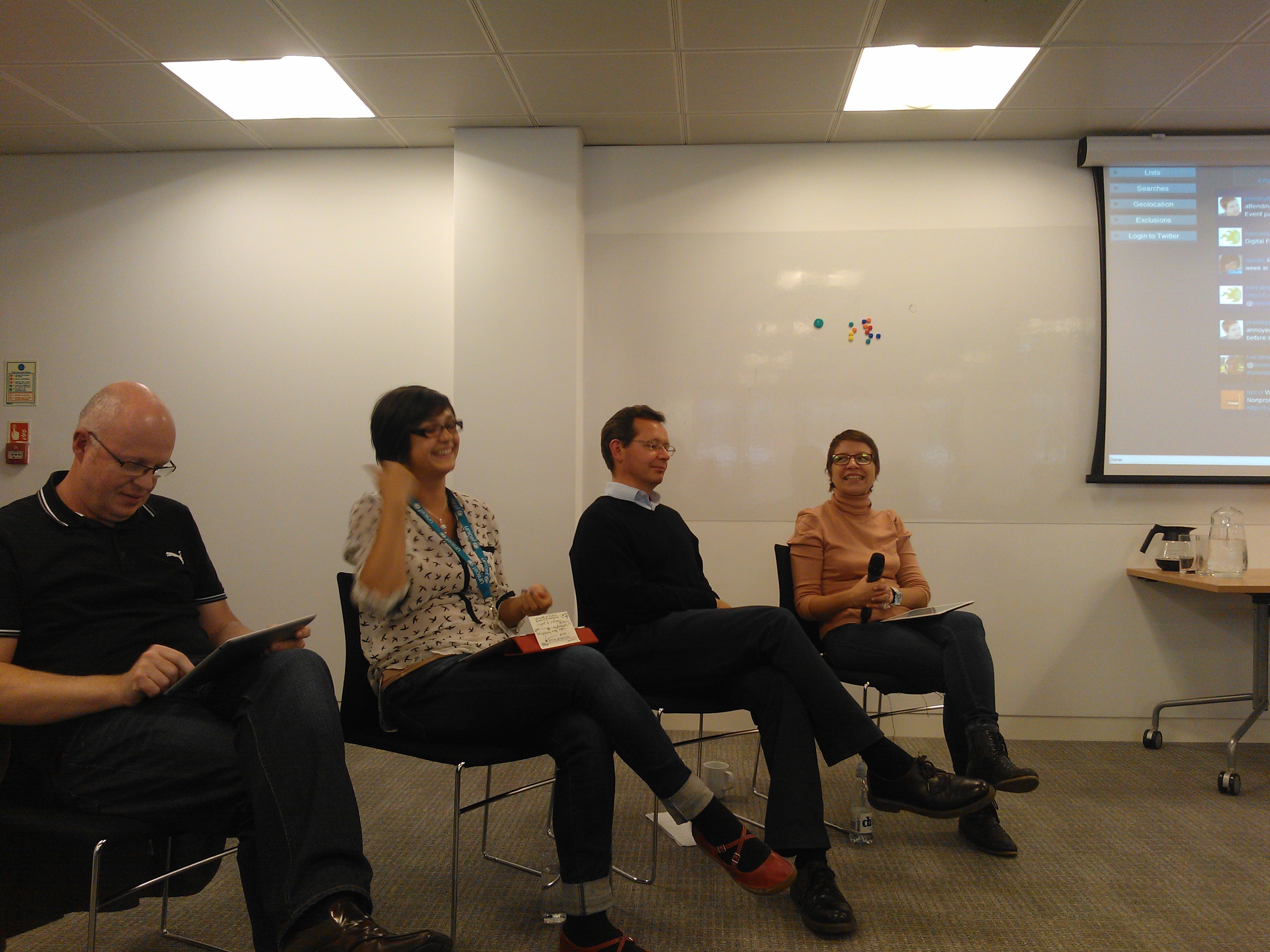
This week I attended the launch of Lloyds Bank Consumer Digital Index. There are some fascinating findings related to financial capability and its link to digital skills. But the two things that stood out as more broadly useful were prompted by questions from the audience:

What are we doing to improve digital capabilities across the UK?

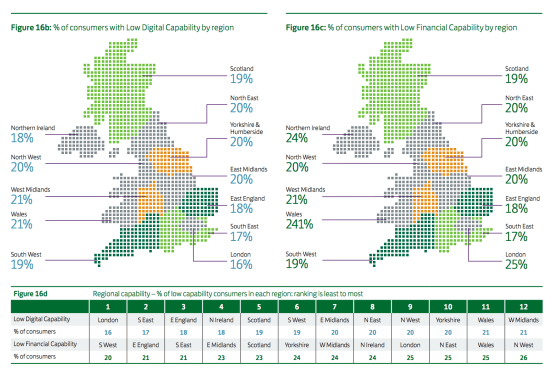
I’ve always been conscious of regional variances in digital capability but the study data appears show that’s its not a major issue anymore. Instead we have to dig deeper into the factors involved in creating inclusive digital services. Poor user experiences and communications were two of the areas flagged by Martha Lane Fox and the other panel members as barriers to digital skill adoption.

Regional digital skills and financial skills: LBG Consumer Digital Index

What are we doing to enable older generation to access digital services?

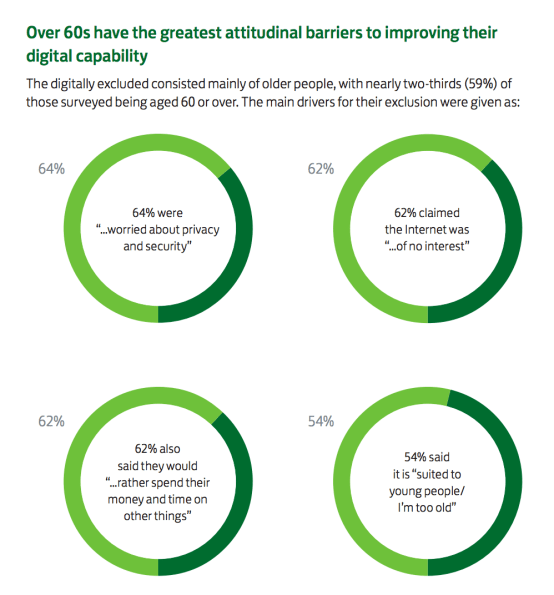
This was a little more contentious as the panel called for a focus on those that will engage rather than sinking time into those that will never engage within their lifetime. The panel were driven by the finding that there are hard to move negative views among non-adopters such as some over 60s. With digitally excluded groups a more effective approach suggested is to work with the network of individuals around them to provide indirect access to digital services.

Attitudes to digital amongst over 60s: LBG Consumer Digital Index


the tension between brand and digital

Post it sorting at Mozilla with UNICEF UK volunteersThere’s been many debates over the impact of digital on brand and reputation. Only recently, it cropped up in a few different ways during a workshop I was involved with organising. Given this, I thought it was time to pull together some thoughts on the theme.

To give a bit of context; the workshop involved a diverse group of UNICEF UK fundraising volunteers playing around with a new Mozilla product. Appmaker helps almost anyone build a mobile web app. It’s still in an experimental phase but already quite progressed compared to the version I helped shape at mozfest last year.

Brand Vs digital

When this issue crops up its still typically presented as opposites. But like most things I’m not sure its helpful to see this as an argument with ‘sides’. This introduces a sense of competition rather than partnership or evolution.

In the workshop this sense of opposition was clear in most of the concerns raised, for example ‘what about your brand if volunteers are creating apps without your involvement?’.

Here’s a break down of the underlying tensions that crop up regularly and the real world factors as I see them.

Look and feel

What: The sense that anything not created by the brand owner is going to be poor quality or inconsistent and that this will damage the organisation.

My perspective:

Most “average joe’s” spend less time looking at your stuff than you do. Anything more than a minor problem is likely to be spotted quite quickly by today’s savvy consumer so the risks here are contained.

The democratisation of technology also means its easier to support non-designers to create reasonably consistent and good quality material if you put the right toolkit in place. If you don’t proactively put a toolkit out there you have to expect more variation and ‘dodgy design’ as people enthusiastically work out ways to hack it for themselves.

Sometimes a person outside the organisation can be more authentic and creative, and therefore more effective. Rather than spending hours trying to include authentic voices, empowering others means you’ve already done that legwork and created a sustainable model.

Open to abuse or untruths

What: The sense that people will use their new power to create an authentic looking app or other digital material to say or do something that’s not right, either on purpose or accidentally. Common concerns are that users will say something on behalf of a brand that isn’t true or funnel money or data into the wrong place.

My perspective:

This is definitely a risk, but its a risk that has always existed. Anyone could knock on a door and claim to be from a particular organisation by brandishing a printed leaflet. Educating consumers has always been a need. Today’s technology may have magnified the problem in some ways but it can also be a part of the solution.

Digital tools can provide ways to ‘lock-down’ elements of the setup so they can’t be tinkered with. Additionally there might be some sort of notification that gets sent to an organisation when certain actions take place meaning there’s a transparent audit trail.  An example with Appmaker is that UNICEF UK could possibly create a default ‘donate’ component that links directly to UNICEF’s secure payments and database.

There are also ways that digital can help to authenticate individual users are who they say they are. For example with Appmaker we could possibly create an electronic badge system where the unique badge can only be earned by genuine fundraising volunteers who have been in touch.

Finally, if there’s anything suspicious the thing about digital is that the genuine website and contact points for the brand are just a click away. As I said earlier, consumers are savvy, it’s fairly frequent that we get emails and tweets @unicef_uk checking if something is really authentic.

Aligning priorities and messages

What: The sense that you can’t keep control over key messages and timings if you’ve empowered others to act on your behalf and tailor their material/s for their own community.

My perspective:

If any of these concerns gets me the most riled up it’s this one. By consciously losing a little bit of control you gain the ultimate benefit that marketing seeks; you become a more integrated part of people’s lives. By being malleable to the interests of users you become more relevant and interesting to them personally.

Not forgetting that you continue to control the primary digital channels for your brand and can communicate the priorities to anyone who you’ve empowered. You might also reserve a place in your digital toolkit that will automatically update from central messages.

There’s not many (any?) moral ways you can control conversations or minds so this risk has always been an aspect of marketing.

Do you need designers and brand managers?

Don’t get me wrong, all of this doesn’t mean you can do away with designers or brand specialists. They can create the toolkit, focus on the big picture and keep pushing forward with more cutting edge work. They have a powerful role in making an ecosystem of digital empowerment real.

Digital can magnify the impact of designers and brand managers which is why it befuddles me that this topic still comes up in the language of arguments.
social media week – barcampnfp workshop

SMW barcampnfp 2013

This week we held a barcampnfp workshop as part of Social Media Week. A group of around 50 people from across the non-profit sector and digital industry came together to work out the next big things for doing good using social media.

We came up with a ton of good, bad and ugly examples of social for good campaigns. I particularly remember this campaign by Refuge which featured a beauty blogger highlighting domestic abuse and the Trial by timeline example from Amnesty.

Moving on from the shared inspiration we started to hive mind ideas for how to achieve real world impact using social media – putting aside any silos that might currently exist. Naturally, we could have carried on for much longer… but here’s a few of the things we came up with.

Plus here’s a storify of the day.

UNICEF UK mobile and digital talk at Institute of Fundraising convention

I spoke at the IOF National Convention today. If you missed it and are interested – here’s the slides and there’s also a storify one of the audience put together. Note: I’m not responsible for typos in the storify 😉

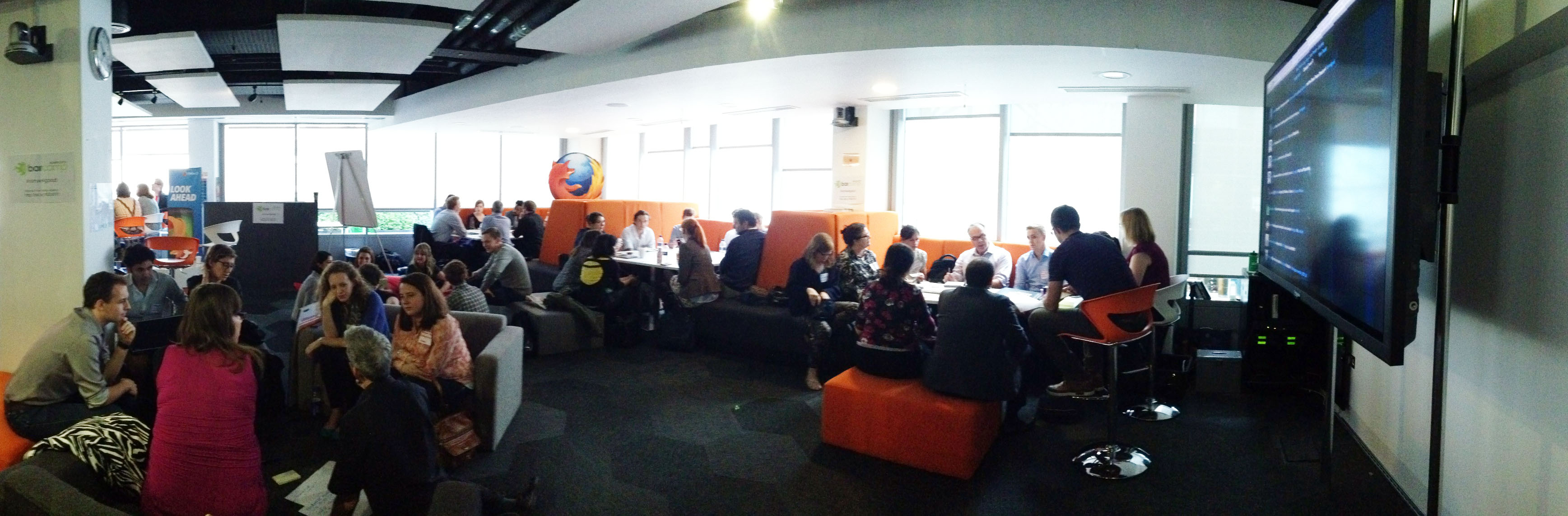
The night before barcampnfp

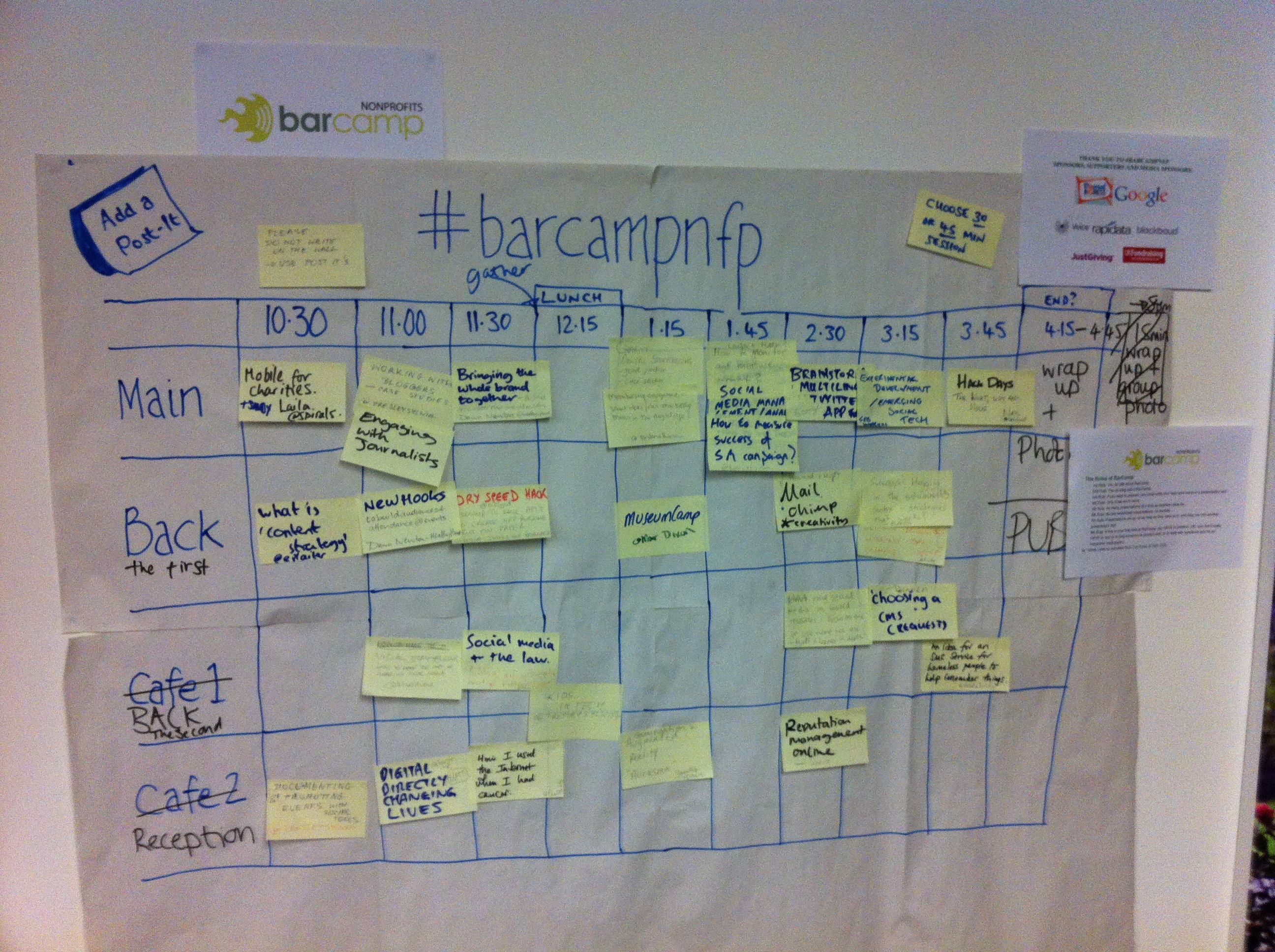
barcampnfp Oct 2012I’ve been involved in barcampnfp for about a year and a half now, once as a helper and twice as the London lead organiser. Every time I learn something new, or more accurately, lots of new things.

There’s something special about an unconference format which means you learn something every time no matter whether you’re a newbie or old hand. Often it’s something I didn’t even know I wasn’t aware of. That’s why I’m really excited about tomorrow, not for what I know is going to happen but what I don’t know.

We’ve got some brilliant people on the participants list and lots of plotting of ideas for sessions already happening on the hashtag.

Watch this space #barcampnfp and hopefully our live notes will work too: bit.ly/bcnfpnotes

disintermediation: is it really that new?

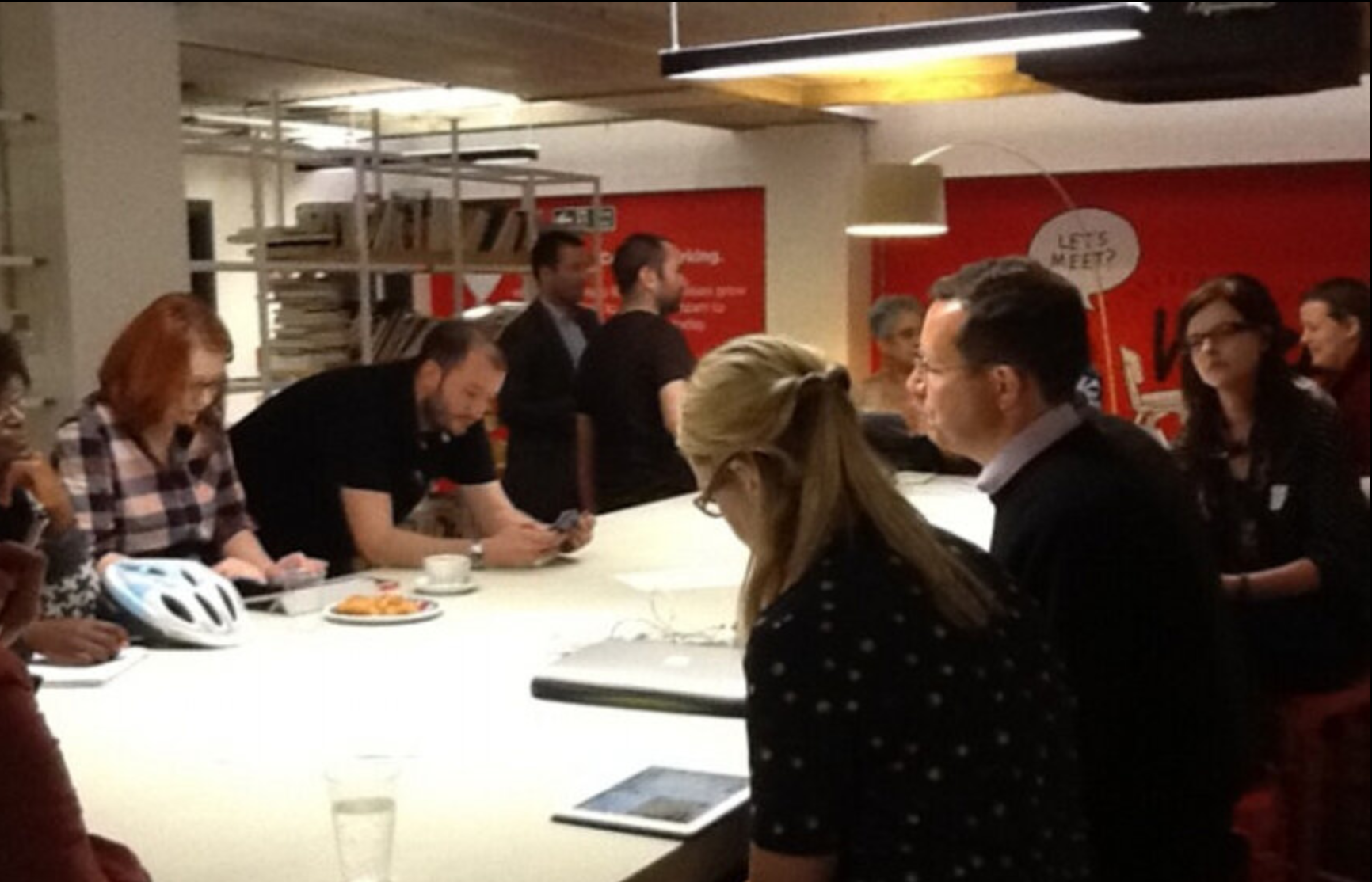
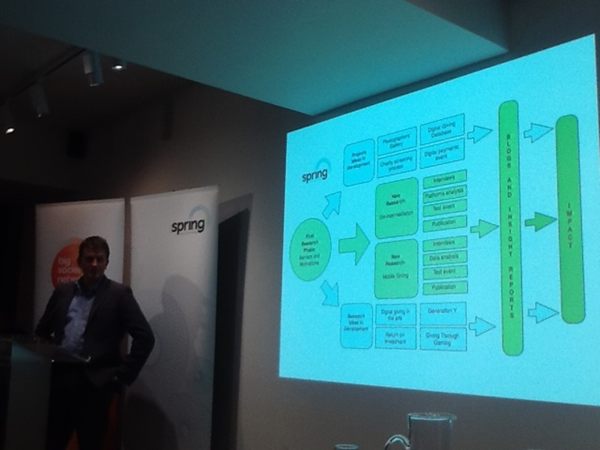
spring giving disintermediation eventThe folk at Spring-giving asked me to give a perspective on their disintermediation study. It’s not been an easy task, hence why this is appearing much later than the event.

I think that’s because I’m not sure how new it feels.

A proportion of individuals have always given directly to someone in need without needing intervention from a non-profit brand. Rewind the clock and you can see that’s how charities started (and continue to start).

Of course, technology is now a part of the journey, and that is new(ish). The convenience of crowd-funding platforms is a real enabler. Yet, that feels new mostly because we’re just in another tech adoption curve; we’ll move past the spawning of many platforms to a small set of reliable platforms that become the way to get something done.

We don’t know if disintermediation will result in more philanthropic giving than pre-internet – it just wasn’t tracked or published before. For example, I recently heard a charity praise their crowd-funding website for giving visibility of the fundraising by their local services. I’ve also pondered if the big successes in crowd-funding are simply aggregating money that would have been involved in smaller informal giving.

That’s not to say the third sector isn’t feeling a little bit unsure and perhaps even at risk due to the concept. You only need to look at the number of events and articles that have started to crop up to know that.

The perceived challenge is the fit with the way many charities currently work. Established charities have processes that help them comply with legislation, to manage reputation and brand, and to ensure investment in long-term sustainable impact as well as the short-term. All things that crowd-funding appears to handle very differently, if at all, at the moment.

But, there will always be people who just want to ‘do their bit’ without too much thought of who is handling the processing. For most, philanthropic acts are only a small part of their life. Based on the hypothesis that this has always happened and it’s just more visible now, what we’re really talking about is not a total shift in behaviours but about finding a way for both to work together better.

I think what we might need to adopt within charities is the Amazon approach; provide a user driven ‘marketplace’ alongside the brand. Provide choice transparently where the charity is facilitator. From what I’ve heard, Amazon’s business was strengthened by this rather than weakened…

what’s in a hashtag?

This week I talked at #gagldn about the UNICEF #sahelNOW campaign we did earlier this year. It was an intense period where we worked hard to ‘do the basics brilliantly’ and break the media quietness around the emerging crisis in West Africa. Here’s the slides. Happy to answer questions, drop me a comment!

p.s. we all agreed you can’t do a campaign just based on a hashtag!

barcamp non-profits october 2012

Last week was the second London Barcampnfp. As one of the co-organisers I don’t want to say too much as a few of our lovely participants have already done a much better job than I would:

[I’ll keep adding to this list as new posts appear]

My key take-out is; get the right people together and wonderful ideas are inevitable. But we need even more people, including more non-charity people as well next time!

So please spread the word, February 2013 here we come…

social media week september 2012

Panel for smwbarcampnfpLast week was Social Media Week so the team and I tried to cram in as many events in as possible to maximise the free learning opportunity. Here’s a few of the key things I thought interesting to share:

Crowd-funding (from event by good innovation)

  • It’s community fundraising by another name.
  • Funders are often motivated by return incentives (think kickstarter perks) and/or that beneficiaries know more directly who provided the funding.
  • The best results come when the community is already interested and networked.
  • Cancer Research UK ‘My Projects’ raises a higher average total per page than they do on event sponsorship pages.
  • Action for Children ‘My Action for Children’ bridges the divide between local service managers and volunteers doing fundraising and the work of the fundraising team.

Social media engagement (mostly from events by @wearelikeminds & @barcampnfp)

  • If you cover lots of topics as a brand, fragmenting your social profile might help you increase engagement if the sub-group sizes justify the separate effort needed. More focused streams can allow you to focus the tone and content more.
  • Images drive higher levels of engagement. Hopeful images particularly. But if you heavily copyright you are restricting sharing potential, look at creative commons.
  • Influence is about driving an outcome, not just the conversation. Sometimes the most effective influencers are sometimes the least expected who suddenly have a reason to comment on your brand.
  • Social media can help organisations blur the divide between staff and supporters. But you need to invest in educating the whole organisation in digital.

Data (from all over the place)

  • Lots of people lie on registration / data capture forms, and thats the ones that don’t just click away. Social logins reduce both bounce and ‘dirty data’.
  • People update their personal details on their social profiles before they update it anywhere else.
  • Some employers are using Klout / Kred scores within their recruitment processes (yes – I’m very dubious too!).

Innovation (event by @nfptweetup)

  • Innovation is not just about the ‘shiny stuff’, everyday innovation is too often overlooked and focus on purpose why you’re trying to innovate is needed.
  • If you innovate in the hardest places, it should be easy to translate and scale the successes in the easier contexts.
  • Innovation is about knocking down doors, painting yourself in creosote or couscous (you had to be there), but mostly attitude and persistence.
  • Finally… UNICEF is hugely inspiring, I am constantly in awe – see innovation preso

Finally, finally … my week was brilliantly rounded off with drinks to celebrate UNICEF UK’s top spot in the Social Charity Index. More on that another time.

digital stats – integration’s worse enemy

I love digital analytics, but the perceived concreteness can lead to some tricky situations…

Unless you’re only using one channel to showcase your brand (if you are I’m intrigued to hear why!?) your audience is almost certainly seeing you in more than one place. This creates a challenge for Google Analytics and other similar tools. While its easy to generate ‘last-touch’ reporting this doesn’t give you a true sense of why someone responded.

We talk a lot about this at work. We were quite aware during our East Africa emergency activity that integrated channels and messages perform best.

So we’ve been building up our understanding of multi-touch attribution, including using tools like Ignition One. But this doesn’t help if/when you include offline in your media mix. You still can’t fully understand what the impact of the full mix is.

The tricky situation this puts you in is particularly relevant if you’re still trying to build the business case for integrating digital. Individuals can interpret last-touch reporting in terms of ROI (return on investment) on a purely channel by channel basis. This can mean investment is skewed, and integration completely overlooked.

Unless you invest in regular market research studies I’m not sure there’s a real-time answer (until we all get micro-chipped!). So next step for us will probably be considering what ‘closest guess based on historic data’ models we can devise and use.

Where are you with your attribution models? Be great to compare notes!