the future of digital giving

This week I was one of a few charity and digital industry types at a roundtable discussion on the future of giving technology hosted by the Guardian. It’ll be written up by the Guardian as an article in mid-May but while my memory is still fresh I wanted to capture a few of my personal take-outs.

  • Technology adoption by charities:
    • Charities are behind the curve in contrast to commercial, partly due to expense of adopting the new while its less consumerised and partly because the technology expertise is missing in many charities.
    • There’s also the technology industry view that the charity sector doesn’t have a strong business case for investment (see previous post by me on Spring-giving).
  • Innovation in charity sector:
    • Some interesting models exist but often innovation comes from the ground up, but only where those ground staff are empowered to express their ideas.
    • In smaller charities the silos that stifle innovation don’t exist (mostly).
  • Giving trends:
    • There’s a question over whether digital channels are fund-catching Vs fundraising.
    • No charity wants to swap a channel which has a higher average gift for one with a lower average gift so sometimes a more convenient channel is a less effective one for the charity.
    • We need to separate the process from the reason, people don’t give because you have an SMS number they give because of the cause and key messages.
  • Some insights from experiences shared:
    • SMS giving has meant a lower average gift for certain charities, choosing ‘slumps’ as focus point for using SMS calls to action is a good mitigation.
    • Unexpected ‘social media’ response as seen with the tragic case of Claire Squires mostly demonstrate that giving is easier than it was before. They pose speed of response and decision-making challenges.


digital marketing optimisation event notes

Notes from Brand Republic event 17 April 2012

  1. Digital strategy
  2. Share
    “Digital marketing is just marketing” #dmoevent

    Tue, Apr 17 2012 04:31:14
  3. Share
    Understand people’s lives if you want to understand how your brand fits in #dmoevent

    Tue, Apr 17 2012 04:36:50
  4. Share
    We can’t treat the online world and the real world as seperate – J Gatward, Britvic #dmoevent

    Tue, Apr 17 2012 04:53:22
  5. Share
    Use 1-9-90 influence model. 1 really strong endorsers get them to influence 9 others and make those 9s feels like 1s #digitaloptimisation

    Tue, Apr 17 2012 04:46:23
  6. Share
    Once you have the 9s you probably have the 90s #digitaloptimisation

    Tue, Apr 17 2012 04:46:41
  7. Share
    Jonathan Gatward, Britvic UK: create hackable content for your brand #dmoevent

    Tue, Apr 17 2012 05:06:54
  8. Share

    I like this one a lot ‘you have to embrace complexity, it’s actual not complex anymore’ #digitaloptimisation http://twitpic.com/9atmer

    Tue, Apr 17 2012 04:57:25
  9. Share
    One of the final takeouts – don’t forget to do internal marketing as well as external. It’s important for buy-in #dmoevent

    Tue, Apr 17 2012 12:13:30
  10. Share
    “Digital marketing works. But it will never work on its own” Jacqui O’Beirne @DogsTrust #DMOevent

    Tue, Apr 17 2012 12:48:25
  11. Campaign examples
  12. Share
    With competitor as event ‘owner’ for Olympics, Britvic goal to own the legacy instead with ‘transform your patch’ #digitaloptimisation

    Tue, Apr 17 2012 04:38:00
  13. Share
    Partners needed to take digital promises into the real world #dmoevent

    Tue, Apr 17 2012 04:59:50
  14. Share
    Pepsi Super Bowl saw over half of the adverts were ‘shazamable’ with shazam tv app #digitaloptimisation cc @willlord

    Tue, Apr 17 2012 04:56:08
  15. Share
    Debenhams beta with content network audience retargeted using tracking on brand site, 1month 3k sales #dmoevent

    Tue, Apr 17 2012 05:21:11
  16. Share
    MediaCom rep in audience says ‘t in the park’ press ad with aurasma worked really well due to video rich content link #dmoevent

    Tue, Apr 17 2012 06:26:11
  17. Share
    Aurasma – results very small but can get very good PR (Debenhams experience) #dmoevent

    Tue, Apr 17 2012 06:28:14
  18.            EA campaign…
  19. Share
    Waterloo takeover by battlefield 3: 17 sites, some posters started to get stolen. That’s a great KPI!! #dmoevent

    Tue, Apr 17 2012 10:20:20
  20. Share

    Example poster from the campaign #dmoevent http://twitpic.com/9awu5g

    Tue, Apr 17 2012 10:25:53
  21. Share
    4k downloads from QR code, Wifi (90% of downloads) NFC in the 2 week campaign #dmoevent

    Tue, Apr 17 2012 10:24:06
  22. Share
    Over 9k interactions, over 900 email addresses collected from an interactive digital 6sheet display in cinemas #dmoevent

    Tue, Apr 17 2012 10:29:18
  23. Share
    Digital out of home learnings – wifi 92% of interactions and consumers still getting used to the approach #dmoevent

    Tue, Apr 17 2012 10:30:53
  24. Search – PPC & SEO
  25. Share
    86% using mobile search while watching TV, debenhams see peak for apps around 10pm. Parts of day strategy important #dmoevent

    Tue, Apr 17 2012 05:25:11
  26. Share

    Debenhams using hydra platform to integrate PPC and SEO activity, but only a week in at mo #dmoevent http://twitpic.com/9atw8o

    Tue, Apr 17 2012 05:34:28
  27. Share
    J Stephenson, Debenhams. Paid Search Mob Stgy: separate mob campaigns on tablets and mobiles for more control and better targeting #dmoevent

    Tue, Apr 17 2012 05:36:19
  28. Email
  29. Share
    When and whe emails are checked makes a big difference – optimise for this #dmoevent

    Tue, Apr 17 2012 05:48:54
  30. Share
    Progressive disclosure using CSS to include expandable areas in emails can help – works on most devices #dmoevent cc @teminamoledina

    Tue, Apr 17 2012 05:50:14
  31. Share
    Open rate significantly improved by using social info in subject line eg ‘share with your 123 friends’ #dmoevent cc @teminamoledina

    Tue, Apr 17 2012 06:02:08
  32. Share
    Optimise for snippets- gmail and outlook summary that appears before open. Use gif with alt being tagline #dmoevent

    Tue, Apr 17 2012 06:03:24
  33. Share
    Segment by most responsive and target them with a social campaign to help optimise a launch #dmoevent

    Tue, Apr 17 2012 06:04:51
  34. Share
    You can download the @BrandRepublic event slides by @marcmunier on email marketing here – ow.ly/akzAQ #dmoevent

    Tue, Apr 17 2012 07:08:51
  35. Mobile
  36. Share
    #dmoevent More mobile Internet than desktop Internet by end 2013

    Tue, Apr 17 2012 06:32:36
  37. Share
    “Mobile technology changes so fast. Be aware, but check whether it is relevant to you” @bansahaUK #dmoevent

    Tue, Apr 17 2012 06:11:34
  38. Share
    80% of ftse100 companies do not have mobile sites & 65% fail to use device detection #dmoevent

    Tue, Apr 17 2012 06:35:19
  39. Share
    Get that @magusblog report about FTSE 100 mobile websites here: magus.co.uk/knowledgebase/… #dmoevent

    Tue, Apr 17 2012 06:44:27
  40. Share
    “Companies that optimise their mobile sites outperform those that don’t by 80pc” Tom Golden Magus #dmoevent

    Tue, Apr 17 2012 06:33:07
  41. Share
    Responsive web design not widely adopted at all – tech challenges still a barrier at mo but this does seem to be the future #dmoevent

    Tue, Apr 17 2012 06:43:16
  42. Share

    Most #mobile sites are full of #usability errors #dmoevent #ux http://twitpic.com/9audwu

    Tue, Apr 17 2012 06:35:48
  43. Share
    BMI baby being taken to court by @RNIB for #mobile website lack of #accessibility #dmoevent #ux

    Tue, Apr 17 2012 06:40:18
  44. Social media and insights
  45. Share
    We’re speaking after lunch at #dmoevent on turning social data into social insight. Find out more about our thinking: (http://bit.ly/ztKbI1)

    Tue, Apr 17 2012 07:50:35
  46. Share
    Value in social media is in the insights it gives into customers thinking #dmoevent

    Tue, Apr 17 2012 09:54:21
  47. Share

    When you make a promise always deliver on it. The effect of not is amplified through social like BA eg #dmoevent http://twitpic.com/9awicv

    Tue, Apr 17 2012 09:59:47
  48. Share
    Pre-TV buzz is created by a digital debut – and TV debut is amplified by this #dmoevent

    Tue, Apr 17 2012 09:56:42
  49. Share

    RT @spirals: Sum up – use insight to plan, optimise, create .. #dmoevent http://twitpic.com/9awjmx

    Tue, Apr 17 2012 10:14:04
  50. Video
  51. Share
    Not about keeping people in a single environment anymore. It’s about streamlining the experience for the user #dmoevent #ux

    Tue, Apr 17 2012 10:46:51
  52. Share
    Successful video strategy is based on views, consumer engagement, and finding your video dubbed into Russian! #dmoevent

    Tue, Apr 17 2012 10:38:19
  53. Share
    Exclusive video content might be all you need to make an audience feel valued #dmoevent

    Tue, Apr 17 2012 10:53:15
  54. And just for the heck of it – a few comments from the twittersphere…
  55. Share
    @ActonPies @brandrepublic seems it went well – liking the skysports twitch pick up #DMOevent #PWNEDonwardsandupwards

    Tue, Apr 17 2012 14:03:07
  56. Share
    So I think that went alright – lot of fun. Thank for having me @BrandRepublic #DMOevent

    Tue, Apr 17 2012 11:09:00
  57. Share
    @ActonPies great energy presentation at @brandrepublic #dmoevent really enjoyed it!

    Tue, Apr 17 2012 12:30:49
  58. Share
    @actionpies fantastic presentation. Really enjoyed. Well done #DMOevent

    Tue, Apr 17 2012 10:59:07
  59. Share
    Seeing nothing but positive comments for @marcmunier ‘s presentation at the #dmoevent – nice work! @pure360 #emailmarketing

    Tue, Apr 17 2012 06:15:51
  60. Share
    Lovin some of the comedy pic slides @marcmunier #DMOevent

    Tue, Apr 17 2012 05:53:56
  61. Share
    At the Digital Marketing Optimisation event in London. Some interesting insights into digital and it’s future #DMOevent

    Tue, Apr 17 2012 07:06:17
  62. Share
    Disappointed that interactive fridges are not the future 😦 #dmoevent

    Tue, Apr 17 2012 11:48:08

the challenge of digital in flux

Recently I met a few colleagues from UNICEF offices all around the world to share experiences and build working relationships. The conversations flowed thick and fast so I’m sure I’ll be drawing on them for blog posts over the coming weeks.

One of the most fascinating things for me was how similar the challenges digital specialists are experiencing.

No matter where the person I spoke with came from, digital appeared to be in a state of flux with confused governance. Digital teams being seen as service delivery and often struggling to get a voice in strategy. And where digital channels are delivering ROI already there were more difficulties in influencing strategically unless someone on the Senior team really understood the future potential beyond the current ROI.

What intrigues me is whether this is just the pattern you see with any media change. You could probably replace the subject in most of these sentences and agree the paragraph still applies. So I’ve been trying to think back to the introduction of the printing press…

I think the key differentiator is where the change stems from. Many have already written that the centre of control is now people powered and organisation structures which are traditionally hierarchical are at odds with this.

This doesn’t explain the lack of understanding of the fact that pinning all your digital activity on an immediate ROI means you’re missing the full potential. I almost (almost almost) think the measurability of digital is its own worst enemy. Printed marketing wasn’t measurable from the start and so brands had to take a risk. With digital being more measurable from the start the line was drawn in a different place.

The pace of change in digital is also a challenge to articulating the potential – some organisations must now have around 10 years worth of web stats but they’ll illustrate the change in digital adoption more than any change in the audience relationship with the brand.

With all my pondering I’m not sure that print didn’t go through the same cycle of change. It’s just the fit with organisation structure was better so it didn’t feel so disruptive.

One final thought… Printing has an ‘end product’ but that stage is just the beginning with digital.

how to build digital literacy in your charity

This week I was lucky enough to be a facilitator at the first CharityComms digital leaders roundtable. There were a few familiar faces but the strategic level promised also attracted many new people too. The topic of the evening was digital literacy in charities.

We spent quality time debating the current state of digital literacy, the impact of this and the approaches being used to build capacity while also handling existing challenges. All a very relevant topic for me personally since my job description tasks me to “mainstream digital at UNICEF UK over a period of 5 years”.

Vicky’s blog sum’s up the key points well so I won’t repeat them here. But I promised to share more information on a few of the capacity building approaches I’ve been taking.

  • Digital competencies framework: a table showing what we expect everyone to be able to do, and then three other levels based on whether you’re external facing or identified as a champion or super-user. This will form part of the organisation’s personal development and recruitment processes in the near future.
  • Training and stimulus sessions: we’ve been hosting external speaker sessions to stimulate interest and learning plus we’re building training programmes based on the competency framework.
  • Internal stakeholder group: with reps from all external facing teams, and key partner teams such as IT and CRM, we meet to shape the strategic direction jointly, and to provide a forum for concerns to be expressed so we’re always listening.
  • Contact management approach: we’ve paired a member of the digital hub with a contact point in another team to ensure a regular dialogue happens. The contact pair discuss plans and opportunities but there’s also capacity building discussions in the regular catch ups.
  • Just doing it: we’ve been modelling the behaviours we want to see by stating ‘digital first’ in project objectives upfront. One example of this is our ownacolour project, it pushed many teams outside of their usual working processes and we’ve all learnt a huge amount from it.

I’ve said before that digital teams needs to be impassioned tutors and coaches and that’s certainly true for my team who are helping to deliver this. Alison, another facilitator from the event, has reaffirmed another perspective for me with her reflection on how digital roles have changed – we also need persuasion and change management skills.

what are you feeding your digital content army?

I think we need to rewrite one of the oldest digital sound bites there is:
Content is king the kingdom.
Users are the king …
…staff, volunteers & influencers are your army.

Digital content challenges actually haven’t changed that much since the early days of digital being established in organisations. To name the key ones:

  • Being audience centric rather than organisation centric.
  • Removing the bottlenecks.
  • Balancing quality Vs timeliness and value Vs effort /cost.

But what has changed is the context. Content creation tools have been ‘friendly’ for a while, they’re more accessible in cost, and many individuals come with experience of creating digital content either personally or professionally. So the key challenge now is actually motivating the whole organisation to take their place in your organisation’s digital content army.

So how do you motivate your content army?
You need to feed them, coach them, and reward them. An audit or plan around these themes is probably a good starting point.

My experience is that there are some commonalities but specific tactics need to differ based on organisation culture, each team’s objectives and individual content contributor preference. So do tell… what are you feeding your digital content army?

social media week 2012 – my take outs

Social Media Week logoThis is the first year I’ve actually managed to attend some social media week events in person. I even co-organised one too (Barcampnfp here’s my earlier blog post). I’ve got a few ideas for future posts and discussions but here are a few key take-outs rattling around in my brain.

Strategy & management

  1. Global organisations (all?) face challenges around Local Vs Global knowledge and leadership.
  2. Having a global resource to ‘mine’ and share any locally created assets is a valuable investment.
  3. Local teams should be trusted to understand their market, global teams should not dictate an approach.
  4. Be brilliant at the basics.
  5. Digital ownership challenges still exist. Digital intersects with many areas but specialists don’t always get the appropriate level of input or influence.
  6. ‘Social Media’ is a fad, it will just be a normal communication method soon. Think ‘make your media social’ instead.
  7. Open data is something the charity sector needs to explore, it could save money and increase impact.

Engagement in social media

  1. It’s easier to ‘ride a meme‘ than to create one.
  2. Don’t think about campaigns, think about relationships.
  3. Quality over quantity counts with influencer engagement; niche and upcoming Vs broad and established – choose wisely.
  4. Global org’s see significant difference in engagement style and tactics by market.
  5. For games – Females want to collaborate, Males want to compete.
  6. Human behaviour hasn’t changed, just expectations and the medium.

Stats and measurement

  1. Telemarketing wasn’t measurable when it started. Social media is already more measurable relative to its age.
  2. 95% of facebook traffic is to the news feed, only 5% of people return to a brand page after their first ‘like’.
  3. Sponsorship pages that are connected to facebook get higher conversion, 40% Vs 7%.
  4. Justgiving see £6 return for each facebook share.

Please feel free to add your amends, key take-outs or thoughts in the comments 🙂

crowd-sourced digital charity conference

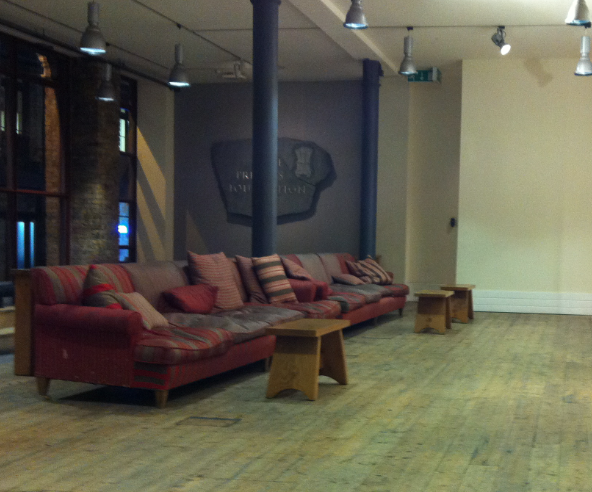
The Prince’s Foundation reception areaGet a room. Fill it with digital types from charity and agencies. Go!

That’s the principle of Barcamp non-profits. A time and place for people with a particular interest to come together to share learnings and come up with new ideas.

I volunteered to be an organiser just before Christmas and now the event is just around the corner (17 Feb 2012). So I met with a few of the other organisers (Amy, Nick and Sylwia) to confirm the basics.

Once we finished chatting about tea, coffee, biscuits and whiteboards (the important stuff!) we couldn’t help stirring up a few potential ideas for the day. I won’t give anything away – but I will say I’m confident it’s going to be a great day!

So … over to you to make sure I’m right. Bring your challenges and gems of learning and be prepared to share.

reducing your bounce rate

This week I was pleasantly surprised by an old blog post on charity bounce rates getting picked up. It sparked a conversation with @charitychap and @LondonKirsty about reducing your website bounce rate that I thought worth elaborating on.

Having assumed a view on average bounce rate for charity websites from my old post. We all agreed the key challenge is that measuring your bounce rate might be easy (and is critical) but it’s harder to know how to reduce it apart from following the generic tips out there. The conversation got me thinking about the analysis we started to consider in my last job.

We got to the stage of considering how best to segment our view of bounce rate. This came from the recognition that taking a site wide view of bounce rate might work for some websites which have a single purpose, but many charity websites have multiple purposes and so a single view isn’t good enough.

This means a good definition of your key audience groups and their goals is very important. Along with recognising that goals may vary by personal circumstance and time of year. For example, for health charities there is a clear ‘patient pathway’ view that can be taken – from diagnosis, through treatment, to recovery, and often to maintenance.

But how exactly can you take a segmented audience view of bounce rate without requiring all of your users to be logged in or personally identifiable? Well – we didn’t find a concrete answer to this. But here are some ideas:

  • Use your content as an approximation of the audience; look at bounce rate by section rather than site wide and make assumptions about the audience consuming that particular section and how you might cross-sell or up-sell to that group.
  • Use the traffic referral source as an approximation of the audience; look at bounce rate segmented by traffic source and see where you can make assumptions about the audience based on this eg those from BBC Vs The Sun, Google Vs Bing are different demographics.
  • Segment those that don’t bounce from those that do; these are two high level segments that could shed some light on things when looked at within a content section.

Finally, of course, the best way to reduce bounce rate is to test, test and test again. I’m not sure enough testing of the ‘bread-and-butter’ online activity happens in charities. But the surest way to find out what improves your bounce rate is to test variations and find the winning combination until you start to spot potential to improve further.


own a colour UNICEF case study

I recently spoke @nfptweetup with Max (and help from Yvette) about the UNICEF own a colour project. Here’s the slides for anyone interested.


To see with speaker notes please view here and use the ‘actions’ option.

the ideal transition digital team

In a week where the Government’s digital champion Martha Lane Fox said there was a digital skills gap in charities [ref: ACEVO conference] it seems only right that I finally write this blog post.

Round two on what everyone ‘just doing digital’ means; “the nirvana where everyone is ‘just doing digital’ may come, but what’s the ideal transition digital team?”. I’ve been contemplating this mind boggler and avoiding writing anything for a good few weeks. But the quote from the ACEVO conference tipped me over the edge.

What does the ideal transitional digital team look like?

It might be big or small, digital all-rounders, or specialists in discrete areas. These specifics are dependent on the organisation size and needs. In this transitional time those factors are less important than the ethos and culture of the team.

I think it’s crucial that the individuals are avid life-long learners who enjoy passing on knowledge. It’s only with these traits that a digital team can help close the skills gap talked about. Remembering of course that the organisation needs to provide the space and resources that allow them to act in this capacity.

It’s even more important that the transitional digital team is not over protective or territorial. A true collaborative approach is needed to make the hub and spoke model work. Other teams need to bring their expertise to the table and own the integration of digital into their work. This means a digital team letting go – occasionally even if you’re doubtful something will be a success. As long as the risk isn’t high, letting others learn through trial and error is the quickest way.

Being a change agent isn’t without its challenges. So patience and persistence are the final facets of a great digital transitional team.

So… what do you think? Are there other skills digital charities teams need right now?

BTW: Thanks to David Bull for tweeting the quote that tipped me over.