the difference of thinking in platforms

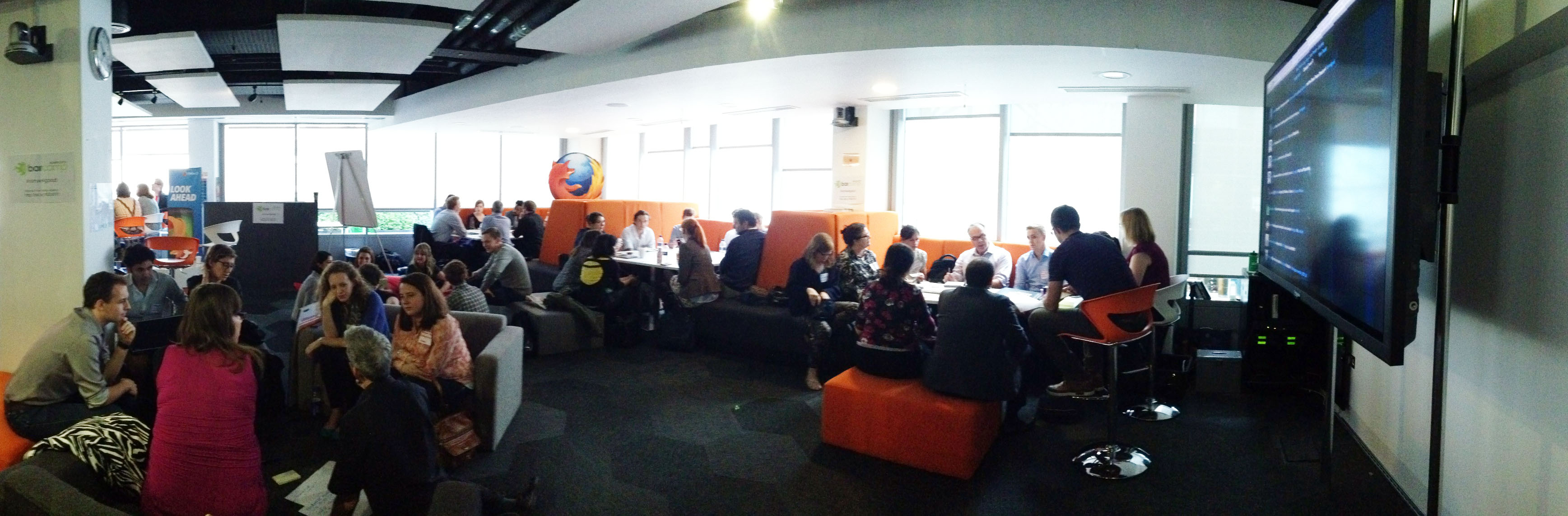
Mozfest_10Nov_018A little while ago I was lucky enough to attend my first, but hopefully not last, Mozfest. I didn’t entirely know what to expect apart from lots of ‘open web’ information and ideas. The timetable wasn’t released until the day before and it was live updated through the entire weekend. It was a great mix of structured and unconference.

I got practical tasters of lots of topics including making your first web app, creating your own maps, and hacking a mobile html5 game.

Quite a bit of my time was spent working with a team assembled on the first day on a project to simplify mobile giving. I won’t describe the final output as there’s a great blog post about Pass the App here. What I wanted to share is the striking difference it made by considering the problem from a platform perspective.

Thinking from a platform perspective really focuses you on the purpose and key features you need. A platform isn’t (primarily) a perfectly designed end consumer product in itself – it’s a tool that others can use to build their own version of something. This gives you an objectivity that quite often gets lost in projects where you’re building the finished public facing website or app.

I found focusing on empowering others through a platform is hugely empowering in itself!


As an aside: I also spoke to SourceFabric about why I was at Mozfest from UNICEF UK. Excuse the Ummms.

social media week – barcampnfp workshop

SMW barcampnfp 2013

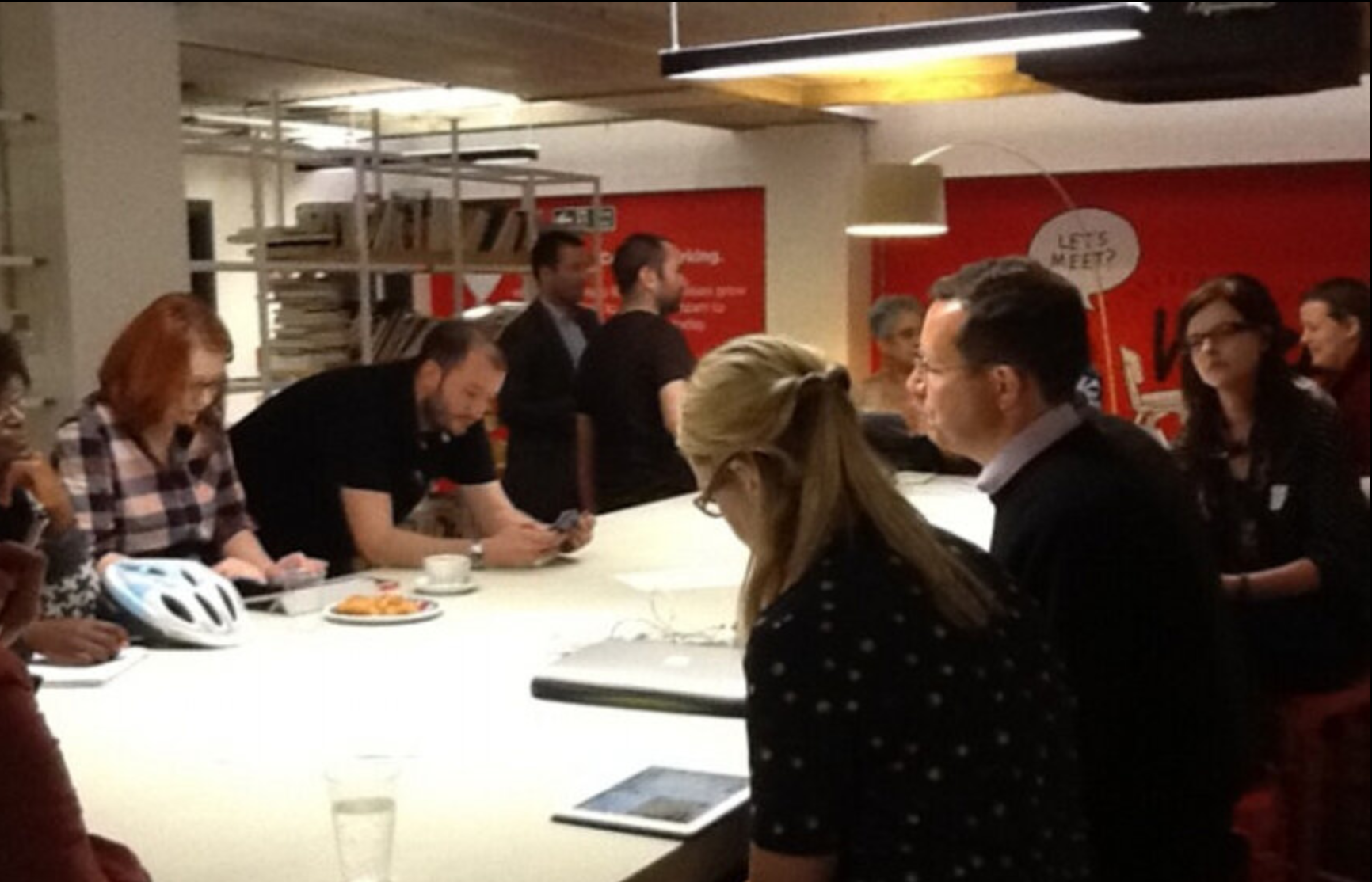
This week we held a barcampnfp workshop as part of Social Media Week. A group of around 50 people from across the non-profit sector and digital industry came together to work out the next big things for doing good using social media.

We came up with a ton of good, bad and ugly examples of social for good campaigns. I particularly remember this campaign by Refuge which featured a beauty blogger highlighting domestic abuse and the Trial by timeline example from Amnesty.

Moving on from the shared inspiration we started to hive mind ideas for how to achieve real world impact using social media – putting aside any silos that might currently exist. Naturally, we could have carried on for much longer… but here’s a few of the things we came up with.

Plus here’s a storify of the day.

digital transformation in action

For the last two years I’ve been leading UNICEF UK on a journey to become digital first, something the org committed to in 2010/2011 as part of the 5 year strategic plan.

I’ve spoken and written about our digital transformation journey a few times. I’ve also chatted to a few people from different charities who are considering their own journey. When I’m asked what my top tips are I typically highlight two things:

Don’t underestimate your own preciousness

You need to empower everyone to use digital channels and ways of working, letting some mistakes happen or project timings extend. Letting go can be hard if you’re used to being the direct deliverer with a level of specialism that has taken years to acquire. It can also be hard for an organisation to take a possible hit on quantity and/or quality while the learning curve takes over.

You just have to let go – letting others learn through doing is critical for change to happen.

Be prepared to sacrifice short-term wins for long-term gain

Transformation is a long journey – this is often at odds with the usual character type in digital. We’re enticed by the almost overwhelming industry speed and we tend to see new opportunities and quick wins everywhere. I’m sure I could spend my entire time bringing great results through fixing and activating new things.

You need to focus on getting the long-term infrastructure (tools, skills and behaviours) in place. This isn’t the kind of stuff that shows immediate results and with finite resources you have to make a choice.


Now we’re a couple of years into our journey we’re taking a hard look at how far we’ve gone and what the next phase is. If you have 10 mins please take our survey.

Watch this space …

technology for development – Guardian Activate 2013

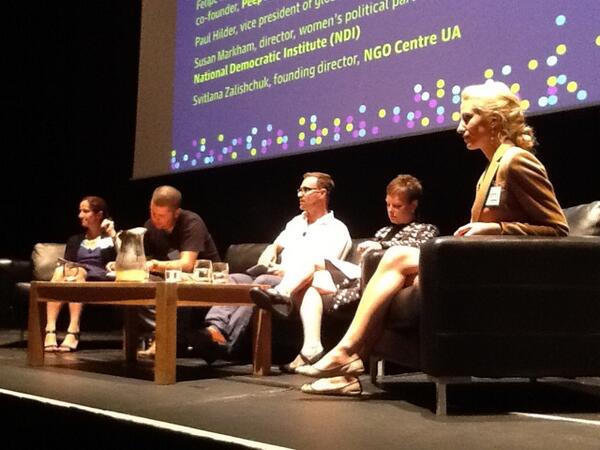
Panel Guardian Activate 2013Today I was inspired once again to hear how technology is being used to change the world.

Yes – smart glasses are what many are talking about. They may still be a little bit glitchy and gimmicky but Pebble has already shown our appetite for wearable screens.

However that’s not where big change is expected next year. We still have far to go to understand and apply the full potential of mobile with cloud tech.

That’s why it’s so exciting …

My storify summary from Guardian Activate can be found here.

UNICEF UK mobile and digital talk at Institute of Fundraising convention

I spoke at the IOF National Convention today. If you missed it and are interested – here’s the slides and there’s also a storify one of the audience put together. Note: I’m not responsible for typos in the storify 😉

preparing your website for a high traffic TV event like Soccer Aid

There’s a moment when there’s no turning back, you’ve done as much preparation and contingency planning as possible and the rest is down to whether a celebrity footballer does something that goes ‘mega viral’.

Soccer Aid is a bi-annual TV programme that raises money for UNICEF. It’s a fantastic live TV event when celebrity footballers, and celebrity non-footballers compete. In return for a great afternoon of telly the viewers are asked to spare a moment to make the world a better place for children by donating to UNICEF UK.

So what exactly does this mean if you happen to be the digital team @UNICEF_UK?

Preparations start-up to a year in advance, and are usually coordinated by a Soccer Aid Digital Producer contracted for the project. There are three core digital streams; marketing, social engagement and tech. I’m going to focus on tech to keep this as brief as you can for something that covers around 12 months work!

The architecture

There was one time (I don’t hesitate to say it was before me, even though I’ve been in the situation during my career) when the worst happened. The UNICEF UK website went down during Soccer Aid.

So now we do a whole host of scaling up, streamlining and performance testing to make sure there’s a reliable web presence and donation funnel in the lead up, just after, and most critically- during the TV programme.

This involves optimisation of the main website and creating a flat (non-CMS) microsite for the highest peaks. We fine tune the website application layer and database processes. Plus we increase the number of servers and use CDN for hosting of any image and video.

Last year we also channeled most of the online donations traffic to a BT MyDonate funnel to push the heaviest lifting outside of our environment. This decoupling meant we could still serve some content if the donations funnel went down, or vice versa, still gather donations if the website went down.

Performance testing

Once we had our approach built we carried out our first performance test, this identified more tweaks to be made. There were two other tests throughout our preparations. They not only identified issues that were fixed but also gave us an expectation of what contingency to plan.

To help with this we had one or two team members casually browsing the website during the tests to observe the experience during heavy traffic. This meant we could begin to think what to say to users if it happened for real.

If you’ve never done it before – it’s important to note that performance testing is best when its on your live site so it’ll probably mean a few late nights so you don’t affect your regular users during the day!

Contingency

Coupled with this preparation we also had a very detailed contingency plan. It mapped out the various possible scenarios and the actions we would take, including who would take key decisions. This was co-created with suppliers who were actively monitoring and on call through the peak moments.

The night itself was a long one. We had one of those moments, a celebrity injury which swelled (couldn’t resist the pun!) the conversation.

Fortunately the tech all went well, hitting our ‘max tweets’ threshold three times is another story…


Quick note: This is a re-post: I created this blog post originally for the Web Managers Group 

twestival two years on

Twestival LogoFor the past few months or so there’s been a worldwide team quietly working away to bring back Twestival. Since 2009, Twestival has raised $1.75 million in support of 286 charities. With this relaunch there’s also a new twist, this time it’s not just a single day of the year, but any day a local organising team chooses.

I got involved a couple of years ago and wrote about my experience and what I thought charities could learn from networked working. This year I’m part of the Global Social and Community team. We’re still using networked approaches but the tools are much better now; Asana for project management, Google calendar for our social rota and Google Docs are the main ones we’re using.

Reflecting on what else has changed in two years I think the most striking thing is that networked collaboration is happening more and feels more normal. But where I’ve seen this most is outside of workplaces.

Technology might have moved on but workplace behaviours are still catching up…


should you outsource your digital technology?

Crown from Seville CathedralThis week I picked up a new phrase (thanks Ian); ‘technology sovereignty’. It’s a nifty way to explain a principle I’ve used in my work ever since I can remember.

Technology Sovereignty = While you might, and probably should in many cases, outsource your technology supply and maintenance needs to a specialist/s – you should not hand over complete control. 

There’s obvious downsides if you do hand over your sovereignty; reduced ability to negotiate price or options, reduced flexibility, and more.  You could even find yourself in the terrible position I once experienced.

At one workplace I inherited a setup where the website CMS, development contract and hosting were all with one supplier – then the company went into administration due to a hostile merger. I was forced to move suppliers without any real choice, unless you consider months of downtime a choice. The new supplier had significantly higher prices and no understanding of the CMS (among other things).

I learnt a lot from that experience. One thing I realised is how much I’ve leaned on my computer science background to help me at work. The benefit of being able to challenge and co-design solutions with suppliers has definitely helped me to keep more control and avoid all kinds of issues.

Recently someone told me they didn’t feel they should need to know this stuff to do their digital job. In reply I talked about car maintenance. I was taught about how a car engine worked in school. It didn’t mean I could build an engine – but I could describe how it should work. It’s meant I can challenge car mechanics where needed.

So should you outsource your technology?
Yes, at least in part. Outsourcing often means you can benefit from economies of scale that come with a supplier or platform having multiple clients. But make sure you know what you’re talking about and avoid having a single point of failure unless it’s an area where failure doesn’t matter.

practical mobile tips for non-profits and charities

I was one of the keynote speakers at Media Trust’s Go Mobile conference this week, a few people have asked for my slides and notes so here they are…

Notes:

Mobile is here

You have to think mobile for all of the experiences you are designing. It’s not going away and it’s not ‘on the horizon’, its well and truly here.

But it’s still evolving

Mobile compatibility is still not entirely standardised, it’s a bit like the www in the 90’s. Adoption of different devices is also changing rapidly. For example, in just the last year the UNICEF UK website has seen a big growth in iPad that has caught it up with iPhones, we also saw Google Nexus 7 appear as well as others.

Case: UNICEF UK Mobile Website

To make sure we had a mobile compatible site as quickly as possible we launched an interim mobile website of just a few key pages and the donation funnel. We’re working on optimising the whole of the site. To keep costs lower and give us increased technology flexibility we’re using separate ‘layers of tech’ to do the transformation rather than having a fully responsive site (for now).

Case: UNICEF Sweden website

Our UNICEF Sweden office, on the other hand, have created a fully responsive website. They were on the brink of a full website rebuild so it made sense to invest now and go ‘mobile first’. The site is designed for smartphones first and PC desktops last. They had to make some hard decisions on how to streamline content.

Forget about ‘mobile’

It’s easy to get obsessed about mobile devices, really what this change means is a change of behaviours. Remember behaviour first when you are designing user experiences. People are now using multiple devices, we don’t live in single screen households.

Time of day

This graph demonstrates a clear difference in behaviour that mobile has created. UNICEF UK non-mobile traffic peaks during working hours while traffic from mobile devices is consistent throughout the day, even into the early hours. This pattern is important when you think about how people are interacting with your brand.

Case: UNICEF UK Speak Up for Children

I’ve learnt the behaviour lesson. We (with an amazing group of partners) did a brilliant mobile campaign called Speak Up for Children, it was a great success in the end, but we failed at first. The original concept was to create the biggest voice petition in the world. It seemed to make sense that a mobile campaign should use the voice feature of your mobile phone.

We quickly learned that very few people wanted to interact this way, it was just a bit too intrusive / embarrassing. So we paused the campaign and replaced the petition with a simple email address entry field.

Case: Syria Emergency

We also know that SMS giving is really effective. It enables the immediate emotional response of a supporter who wants to help, it also gets funds for emergencies quickly. We even include the SMS giving number in search adword campaigns. You should be prepared for SMS giving no matter what charity you are.

Apps are hard

Finding a concept that works as an app is hard. UNICEF offices around the world have tried and success has been limited. You need an app that fits with an individual’s life, if you wouldn’t download it – don’t build it.

When I worked at the British Heart Foundation we created a recipe finder app, it worked because it was something people could use repeatedly and it fitted with our brand.

Email is important

Increasingly, email is consumed on mobile. If you have an email marketing programme or email newsletter it should be compatible with mobile now. Even if you have to create plain text emails, it’s better than emails that don’t work on a mobile.

It can be easy (sort of)

If you have very limited resources it can be very difficult to go mobile. But there are lots of platforms which are now mobile compatible which you could design your experience around. For example; using twitter, facebook and justgiving could give you a campaign experience which is mobile compatible without you needing to convert your own website for a bit longer.

And that was it!

15 mins really isn’t very long to talk about mobile. I didn’t even touch on UNICEF use of mobile in the field, there’s a bit about that in this innovation presentation.

The night before barcampnfp

barcampnfp Oct 2012I’ve been involved in barcampnfp for about a year and a half now, once as a helper and twice as the London lead organiser. Every time I learn something new, or more accurately, lots of new things.

There’s something special about an unconference format which means you learn something every time no matter whether you’re a newbie or old hand. Often it’s something I didn’t even know I wasn’t aware of. That’s why I’m really excited about tomorrow, not for what I know is going to happen but what I don’t know.

We’ve got some brilliant people on the participants list and lots of plotting of ideas for sessions already happening on the hashtag.

Watch this space #barcampnfp and hopefully our live notes will work too: bit.ly/bcnfpnotes