practical mobile tips for non-profits and charities

I was one of the keynote speakers at Media Trust’s Go Mobile conference this week, a few people have asked for my slides and notes so here they are…

Notes:

Mobile is here

You have to think mobile for all of the experiences you are designing. It’s not going away and it’s not ‘on the horizon’, its well and truly here.

But it’s still evolving

Mobile compatibility is still not entirely standardised, it’s a bit like the www in the 90’s. Adoption of different devices is also changing rapidly. For example, in just the last year the UNICEF UK website has seen a big growth in iPad that has caught it up with iPhones, we also saw Google Nexus 7 appear as well as others.

Case: UNICEF UK Mobile Website

To make sure we had a mobile compatible site as quickly as possible we launched an interim mobile website of just a few key pages and the donation funnel. We’re working on optimising the whole of the site. To keep costs lower and give us increased technology flexibility we’re using separate ‘layers of tech’ to do the transformation rather than having a fully responsive site (for now).

Case: UNICEF Sweden website

Our UNICEF Sweden office, on the other hand, have created a fully responsive website. They were on the brink of a full website rebuild so it made sense to invest now and go ‘mobile first’. The site is designed for smartphones first and PC desktops last. They had to make some hard decisions on how to streamline content.

Forget about ‘mobile’

It’s easy to get obsessed about mobile devices, really what this change means is a change of behaviours. Remember behaviour first when you are designing user experiences. People are now using multiple devices, we don’t live in single screen households.

Time of day

This graph demonstrates a clear difference in behaviour that mobile has created. UNICEF UK non-mobile traffic peaks during working hours while traffic from mobile devices is consistent throughout the day, even into the early hours. This pattern is important when you think about how people are interacting with your brand.

Case: UNICEF UK Speak Up for Children

I’ve learnt the behaviour lesson. We (with an amazing group of partners) did a brilliant mobile campaign called Speak Up for Children, it was a great success in the end, but we failed at first. The original concept was to create the biggest voice petition in the world. It seemed to make sense that a mobile campaign should use the voice feature of your mobile phone.

We quickly learned that very few people wanted to interact this way, it was just a bit too intrusive / embarrassing. So we paused the campaign and replaced the petition with a simple email address entry field.

Case: Syria Emergency

We also know that SMS giving is really effective. It enables the immediate emotional response of a supporter who wants to help, it also gets funds for emergencies quickly. We even include the SMS giving number in search adword campaigns. You should be prepared for SMS giving no matter what charity you are.

Apps are hard

Finding a concept that works as an app is hard. UNICEF offices around the world have tried and success has been limited. You need an app that fits with an individual’s life, if you wouldn’t download it – don’t build it.

When I worked at the British Heart Foundation we created a recipe finder app, it worked because it was something people could use repeatedly and it fitted with our brand.

Email is important

Increasingly, email is consumed on mobile. If you have an email marketing programme or email newsletter it should be compatible with mobile now. Even if you have to create plain text emails, it’s better than emails that don’t work on a mobile.

It can be easy (sort of)

If you have very limited resources it can be very difficult to go mobile. But there are lots of platforms which are now mobile compatible which you could design your experience around. For example; using twitter, facebook and justgiving could give you a campaign experience which is mobile compatible without you needing to convert your own website for a bit longer.

And that was it!

15 mins really isn’t very long to talk about mobile. I didn’t even touch on UNICEF use of mobile in the field, there’s a bit about that in this innovation presentation.
what makes a perfect employee?

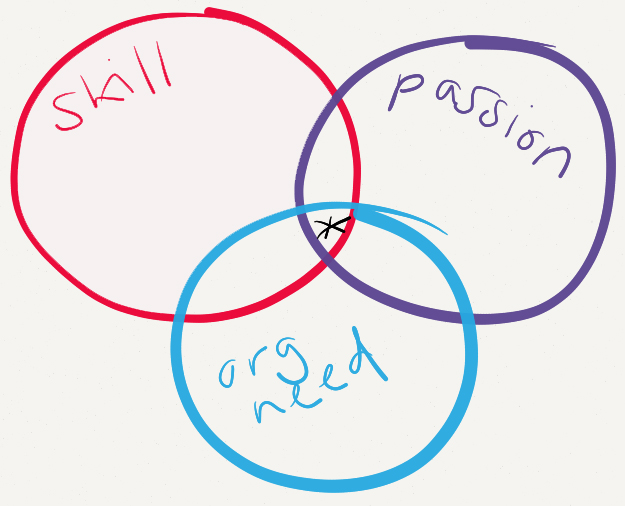
Skill and Passion and Org needToday we had a session at work on well-being and employee engagement. Lots of interesting management theory and practise was shared. At one point during discussion I drew a diagram to explain a point I was making. It seemed to explain things pretty well and someone even said I should write a book 😉

I’m not going to write a book, I imagine someone has already beaten me to it, but I thought it might be useful to share here.

I wanted to explain the delicate balance between skill, passion and organisational need in creating the right mix of team members. It’s particularly relevant to a disruptive industry like digital.

There’s lots of people who have passion for digital, but that doesn’t mean they have the skill/s, or that the organisation needs the particular thing that individual is passionate about. How many times have you had to gently remind people that ‘shiny new’ digital idea in isolation is less likely to get results? Or how many bad videos by keen hobby videographers have you sifted through?

But at the same time; meeting an organisation need and having the right skill is often not helpful unless the passion is also there. While digital is still evolving you need passion in order to keep up with industry changes and / or to have that moment of inspiration that makes your delivery different or better.

The night before barcampnfp

barcampnfp Oct 2012I’ve been involved in barcampnfp for about a year and a half now, once as a helper and twice as the London lead organiser. Every time I learn something new, or more accurately, lots of new things.

There’s something special about an unconference format which means you learn something every time no matter whether you’re a newbie or old hand. Often it’s something I didn’t even know I wasn’t aware of. That’s why I’m really excited about tomorrow, not for what I know is going to happen but what I don’t know.

We’ve got some brilliant people on the participants list and lots of plotting of ideas for sessions already happening on the hashtag.

Watch this space #barcampnfp and hopefully our live notes will work too: bit.ly/bcnfpnotes

being a leader who gets digital

A little while ago I was extremely flattered to be asked to say what I thought every charity leader should know about digital as one of around thirty ‘opinion leaders’. There’s some great content so I thought I’d repost it for anyone who hasn’t yet seen it. I’ve also got some additional thoughts to add to my points (slide 33) so I’ve expanded on them here.

Silos don’t exist externally, don’t let them exist internally

Digital is breaking down walls because of the required ways of working, but the silos shouldn’t have been there in the first place. Recognise the organisational change your digital staff may (or should) be driving and create space for it to happen.

+ Personal responsibility is something every leader strives to embed in their whole team, its good business sense. The same is true with digital, it should be everyone’s responsibility to embrace and explore the opportunities and challenges. Leaving it to the digital staff alone can slow change down and re-enforce siloes. This also means every leader taking the time to explore how to integrate digital into work (and life) too. While existing work approaches are effective they might be bettered… you don’t know what you don’t know.

Your brand has always been what people say about you – you can just see it more

The risks of social media aren’t much bigger than those you already have when a member of staff picks up the phone or knocks on a door. Put the same effort into social media training and guidance and you should be covered.

+ Designing enablers for others to use your brand is the other critical component. Providing easy tools, guides and ways for audiences to use your brand is a proactive way to manage brand. After-all we’re all pretty lazy 😉

Focus on outcome, not sparkle 

An app may be on-trend but you need to do the basics (search, email, website) brilliantly first. It’s a better investment. If you’re not up-to scratch in these areas your other promo activity will be less effective.

+ The opposite side of the coin is also useful to keep in mind (sorry it’s never simple!). Sometimes the sparkly things will get you the outcome you’re looking for. Build a culture that can be experimental at low risk with low effort, at the right time! An example is our UNICEF pinterest experiment, here’s an interview with Beth Kanter about it.

Evidence based decisions rule

Why guess when you can test. Next time you’re agonising over a headline, colour, layout or something else equally subjective remember this. You can test run your work – taking the guessing and the internal politics out of the situation.

+ This is another double-edged sword to be aware of. The old saying is true – if you fail you should try again. So much can influence a result that you need to be sure your test was valid. Too many definitive decisions could limit your options too soon.

Mobile is already here, and it’s not going away

If you’re redesigning your website, emails or anything else, including how you interact in face to face activities – design for mobile devices first. This should also concentrate the mind on ditching any unnecessary-ness.

+ Mobile web is still in evolution. It’s right to invest but worth considering slightly more short-term solutions until the technology starts to settle down more.

what to prioritise if you have limited digital resources

I wrote an article for the Lasa Knowledgebase website recently. Here it is: What To Prioritise If You’ve Only Got Limited Digital Resources and copied below for prosperity 🙂


What To Prioritise If You’ve Only Got Limited Digital Resources

Digital is a very broad area so it can feel overwhelming to get started if you or your organisation is relatively new to the topic. Laila Takeh lists the main ingredients to consider for a comprehensive digital presence.

This article comes with a big healthy caveat. As with all things you should talk to your target audience/s first to see what they’re using. It might result in your list being quite different to this!

1 – An up to date website

Having an up–to-date website for your organisation is still the topmost priority; without one your reputation may be damaged as most people (including potential supporters and funders) will check who you are by searching online. If you don’t have much time; it doesn’t need to be lots of pages, or constantly updated, as long as it’s clear, has contact details and other info that won’t date.

2 – Email newsletter / list

Email is still important, even with the explosion of social media, email is often how existing supporters and beneficiaries like to be kept up to date. And each email has a longer lifespan than a tweet or a Facebook post (it can be as low as 15mins according to Edgerank Checker).

Capture email addresses wherever you have touch-points with your target audiences, making sure you use the appropriate data protection opt-ins so you can regularly send email. And then, actually send email regularly. Once a month is enough, and it doesn’t need to be long.

An email address ages quite quickly as people move jobs or change accounts. Sending a regular email means your contacts are more likely to remember you both in terms of getting involved but also when they move their email address.

See the knowledgebase articles Best Practice For Sending Email Newsletters and 14 Email Dos and Don’ts.

3 – Analytics

Knowing how people are using your website and email is critical in making plans for what to do next, not just digitally but also in your wider work.

You can setup Google Analytics for free by inserting a small bit of code in your website and emails. Once you’re set up make sure you spend at least 30 minutes a month looking at the results and sharing them across your organisation. See also the knowledgebase article Reading Web Statistics.

If your website and email are very busy and more complex you’ll need more time. It’s worth it as it can help you decide where to best spend your resources moving forward.

4 – Facebook

The largest social network in the UK is still Facebook. Having a presence on thenetwork means a greater exposure for your organisation. It can be very time consuming but there are ways to constrain your efforts if needed.

The most obvious way is to make your Facebook page volunteer led, establishing yourself as the coordinator / facilitator. You’ll need to recruit volunteers into Facebook admin / ambassador roles and provide the appropriate guidance. You should then check the page and check-in with your volunteer/s once a week or more regularly.

If this still sounds like too much time in your already busy job, set aside up to an hour a week of your time. With an hour a week you should be able to do just enough; post a couple of times and reply to people who have posted on your page.

Whatever you do, you need to be able to keep doing it. A Facebook page left alone for too long will simply dry up and might give you a reputation problem.

5 – Google Grants

Around 90% of the searches done in the UK are done on Google. Hopefully your website will already be listed against a few relevant keyword searches but you can also buy search adverts to make sure you appear wherever you think relevant.

Fortunately Google offer a grant to charities so you can get access to search advertising for free. Once you’ve got the other priorities sorted you should apply and (hopefully) when you’re approved you can start to setup search advertising to get more people to your website.

You’ll need to put aside a bit of time to keep monitoring and updating your search campaigns once they’re live.

See the knowledgbase article How Google Grants Can Help Your Charity.

6 – YouTube

After Google, YouTube is the next biggest place people search. Setting up a YouTube channel for your charity is a great way to be found. Luckily Google (who own YouTube) also offer a charity channel account for free, and you can apply online for this too.

Once you’ve got a channel some simple videos explaining your organisation, and / or projects that have created impact, are the best way to start. They don’t need to be fancy if you don’t have the resource, interviews with supporters and beneficiaries are often a good format.

With a charity channel account you’ll be able to include overlays and links out from your videos. Make good use of these to capitalise on the exposure you’re getting.

See the knowledgebase article An Introduction To Effective Use Of Video On The Web.

7 – Twitter

Still not as big as Facebook but with a growing audience, Twitter is a great way to publish quick updates to easily tell people what your organisation is working on . There’s lots of journalists, bloggers and politicians using twitter to listen out for stories or political views. So gearing your efforts around engaging influencers can be a good place to start if you have limited time.

With political engagement the same rules apply as elsewhere, a large supporter endorsement (e.g. through retweets or posts on a specific hashtag) will help convince others that it’s an important issue.

See the knowledgebase article To Twitter or not to Twitter?

8 – Google+

Google+ (G+) is Google’s social network offering; it has some similarities to Facebook but also quite a few differences. There’s still uncertainty about G+ and its effectiveness. But with the integration of G+ with other Google products there is value having a G+ page to get the extra benefits on those other Google products, particularly in search results.

Checking your G+ page once a month might be enough if you don’t have lots of people following your page.

About the author

Laila Takeh
Laila is a self confessed digital geek who has been working in charity digital roles for over a decade. She is also the London Barcampnfp organiser, an unconference event for anyone interested in technology for non-profits – find out more on twitter@barcampnfp. You can find her tweeting @spirals and blogging at SpiralForms.


do we need a new label for online giving?

love heart on padlockThanks to the Marketing Academy I saw Rory Sutherland speak this week. It was an excellent talk with lots of things to take away. One of them was the importance of language in creating social norms.

Rory talked about the phrase ‘designated driver’ and how it was born out of anti-drink driving campaigns. He told us how the label was seeded into TV programmes and other media to get it accepted into mainstream language. And how this new label meant ‘not drinking’ went from being unsociable to acceptable.

It got me thinking about how we might apply this learning in the charity sector. With my digital focus the first thing that came to mind was the difference in adoption between ecommerce and online giving.

For commercial organisations, ecommerce is often a higher proportion of their income than online donations are to many charities. I stand by my previous statements that charities might be behind because of the available technology. But reframing the question using this case study from Rory provides some interesting thoughts.

We need a new language for online giving, a label which makes it more of a social norm than it is. There’s a strong case for this, particularly if you are an endorser of CAF’s research into the giving habits of younger generations.

Looking back at the language around charitable giving I’m not sure its changed that much in the last few decades (please tell if you know different!). If this is correct it’s not surprising that online giving is not aligned with the modern media environment or younger generations.

So what could that new label be?

disintermediation: is it really that new?

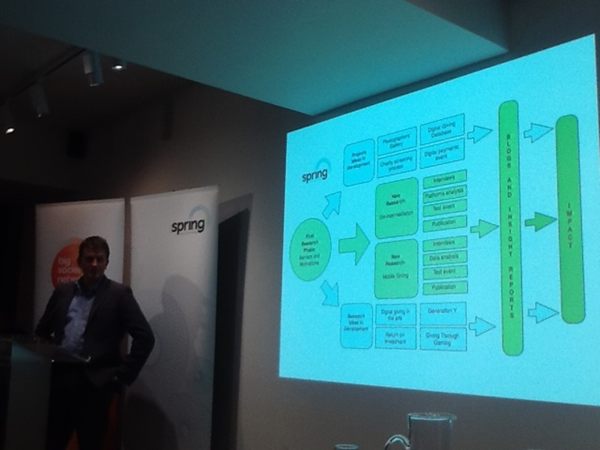
spring giving disintermediation eventThe folk at Spring-giving asked me to give a perspective on their disintermediation study. It’s not been an easy task, hence why this is appearing much later than the event.

I think that’s because I’m not sure how new it feels.

A proportion of individuals have always given directly to someone in need without needing intervention from a non-profit brand. Rewind the clock and you can see that’s how charities started (and continue to start).

Of course, technology is now a part of the journey, and that is new(ish). The convenience of crowd-funding platforms is a real enabler. Yet, that feels new mostly because we’re just in another tech adoption curve; we’ll move past the spawning of many platforms to a small set of reliable platforms that become the way to get something done.

We don’t know if disintermediation will result in more philanthropic giving than pre-internet – it just wasn’t tracked or published before. For example, I recently heard a charity praise their crowd-funding website for giving visibility of the fundraising by their local services. I’ve also pondered if the big successes in crowd-funding are simply aggregating money that would have been involved in smaller informal giving.

That’s not to say the third sector isn’t feeling a little bit unsure and perhaps even at risk due to the concept. You only need to look at the number of events and articles that have started to crop up to know that.

The perceived challenge is the fit with the way many charities currently work. Established charities have processes that help them comply with legislation, to manage reputation and brand, and to ensure investment in long-term sustainable impact as well as the short-term. All things that crowd-funding appears to handle very differently, if at all, at the moment.

But, there will always be people who just want to ‘do their bit’ without too much thought of who is handling the processing. For most, philanthropic acts are only a small part of their life. Based on the hypothesis that this has always happened and it’s just more visible now, what we’re really talking about is not a total shift in behaviours but about finding a way for both to work together better.

I think what we might need to adopt within charities is the Amazon approach; provide a user driven ‘marketplace’ alongside the brand. Provide choice transparently where the charity is facilitator. From what I’ve heard, Amazon’s business was strengthened by this rather than weakened…

what’s in a hashtag?

This week I talked at #gagldn about the UNICEF #sahelNOW campaign we did earlier this year. It was an intense period where we worked hard to ‘do the basics brilliantly’ and break the media quietness around the emerging crisis in West Africa. Here’s the slides. Happy to answer questions, drop me a comment!

p.s. we all agreed you can’t do a campaign just based on a hashtag!

barcamp non-profits october 2012

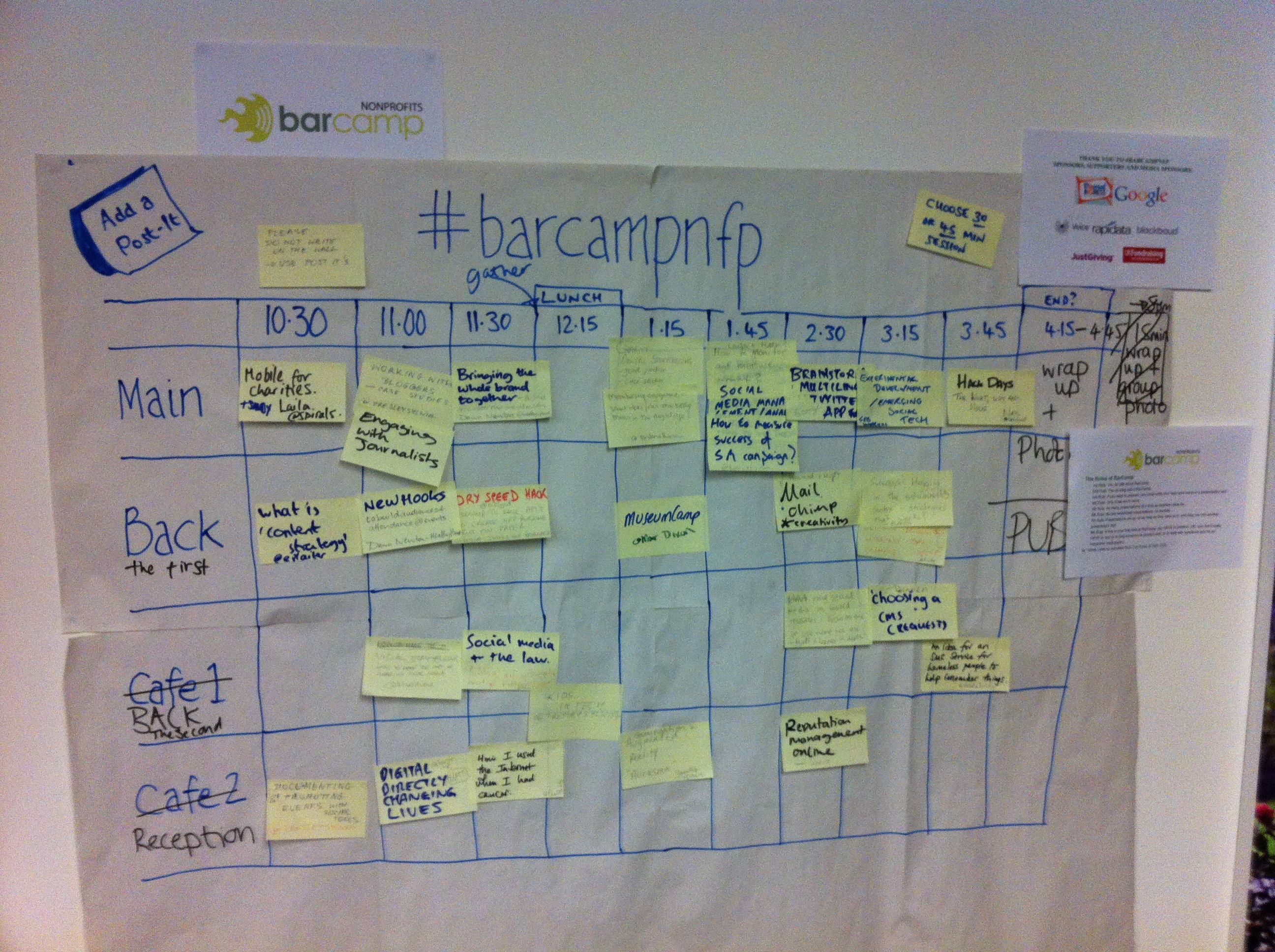
Last week was the second London Barcampnfp. As one of the co-organisers I don’t want to say too much as a few of our lovely participants have already done a much better job than I would:

[I’ll keep adding to this list as new posts appear]

My key take-out is; get the right people together and wonderful ideas are inevitable. But we need even more people, including more non-charity people as well next time!

So please spread the word, February 2013 here we come…

social media week september 2012

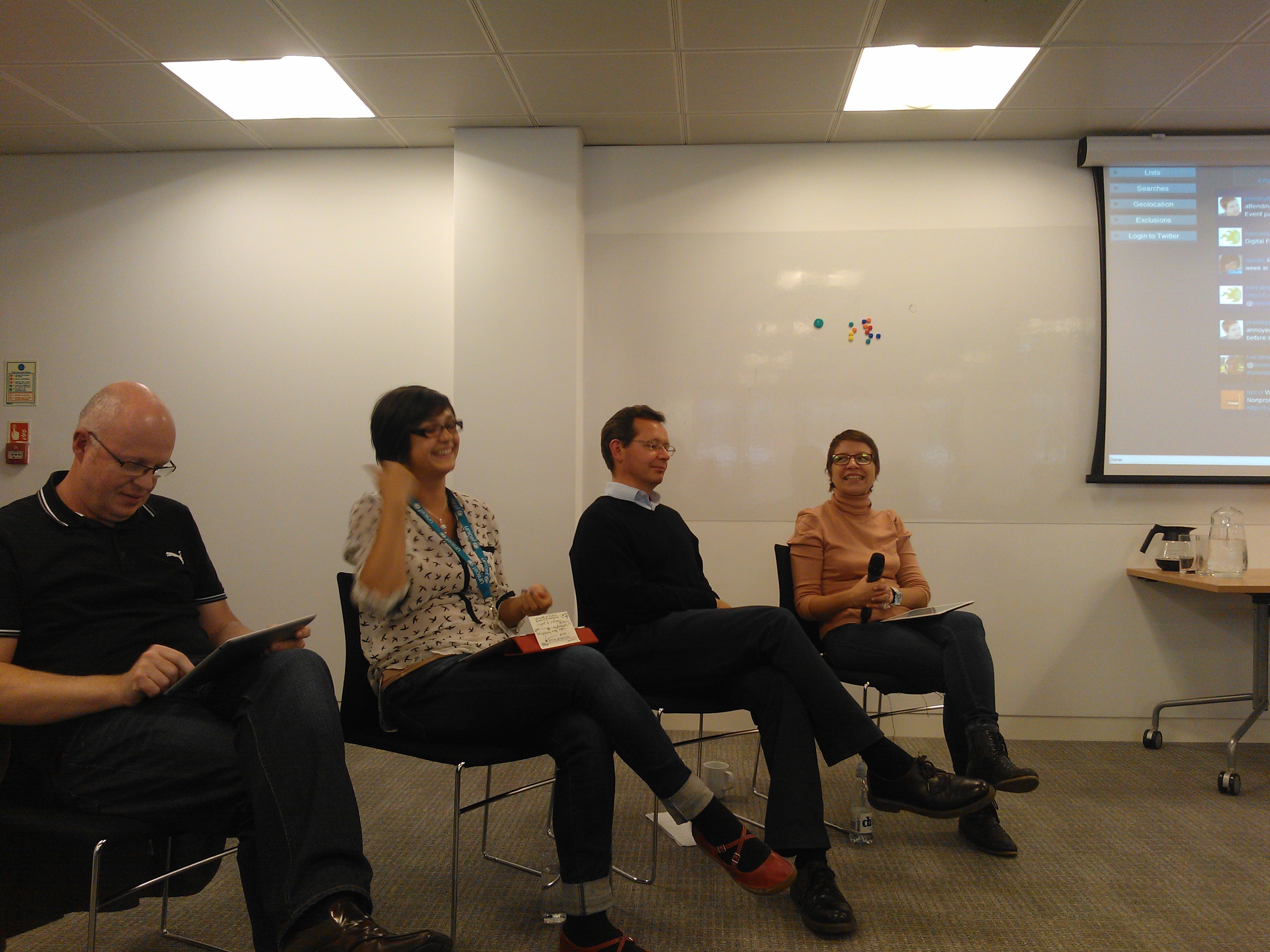
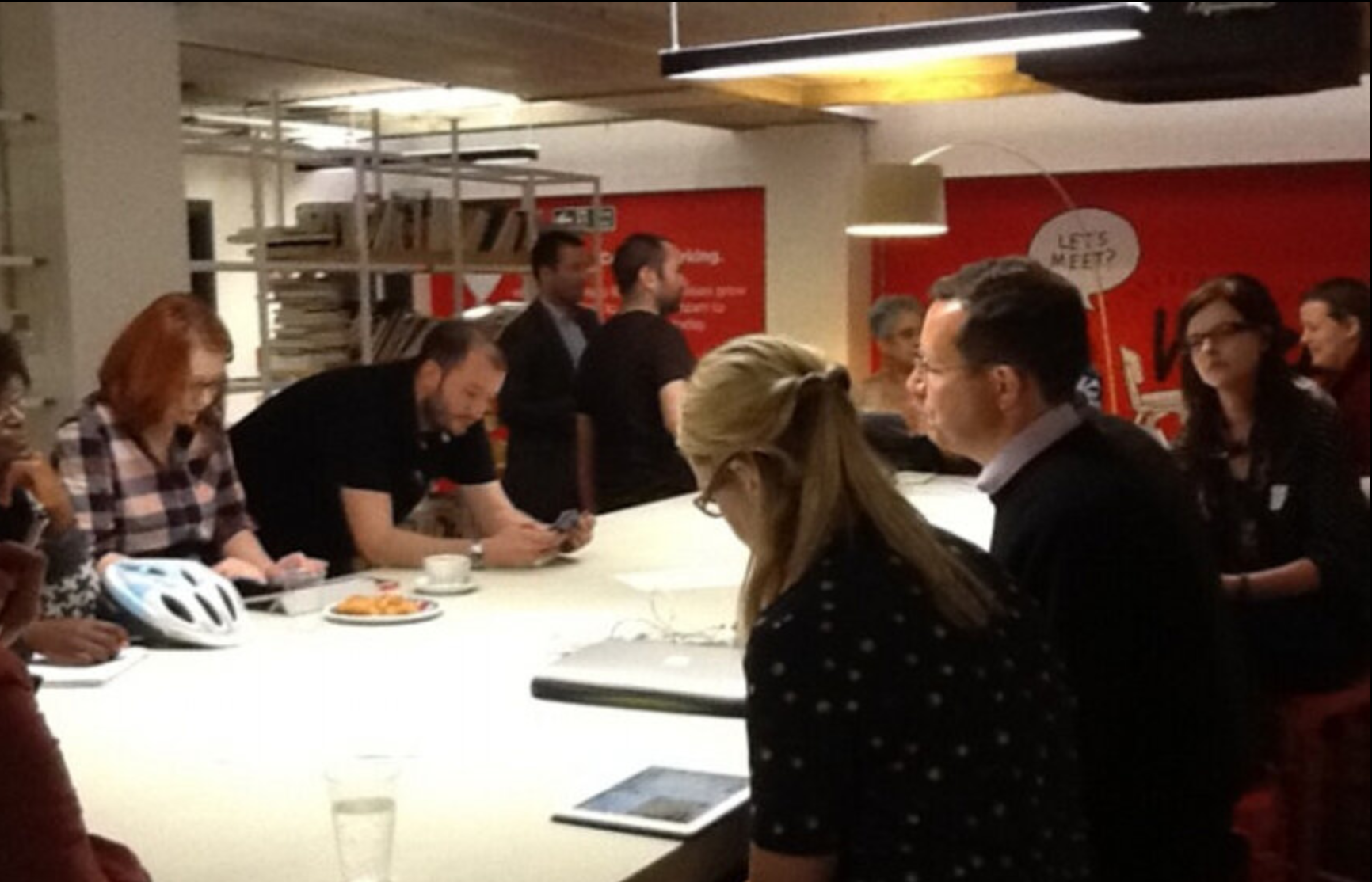
Panel for smwbarcampnfpLast week was Social Media Week so the team and I tried to cram in as many events in as possible to maximise the free learning opportunity. Here’s a few of the key things I thought interesting to share:

Crowd-funding (from event by good innovation)

  • It’s community fundraising by another name.
  • Funders are often motivated by return incentives (think kickstarter perks) and/or that beneficiaries know more directly who provided the funding.
  • The best results come when the community is already interested and networked.
  • Cancer Research UK ‘My Projects’ raises a higher average total per page than they do on event sponsorship pages.
  • Action for Children ‘My Action for Children’ bridges the divide between local service managers and volunteers doing fundraising and the work of the fundraising team.

Social media engagement (mostly from events by @wearelikeminds & @barcampnfp)

  • If you cover lots of topics as a brand, fragmenting your social profile might help you increase engagement if the sub-group sizes justify the separate effort needed. More focused streams can allow you to focus the tone and content more.
  • Images drive higher levels of engagement. Hopeful images particularly. But if you heavily copyright you are restricting sharing potential, look at creative commons.
  • Influence is about driving an outcome, not just the conversation. Sometimes the most effective influencers are sometimes the least expected who suddenly have a reason to comment on your brand.
  • Social media can help organisations blur the divide between staff and supporters. But you need to invest in educating the whole organisation in digital.

Data (from all over the place)

  • Lots of people lie on registration / data capture forms, and thats the ones that don’t just click away. Social logins reduce both bounce and ‘dirty data’.
  • People update their personal details on their social profiles before they update it anywhere else.
  • Some employers are using Klout / Kred scores within their recruitment processes (yes – I’m very dubious too!).

Innovation (event by @nfptweetup)

  • Innovation is not just about the ‘shiny stuff’, everyday innovation is too often overlooked and focus on purpose why you’re trying to innovate is needed.
  • If you innovate in the hardest places, it should be easy to translate and scale the successes in the easier contexts.
  • Innovation is about knocking down doors, painting yourself in creosote or couscous (you had to be there), but mostly attitude and persistence.
  • Finally… UNICEF is hugely inspiring, I am constantly in awe – see innovation preso

Finally, finally … my week was brilliantly rounded off with drinks to celebrate UNICEF UK’s top spot in the Social Charity Index. More on that another time.