digital transformation in action

For the last two years I’ve been leading UNICEF UK on a journey to become digital first, something the org committed to in 2010/2011 as part of the 5 year strategic plan.

I’ve spoken and written about our digital transformation journey a few times. I’ve also chatted to a few people from different charities who are considering their own journey. When I’m asked what my top tips are I typically highlight two things:

Don’t underestimate your own preciousness

You need to empower everyone to use digital channels and ways of working, letting some mistakes happen or project timings extend. Letting go can be hard if you’re used to being the direct deliverer with a level of specialism that has taken years to acquire. It can also be hard for an organisation to take a possible hit on quantity and/or quality while the learning curve takes over.

You just have to let go – letting others learn through doing is critical for change to happen.

Be prepared to sacrifice short-term wins for long-term gain

Transformation is a long journey – this is often at odds with the usual character type in digital. We’re enticed by the almost overwhelming industry speed and we tend to see new opportunities and quick wins everywhere. I’m sure I could spend my entire time bringing great results through fixing and activating new things.

You need to focus on getting the long-term infrastructure (tools, skills and behaviours) in place. This isn’t the kind of stuff that shows immediate results and with finite resources you have to make a choice.


Now we’re a couple of years into our journey we’re taking a hard look at how far we’ve gone and what the next phase is. If you have 10 mins please take our survey.

Watch this space …
technology for development – Guardian Activate 2013

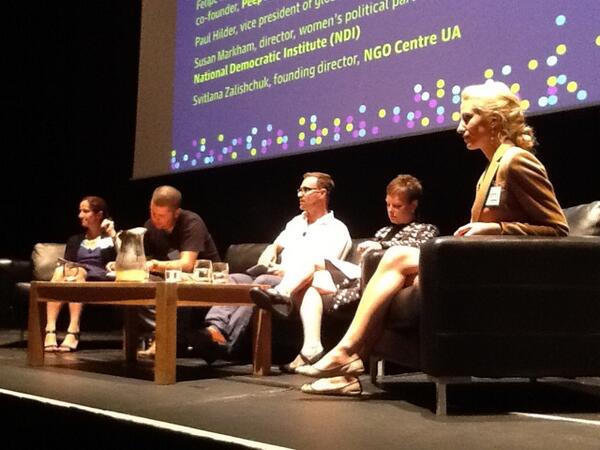
Panel Guardian Activate 2013Today I was inspired once again to hear how technology is being used to change the world.

Yes – smart glasses are what many are talking about. They may still be a little bit glitchy and gimmicky but Pebble has already shown our appetite for wearable screens.

However that’s not where big change is expected next year. We still have far to go to understand and apply the full potential of mobile with cloud tech.

That’s why it’s so exciting …

My storify summary from Guardian Activate can be found here.

UNICEF UK mobile and digital talk at Institute of Fundraising convention

I spoke at the IOF National Convention today. If you missed it and are interested – here’s the slides and there’s also a storify one of the audience put together. Note: I’m not responsible for typos in the storify 😉

preparing your website for a high traffic TV event like Soccer Aid

There’s a moment when there’s no turning back, you’ve done as much preparation and contingency planning as possible and the rest is down to whether a celebrity footballer does something that goes ‘mega viral’.

Soccer Aid is a bi-annual TV programme that raises money for UNICEF. It’s a fantastic live TV event when celebrity footballers, and celebrity non-footballers compete. In return for a great afternoon of telly the viewers are asked to spare a moment to make the world a better place for children by donating to UNICEF UK.

So what exactly does this mean if you happen to be the digital team @UNICEF_UK?

Preparations start-up to a year in advance, and are usually coordinated by a Soccer Aid Digital Producer contracted for the project. There are three core digital streams; marketing, social engagement and tech. I’m going to focus on tech to keep this as brief as you can for something that covers around 12 months work!

The architecture

There was one time (I don’t hesitate to say it was before me, even though I’ve been in the situation during my career) when the worst happened. The UNICEF UK website went down during Soccer Aid.

So now we do a whole host of scaling up, streamlining and performance testing to make sure there’s a reliable web presence and donation funnel in the lead up, just after, and most critically- during the TV programme.

This involves optimisation of the main website and creating a flat (non-CMS) microsite for the highest peaks. We fine tune the website application layer and database processes. Plus we increase the number of servers and use CDN for hosting of any image and video.

Last year we also channeled most of the online donations traffic to a BT MyDonate funnel to push the heaviest lifting outside of our environment. This decoupling meant we could still serve some content if the donations funnel went down, or vice versa, still gather donations if the website went down.

Performance testing

Once we had our approach built we carried out our first performance test, this identified more tweaks to be made. There were two other tests throughout our preparations. They not only identified issues that were fixed but also gave us an expectation of what contingency to plan.

To help with this we had one or two team members casually browsing the website during the tests to observe the experience during heavy traffic. This meant we could begin to think what to say to users if it happened for real.

If you’ve never done it before – it’s important to note that performance testing is best when its on your live site so it’ll probably mean a few late nights so you don’t affect your regular users during the day!

Contingency

Coupled with this preparation we also had a very detailed contingency plan. It mapped out the various possible scenarios and the actions we would take, including who would take key decisions. This was co-created with suppliers who were actively monitoring and on call through the peak moments.

The night itself was a long one. We had one of those moments, a celebrity injury which swelled (couldn’t resist the pun!) the conversation.

Fortunately the tech all went well, hitting our ‘max tweets’ threshold three times is another story…


Quick note: This is a re-post: I created this blog post originally for the Web Managers Group 

augmented reality summit – summary

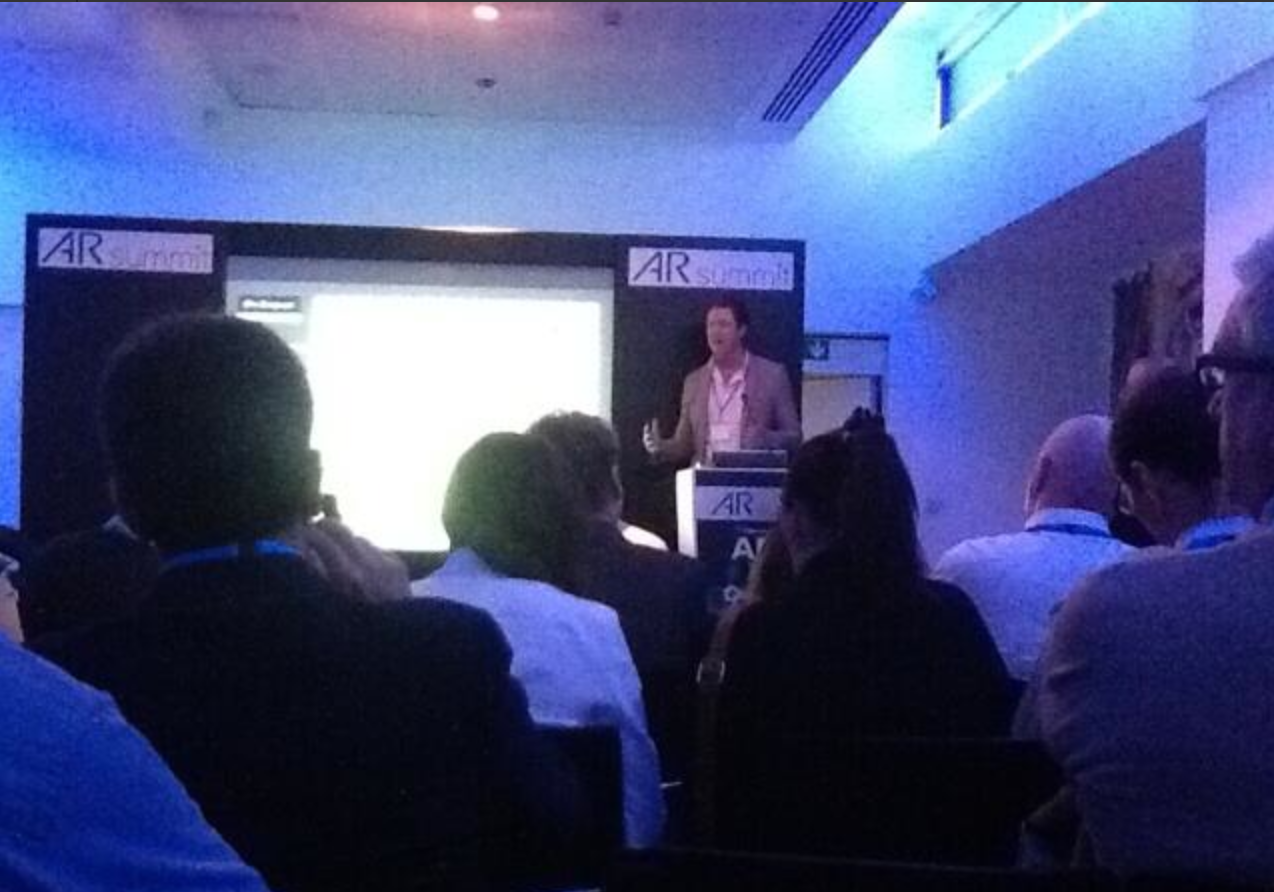
AR Summit 2013This thursday I attended the Augmented Reality Summit, its been going for a few years but this was my first. Here’s a quick summary of my key take aways.

General trend

  • AR has grown from a niche techie interest to something that is viable for consumers in the last year.
  • There is ongoing convergence of wearable technology and AR. Oculus rift and Smart glasses being the obvious examples.
  • Google glass is being viewed as a conversation starter to get the key issues, like privacy, worked through quickly. Smart glasses have been around for a while.
  • QR codes are mostly outdated already as markers – image recognition is widely possible. I’ve never been a fan of QR.
  • AR and future mobile devices have the potential to disrupt the games console market by being just as powerful.
  • The key challenges:
    • battery power; use runs down your battery quickly, but the industry is working on processors and software to help.
    • GPS accuracy
    • interoperability; there’s no standards yet!
    • quality content.

Tips

  • Lighting; accuracy can be affected by light variation but you can always use the flash on a phone to help.
  • Markers; picking a strong image is critical in avoiding temperamental ‘pick-up’ in the AR reading.
  • Apps; custom apps exist at the moment because the off-the-shelf ones give limited interactivity and content options.
  • Aurasma; is relatively widespread in its adoption and has cheap / free options for creating AR triggers. Blippar and Zappar (and others) are yet to offer this.

Case studies

And here’s a tweet summary of the AR Summit in storify.

marketing bootcamp – tough love for leaders

Last week was the first Marketing Academy bootcamp…

What is a marketing bootcamp?

I was lucky enough to be selected from around 600 applicants as one of 30 Marketing Academy scholars. The selection process was rigorous; written application, employer endorsement, showcase piece, telephone interview, four psychometric tests and a panel interview!

There are three bootcamps in the 12 month scholarship. The other elements of the scholarship are mentor meets, lunch and learns, faculty days and coaching.

The bootcamps are two or three intensive days of active learning with all scholars in attendance. This first one was mostly led by @thelivingleader but we also heard from @gailgallie@olibarrett and @petermarkey.

What did I learn?

Lots and lots and lots. Here’s a few of the easy to share bits:

  • Leadership: A real leader is one that develops other leaders. Authenticity is key.
  • Communication: Giving info isn’t the main leadership communication style; other key ones are seeking clarification, supporting, building.
  • Networking: Don’t ask what someone does – find out about them as a person first. You can spot something useful to share by email later.
  • Personal development: Focus on what you want to grow, if you focus on the negatives they will grow.
  • Your vision: If you vocalise your ambitions as if they were already true – it makes them easier to achieve.
  • Confidence: You can’t control how people feel, only how you treat them. So focus on what you give, not what you get.
  • Pull and push: When leading there are times to push, and there’s a moment to switch to pull. If you keep pushing results will diminish.

It’s going to be an amazing year of learning – I’ll try to share it with you along the way.

the future of digital jobs

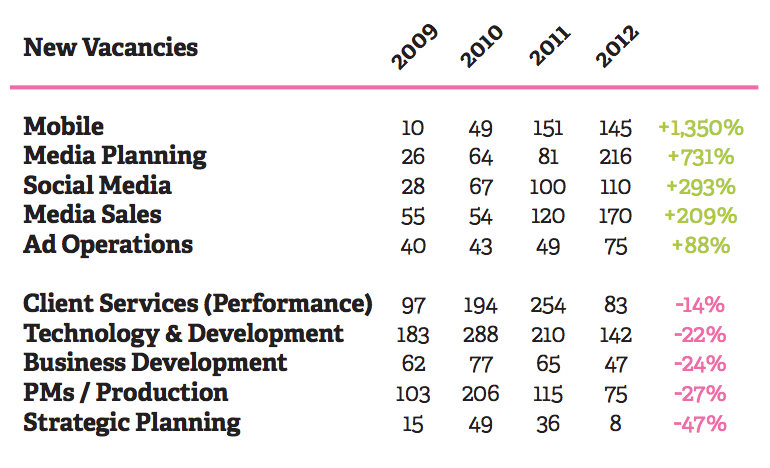
chart courtesy of Propel LondonDiscussing digital transformation often ends with the inevitable question… what happens to the digital roles (your job!) when the transformation is finished?

I’ve written about whether digital team’s will continue to exist before so I won’t go into detail again. But recently I spotted this salary benchmarking report by Propel which I thought gives some useful insights.

I particularly like the chart about new vacancies by role type. What this data makes me think is:

  • there’s more growth in digital marketing roles than ‘back office’ tech and services.
  • specific digital strategy roles are perhaps being subsumed into overall strategy roles.
  • technology is more consumerised and development is getting slightly ‘easier’ to do and project manage with less-specialist roles.

What does it make you think?

digital team structures – hub and spoke or dandelion?

Dandelion modelI first wrote about the hub and spoke model back in summer 2011. Since then I’ve talked to a lot of people about it.

I’m a raving advocate for the model. The cultural changes needed to realise the benefits of digital are only really possible through an integrated approach driven from a single focal point. This is why I’ve often pondered how this model could work at a global scale for an organisation.

Local autonomy is important. I’ve been one of those ‘HQ people’ working with local offices, and now I am part of a ‘local office’ in a global organisation. So I know how important a certain level of independence is. Without this you can’t adapt to local market or community needs, innovation and motivation is stifled, and you risk not being able to capitalise on local opportunities.

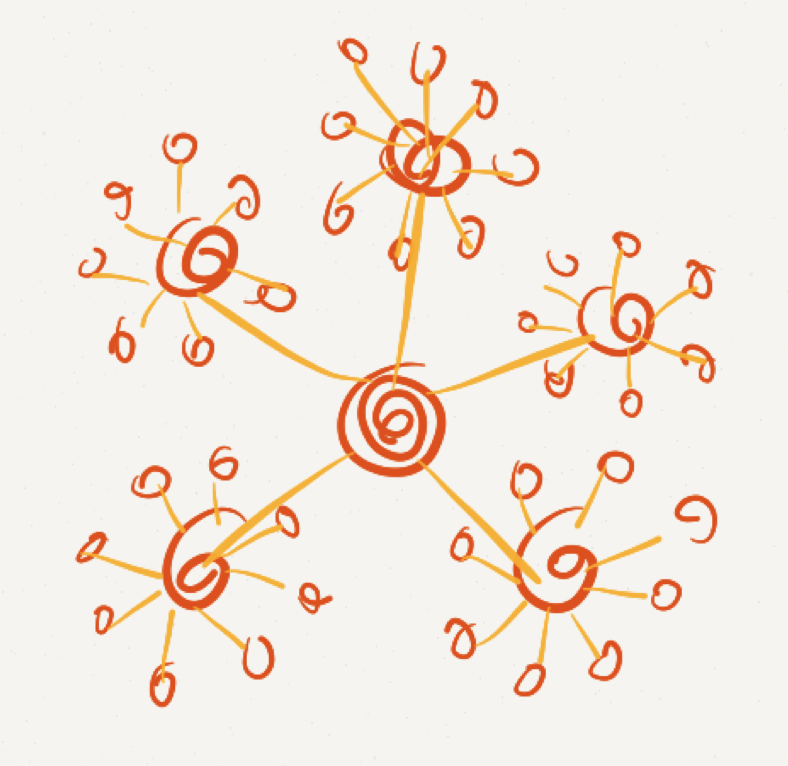
Dandelions might just be the answer I was looking for. Jeremiah Owyang posted about social business models recently and described this model as:

Multiple hub & spoke “Dandelion” notice how each business unit may have semi-autonomy with an over arching tie back to a central group.

Reflecting on this – I recognise this model from my current and past workplaces – it’s nothing new. Yet it’s strange how giving a name to something means you can examine and discuss it more easily. Examining it leaves me agreeing with the points Jeremiah makes and adding a few of my own;

  • too much internal comms = noise; but an internal social network delivers the power of discovery and self-filtering.
  • decentralised cross- team working is critical; but it’s tricky for central hubs to empower and be sufficiently in the loop to add value.
  • focus on the bright spots; understanding the strengths and weaknesses of each hub gives strategic opportunities for spreading learning.
  • apples and pears aren’t the same; a common language and frame of reference (eg terminology) makes it easier to identify and share insights.
  • sharing needs to be incentivised; to motivate teams to share it needs to return local results or at least recognition.
  • people trust people; there’s nothing like face to face to build trust and communication, with video meetings there’s no excuse.

twestival two years on

Twestival LogoFor the past few months or so there’s been a worldwide team quietly working away to bring back Twestival. Since 2009, Twestival has raised $1.75 million in support of 286 charities. With this relaunch there’s also a new twist, this time it’s not just a single day of the year, but any day a local organising team chooses.

I got involved a couple of years ago and wrote about my experience and what I thought charities could learn from networked working. This year I’m part of the Global Social and Community team. We’re still using networked approaches but the tools are much better now; Asana for project management, Google calendar for our social rota and Google Docs are the main ones we’re using.

Reflecting on what else has changed in two years I think the most striking thing is that networked collaboration is happening more and feels more normal. But where I’ve seen this most is outside of workplaces.

Technology might have moved on but workplace behaviours are still catching up…


should you outsource your digital technology?

Crown from Seville CathedralThis week I picked up a new phrase (thanks Ian); ‘technology sovereignty’. It’s a nifty way to explain a principle I’ve used in my work ever since I can remember.

Technology Sovereignty = While you might, and probably should in many cases, outsource your technology supply and maintenance needs to a specialist/s – you should not hand over complete control. 

There’s obvious downsides if you do hand over your sovereignty; reduced ability to negotiate price or options, reduced flexibility, and more.  You could even find yourself in the terrible position I once experienced.

At one workplace I inherited a setup where the website CMS, development contract and hosting were all with one supplier – then the company went into administration due to a hostile merger. I was forced to move suppliers without any real choice, unless you consider months of downtime a choice. The new supplier had significantly higher prices and no understanding of the CMS (among other things).

I learnt a lot from that experience. One thing I realised is how much I’ve leaned on my computer science background to help me at work. The benefit of being able to challenge and co-design solutions with suppliers has definitely helped me to keep more control and avoid all kinds of issues.

Recently someone told me they didn’t feel they should need to know this stuff to do their digital job. In reply I talked about car maintenance. I was taught about how a car engine worked in school. It didn’t mean I could build an engine – but I could describe how it should work. It’s meant I can challenge car mechanics where needed.

So should you outsource your technology?
Yes, at least in part. Outsourcing often means you can benefit from economies of scale that come with a supplier or platform having multiple clients. But make sure you know what you’re talking about and avoid having a single point of failure unless it’s an area where failure doesn’t matter.